Feeding a train that never stays put
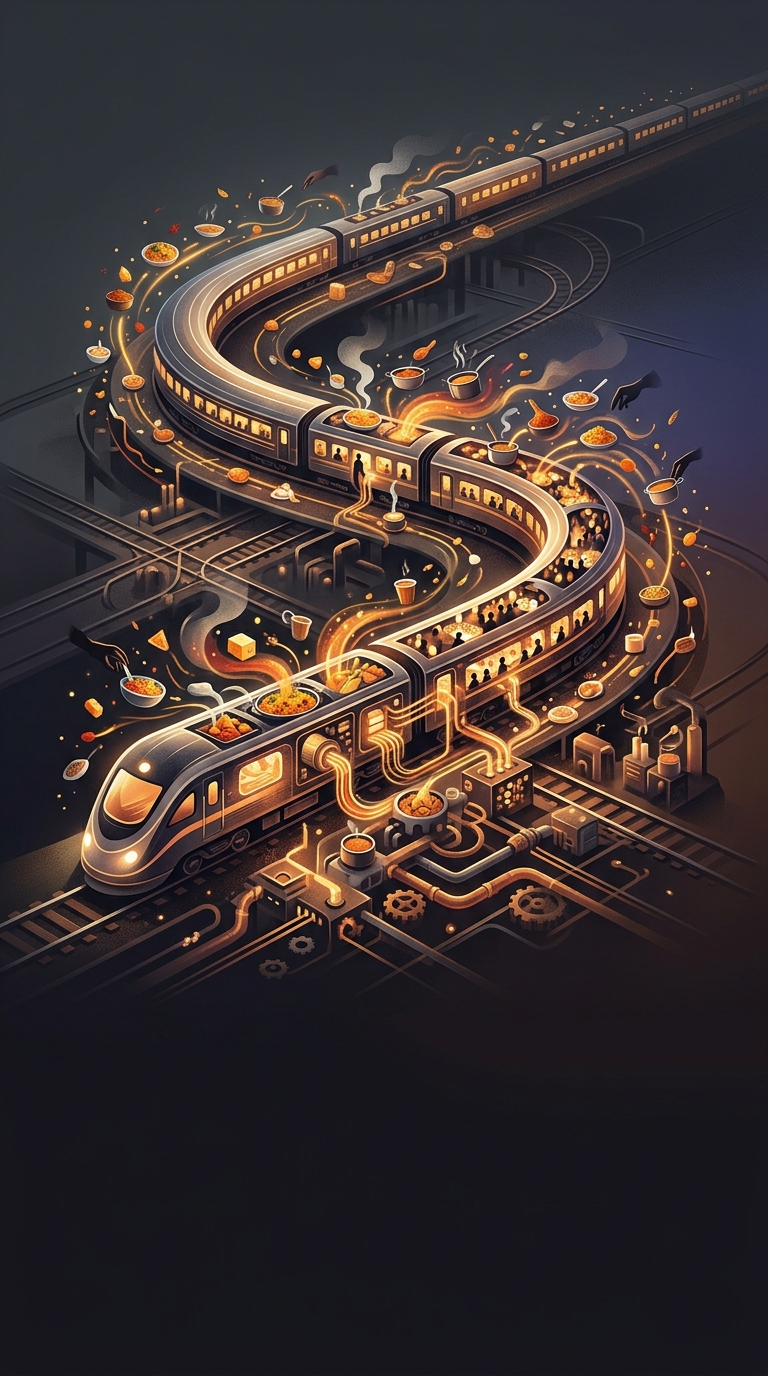
A railway meal has to solve a problem ordinary restaurants do not: the customer is moving, and the kitchen may be miles away by the time the food is ready. Indian Railways’ scale makes that a daily coordination challenge. Meals are prepared at base kitchens, then connected to passengers and trains through onboard service or station-based delivery.
The station becomes the handoff point
With e-catering, a passenger can choose food for delivery at an upcoming station rather than rely only on what is available aboard. The order links a dish to a particular journey and seat, while the station stop provides a brief moment to transfer it onto the train. That makes timing central: a meal delivered too early may wait, while a missed handoff can leave little opportunity to catch up before the train moves on.
Base kitchens help organize preparation away from the cramped space of a carriage. They can make food before it is needed, while digital ordering gives passengers a way to select from available options—including local dishes—along the route. The system still has to match kitchen capacity, train schedules and passenger demand, all across a network where each stop is temporary.
A moving dining room
The striking part is not simply the number of meals, but the chain of handoffs behind each one: from preparation to a scheduled station, then to a passenger in a moving train. A journey can become a sequence of local food choices, with the railway’s timetable acting as the delivery window.