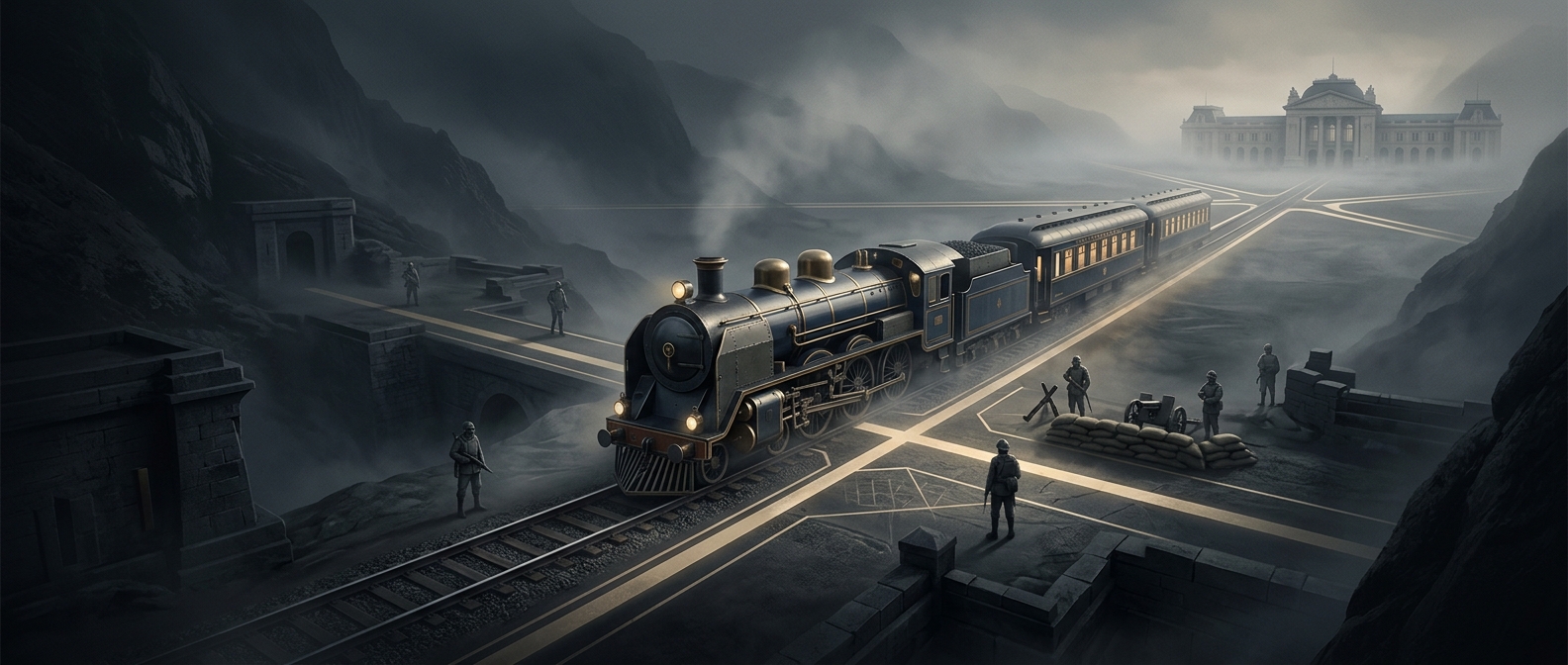
A new path through the Alps
The Simplon route carried the train south from Paris through Switzerland, under the Alps by way of the Simplon Tunnel, and onward through Italy and the Balkans toward Istanbul. The tunnel made this route practical: instead of crossing Germany and Austria, the train could reach northern Italy directly beneath the mountain barrier.
That change mattered because railway routes were more than lines on a map. They determined which countries a prestigious international service connected—and which it left out. In the aftermath of the war, bypassing Germany and Austria made the train’s itinerary a visible expression of the Allies’ political choices.
Infrastructure with a diplomatic edge
The route depended on a major piece of Swiss engineering, but its significance came from how that infrastructure was used. A tunnel built to connect regions across the Alps could also help redirect international traffic away from former enemy states. The journey’s luxury did not soften that message; it made the exclusion especially conspicuous, because the train represented elite travel and cross-border prestige.
The detour also shifted the route’s center of gravity toward Switzerland and Italy, linking passengers to a different chain of countries on the way east. A change in the train’s itinerary turned geography into policy: the Simplon Orient Express showed how postwar sanctions could be felt not only at borders, but in the routes travelers were invited to take.