A railway journey built around distance
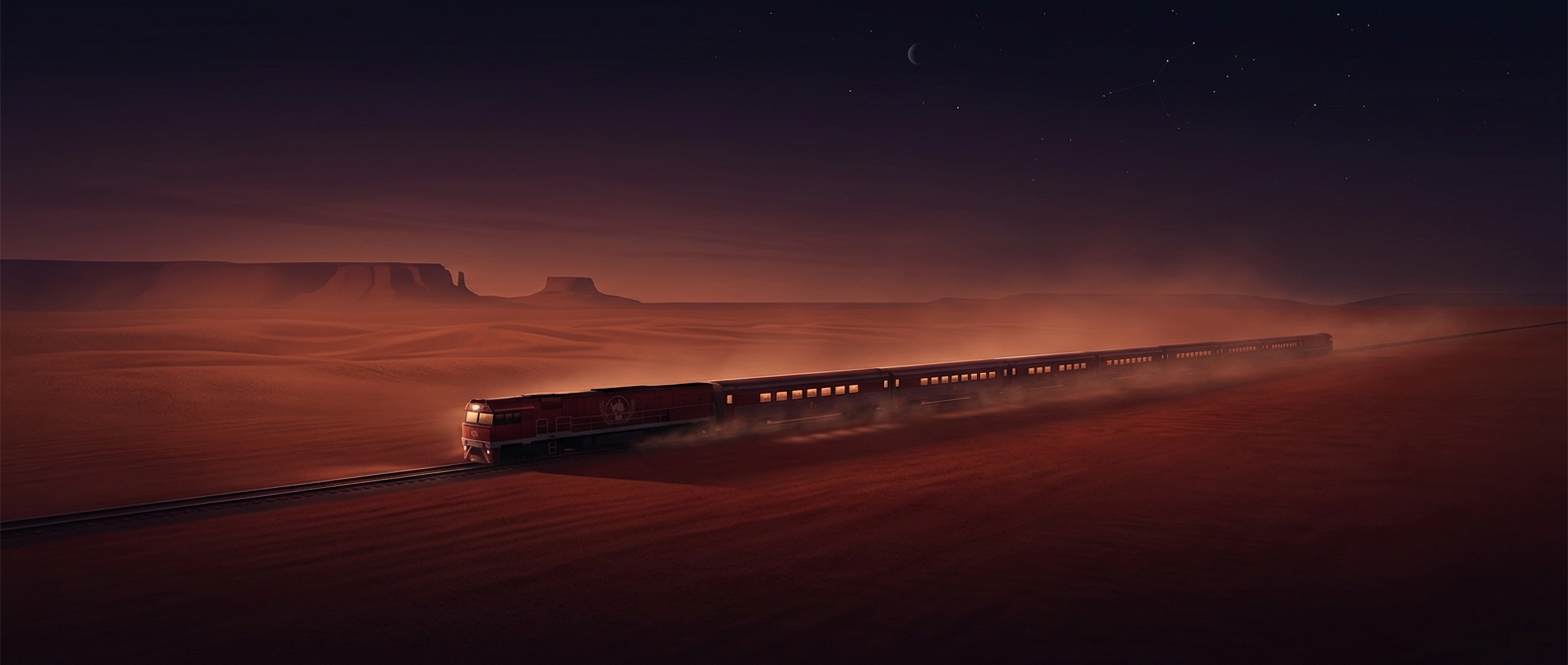
The Ghan’s three-day crossing is not simply a long ride between two cities. It follows a north–south corridor through the continent’s interior, linking Adelaide with Alice Springs and then Darwin. The landscape changes along the way: dry country and red earth give way to the ranges around central Australia, then to the greener, more tropical north.
That scale shapes the experience. Instead of treating the Outback as a quick stretch between destinations, the train makes the transition itself the point of the trip. Passengers can watch the country change from their windows, while sleeping aboard avoids breaking the journey into a series of separate road transfers.
From camel routes to a rail connection
The train’s name recalls the Afghan cameleers who helped open up Australia’s interior to travel and trade. Before railways reached far inland, camel teams carried people and supplies across country where long distances and scarce water made transport difficult. The name links today’s steel railway to that earlier era of overland movement, even though the train is a modern service rather than a camel-track replica.
The route also reflects the slow work of connecting a vast interior by rail. For much of its history, the line reached only as far north as Alice Springs; the connection onward to Darwin came later. Extending the railway turned a journey once associated with the remote centre of the continent into a continuous rail crossing from the south coast to the northern city.
The journey is part of the destination
On a trip this long, the train is both transport and accommodation. Its steady pace gives the landscape time to register: the red ground is not a backdrop passed in an instant, but a succession of places and terrain. The Ghan’s defining feature is the distance it lets travelers experience, not merely the distance it covers.