Pullman Put the Dining Room on Wheels
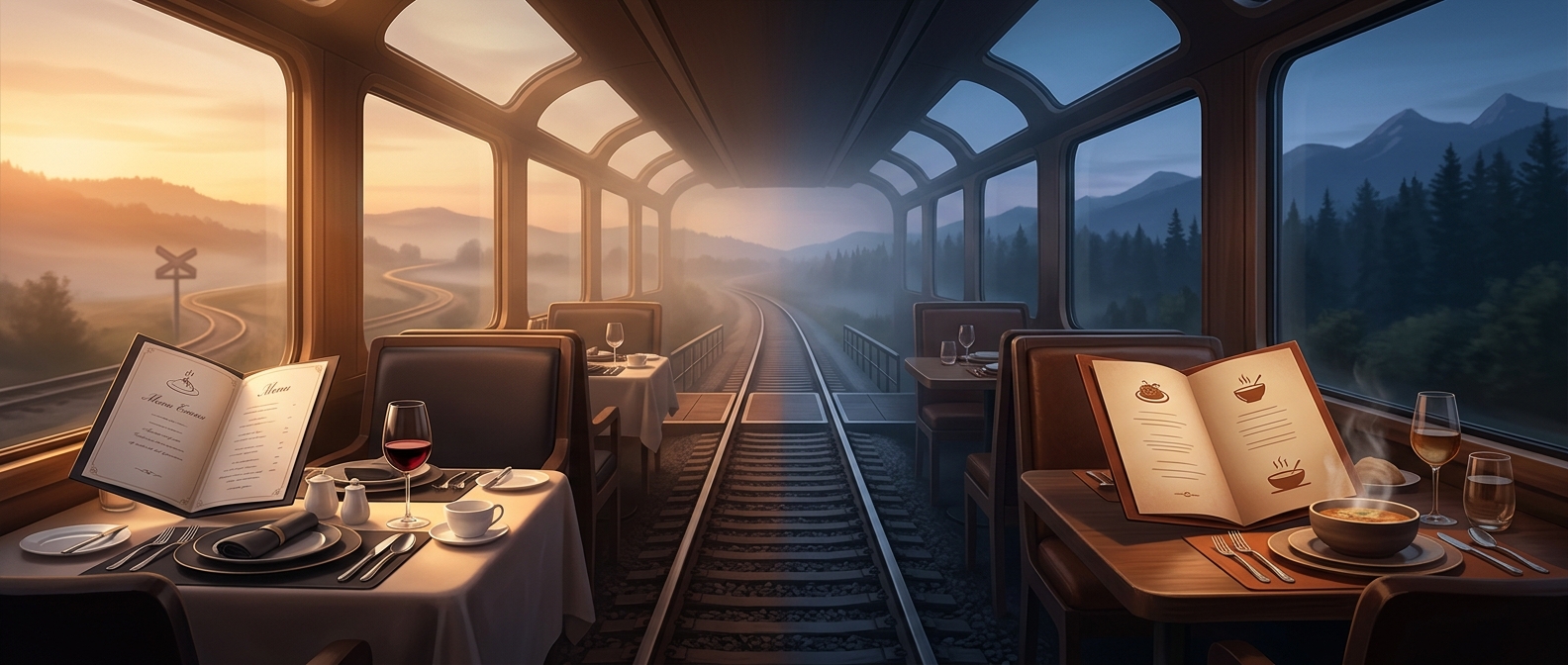
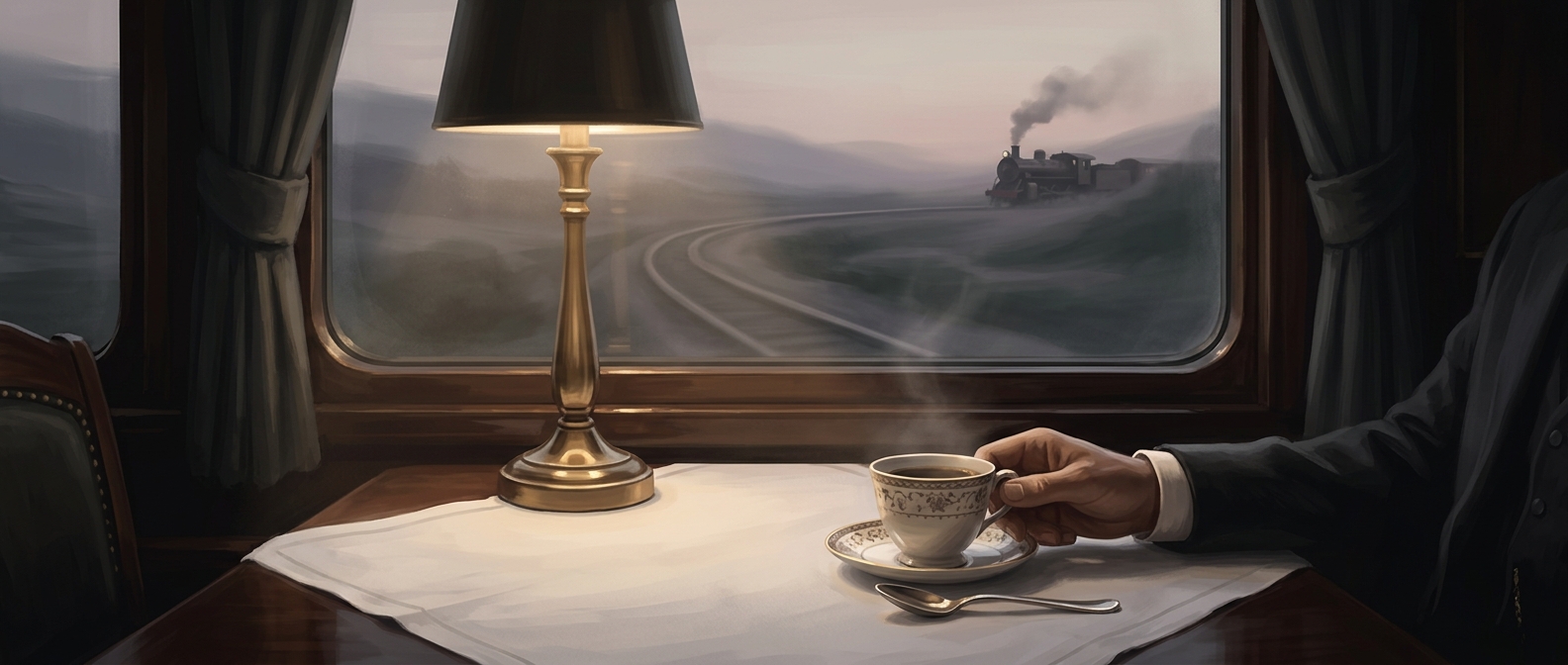
George Pullman’s dining cars changed a train journey by moving the meal—not merely the passenger. Rather than rely on a town’s station stop and whatever food could be found nearby, travelers could sit down to a cooked meal while the train continued along its route. Pullman, whose company became known for its passenger cars, helped establish this model of onboard service.
A Kitchen Had to Work in Motion
Serving a meal on a moving train meant fitting the work of a restaurant into a narrow, rattling car. A kitchen, food storage, and dining tables all had to share limited space, while staff prepared dishes amid vibration and the constant movement of the train. The dining car was therefore more than a room with tables: it was a compact service system built into the train.
That arrangement also changed the rhythm of a trip. Passengers no longer had to make a brief stop do double duty as a chance to find food, eat, and return before departure. The railroad could keep moving, while the meal became part of the journey itself.
A New Expectation for Long-Distance Travel
Pullman’s approach helped make onboard dining a feature of the more comfortable, full-service rail journey. It turned travel time into time for an ordinary activity—sitting down to eat—rather than a stretch to endure between stations. The striking shift was practical: a train could carry not just people to their destination, but the kitchen and dining room needed to serve them along the way.