A Border Crossing Reaches the Café Counter
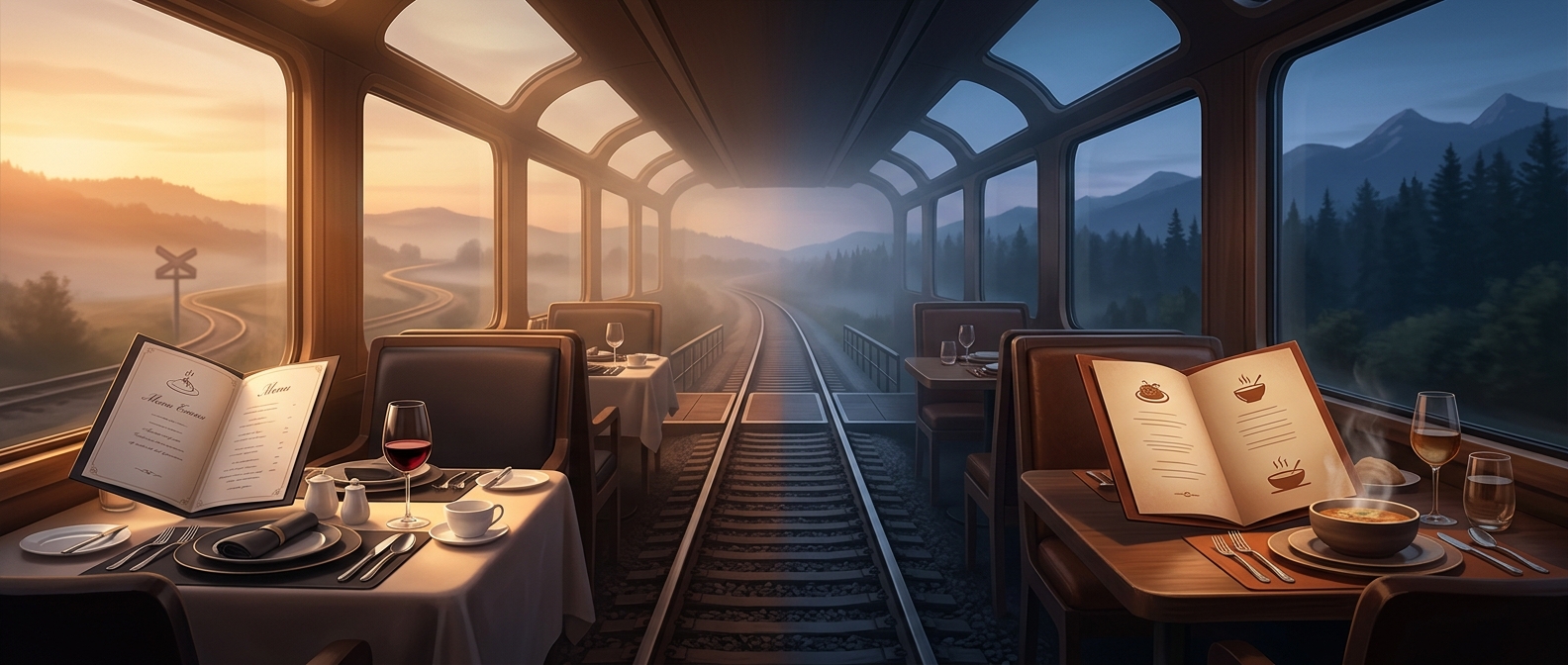
On an international train, the border is more than a line on a map: it can change what a passenger can buy and how much it costs. A café menu that switches currency and snacks makes that shift visible in the middle of an otherwise continuous journey.
The currency change is practical. Once the train is serving passengers in the next country, prices in that country’s money are easier for many customers to understand and pay. For the crew, the change also means handling a different set of prices and, where cash is accepted, a different currency. Card payments can make the handoff less noticeable, but the menu still has to show the amount passengers will be charged.
Stock Has to Travel, Too
The food cannot change as neatly as a price display. Snacks must be loaded before the train departs, so the café’s selection depends on what it carries and how much space is available. A switch to local products may reflect what passengers recognize or what can be supplied for that part of the route. It also means planning quantities: every item takes up limited storage, and whatever is not sold may remain onboard after the train moves on.
That is why the border moment is a small coordination task, not just a menu redesign. Staff need the right products ready, prices presented clearly, and payment handled in the appropriate currency. The transition turns a national change into something passengers can taste—and gives them a practical clue that the train has entered a different everyday world.