Why the table fills up before the main dish
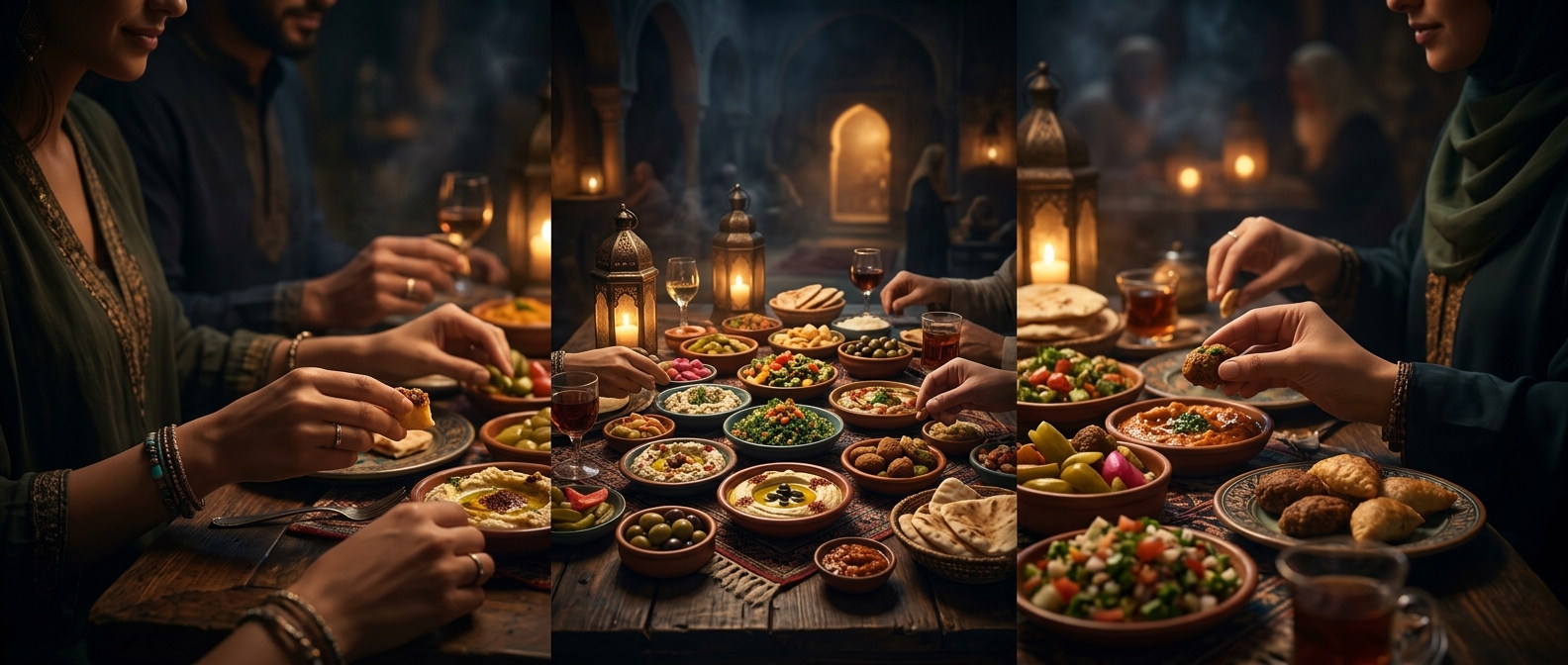
Mezze is less a single course than a way of arranging a meal: many small plates arrive for everyone to share. A table might offer hummus or other dips, olives, pickled vegetables, salads, and cooked savory bites. Diners take a little at a time, often using bread to scoop or accompany the food, while conversation continues around the spread.
That format changes the meal’s rhythm. Instead of waiting for one plated entrée, guests can begin eating as soon as the first dishes arrive. Hosts can bring out plates in stages, and people can sample different flavors without committing to a large portion of any one item.
A starter that can become the meal
The word “before” can be misleading: mezze may precede a larger dish, but it can also make up much or all of the meal. How it is served varies by place, household, and occasion. The shared plates are the point—not a fixed menu or a strict sequence.
That helps explain why a spread intended as an opening can feel so substantial. Each plate adds another taste, and diners keep returning to the table while they talk. By the time a main course appears, the meal has already been underway for a while—and guests may have eaten more than they expected.