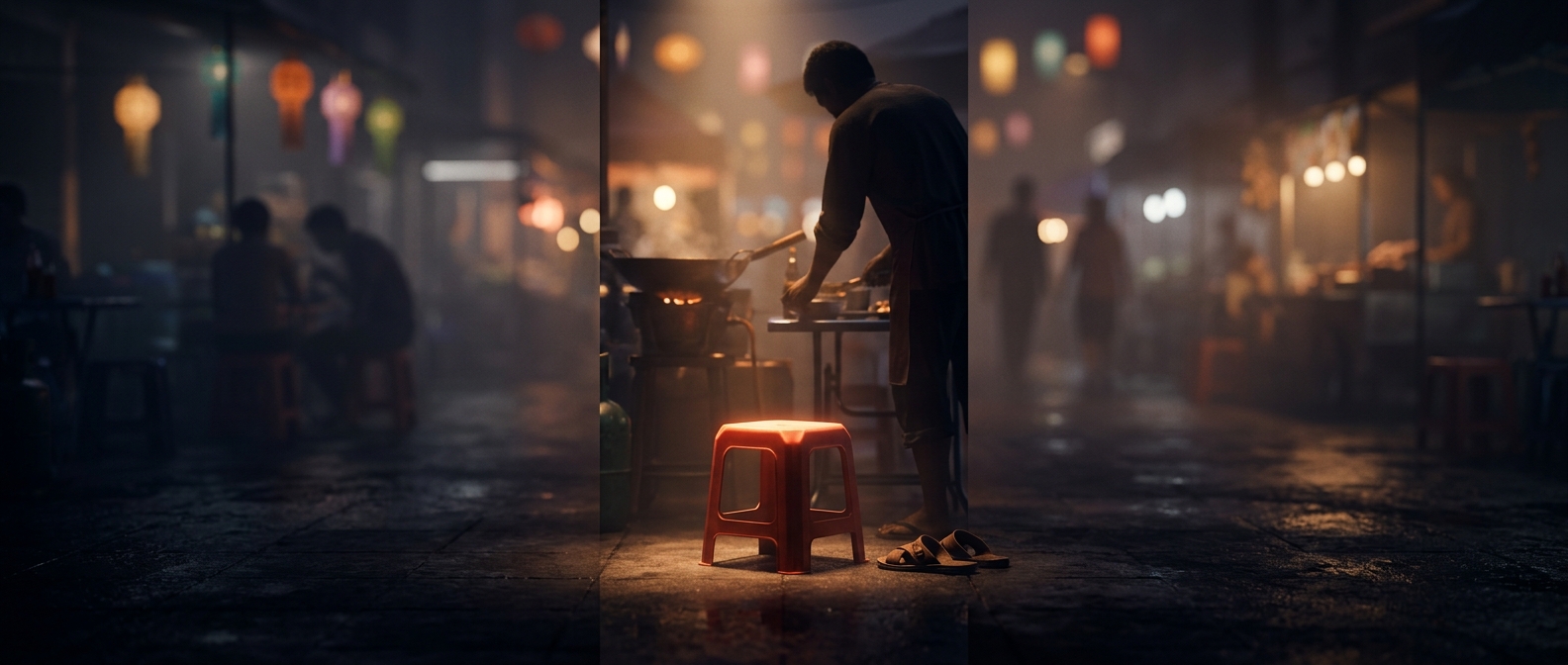
Why Thai Street-Food Seats Stay Small
At a sidewalk noodle stall, a tiny plastic stool is less a miniature version of a restaurant chair than a practical piece of street equipment. It is light enough to move quickly, easy to stack when the stall packs up, and compact enough to fit around a narrow table without claiming much of the pavement.
That footprint matters in a city where a vendor may need to leave room for pedestrians, passing traffic, and neighboring businesses. Small stools let a few customers eat close together in a space that could not accommodate full-size chairs and broad tables. Their bright colors also make them easy to spot in the bustle, but their usefulness is more basic: they are inexpensive, portable, and replaceable.
A Meal Built Around the Curb
The seating shapes the meal. Customers sit low and close to the cooking station, often eating a bowl of noodles soon after it is prepared. The setup favors a short, casual stop over the lingering comfort of a café. When diners finish, the same tight arrangement can turn over for the next customers.
Because the stools are easy to rearrange, a vendor can adapt the seating to the available patch of sidewalk—or clear it when service ends. Their toddler-sized feel is memorable, but it reflects a larger bargain of street dining: make room for a hot, inexpensive meal without needing a permanent dining room.