From Mine Wagons to Main Lines
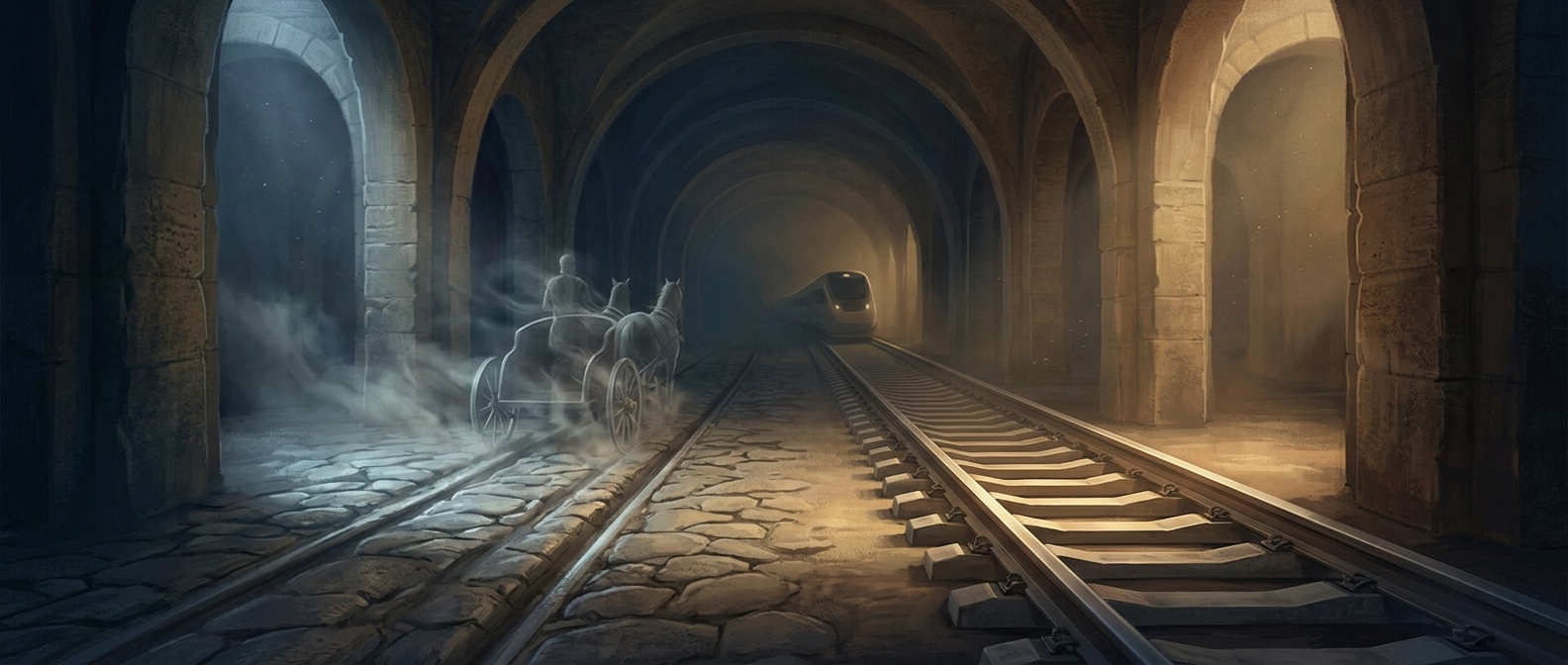
A railway’s gauge is the distance between the inner faces of its two rails. The familiar standard gauge—4 feet 8½ inches—grew out of early English railways, which adapted the spacing used on horse-drawn mine wagons and trackways. Those routes carried coal from pits toward canals and other transport links. Their dimensions reflected practical local equipment and working habits, not a measurement inherited from Roman vehicles.
Once railways began connecting towns and industries, a useful local choice became a network problem. A wagon built for one gauge could not simply roll onto rails set farther apart or closer together. Early lines therefore had strong reasons to copy established track dimensions: doing so made it easier for vehicles and equipment to work across routes, rather than forcing every connection to require a transfer.
How a Local Measure Became a Standard
The spread of railways helped make the English gauge influential beyond its original coal-hauling setting. Later builders often adopted the already common width, while other networks chose different gauges for their own reasons. The result was not one universal measurement but a patchwork in which shared gauge made through-running possible and mismatched gauge could interrupt it.
That practical legacy is visible wherever railways meet: when two lines use different gauges, passengers or freight may need to change trains, or the railway must use specialized equipment to bridge the difference. The distance between the rails began as a working dimension for local transport—and became a lasting constraint on how networks connect.