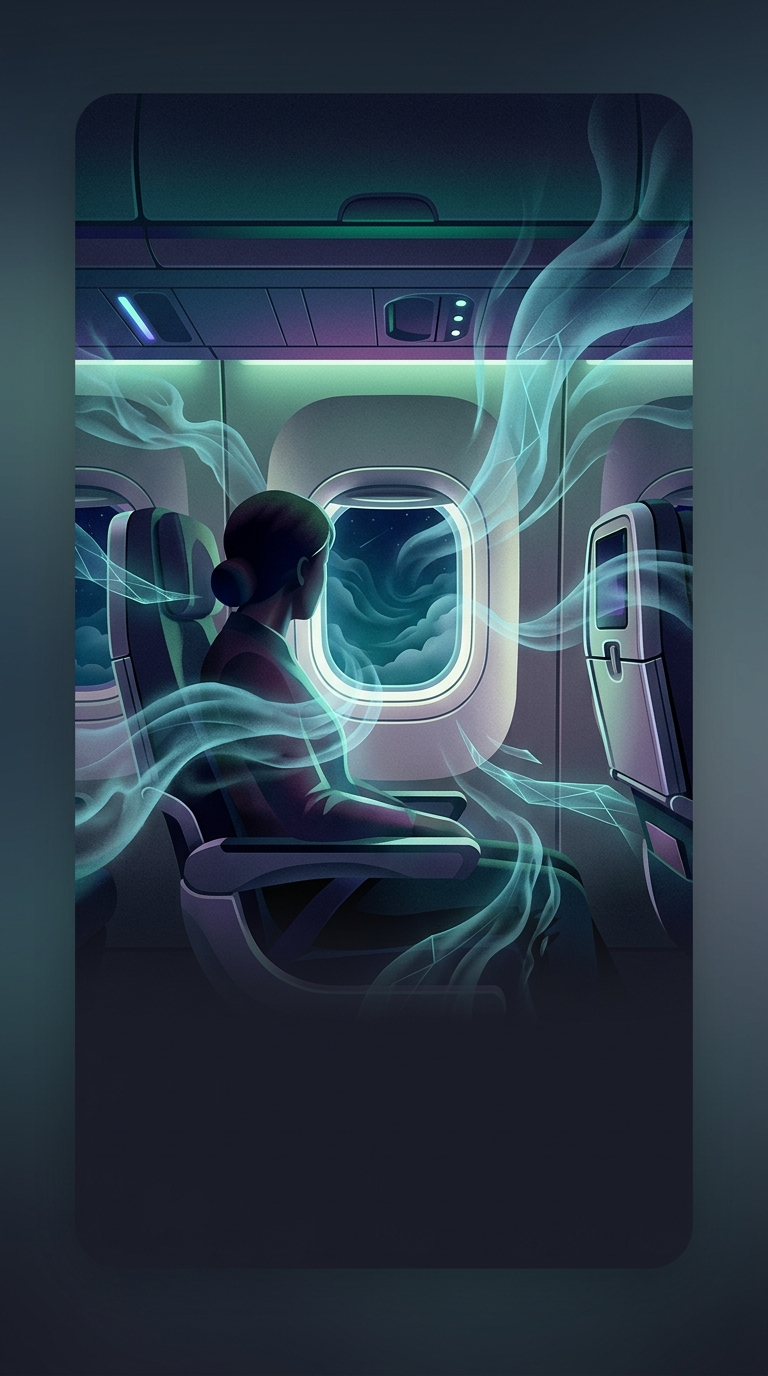
Airplane Cabin Air Is Not Simply Recycled
The misleading assumption is that passengers spend a flight breathing the same stale air over and over. In most commercial aircraft, cabin air is a moving mixture: fresh air is brought in from outside, while some cabin air is recirculated after passing through filters.
That fresh-air supply matters because it continually replaces part of the cabin air rather than letting it sit unchanged. Recirculated air typically passes through high-efficiency particulate air, or HEPA, filters—devices designed to trap very small particles, including many airborne microbes. The filtered air is then mixed with incoming fresh air and returned to the cabin.
What the System Can—and Cannot—Do
Air generally moves through the cabin in sections, entering near the ceiling and leaving near the floor. This helps limit how far air travels along the length of the cabin, though it does not create sealed-off bubbles around individual seats. People nearby can still share air, especially at close range.
So the correction is not that cabin air is untouched by other passengers. It is that “recycled” does not mean unfiltered or endlessly reused. The system continually brings in fresh air and cleans much of the air it recirculates—a distinction that makes the cabin less like a closed room with a fan and more like a space with ongoing air replacement.