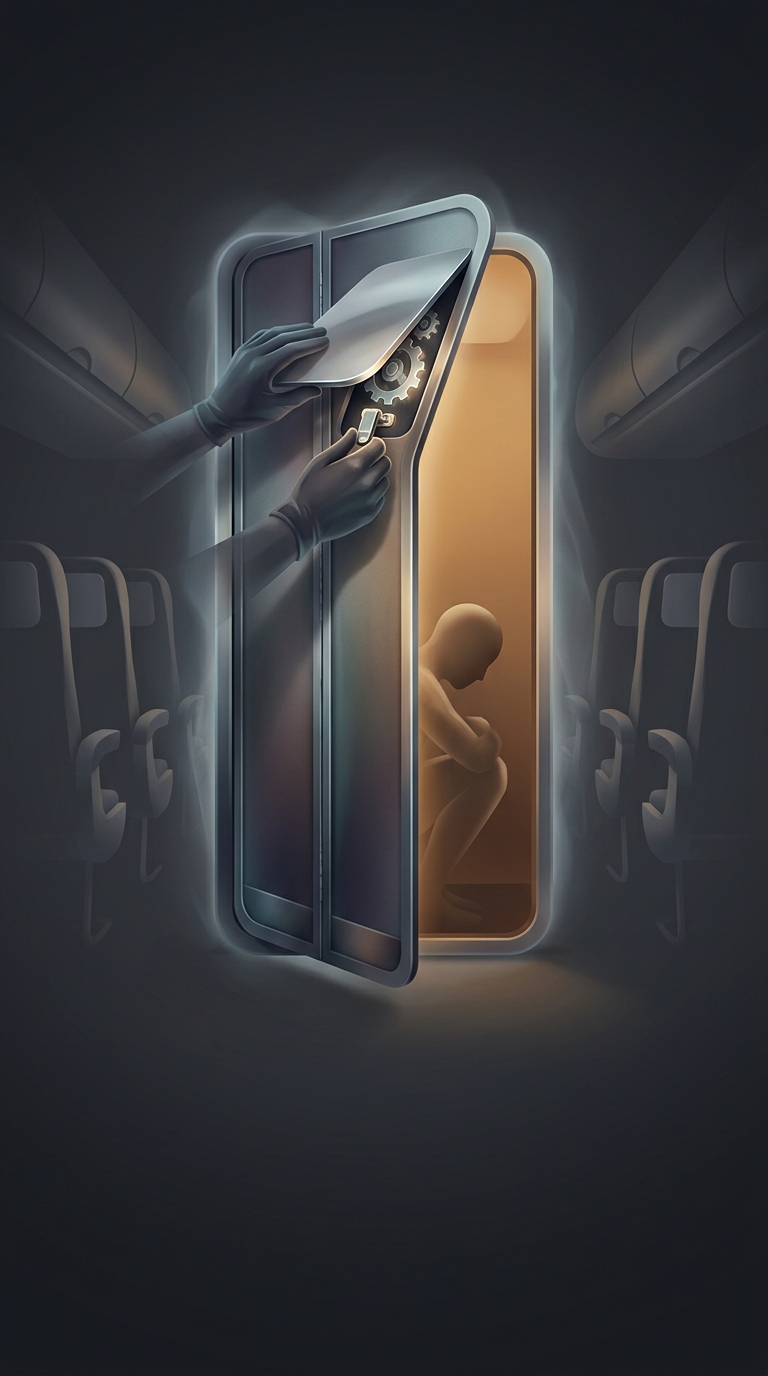
How an Airplane Toilet Keeps Waste Contained
An aircraft toilet uses suction rather than a flush of water like a household toilet. When the toilet is flushed, a valve opens and the pressure difference between the cabin and the waste system pulls the contents through a pipe into a sealed holding tank. The tank stays aboard for the flight; it is not connected to an outlet that releases waste into the air.
After landing, a service truck connects a hose to a dedicated fitting on the aircraft. Ground crews drain the tank and then service the system for its next flight. The distinctive blue liquid helps control odors and sanitize the waste system, but it is not a sign that material is being released during normal operation.
How a Leak Can Create Falling Ice
The alarming reports have a different explanation: a fault in a seal or valve can allow a small amount of liquid to escape. At cruising altitude, exposed aircraft surfaces are extremely cold, so a leak can freeze onto the outside of the plane and build up into a patch of ice, sometimes tinted blue by the deodorizing fluid.
As the aircraft descends, changing temperatures and airflow can loosen that frozen material. If a piece breaks away, it may fall to the ground—an unusual maintenance failure, not a routine way of disposing of toilet waste. That distinction matters: the tank-and-truck system is designed to keep the contents contained, while the rare falling-ice incident begins with containment breaking down.