A bath beside the passing landscape
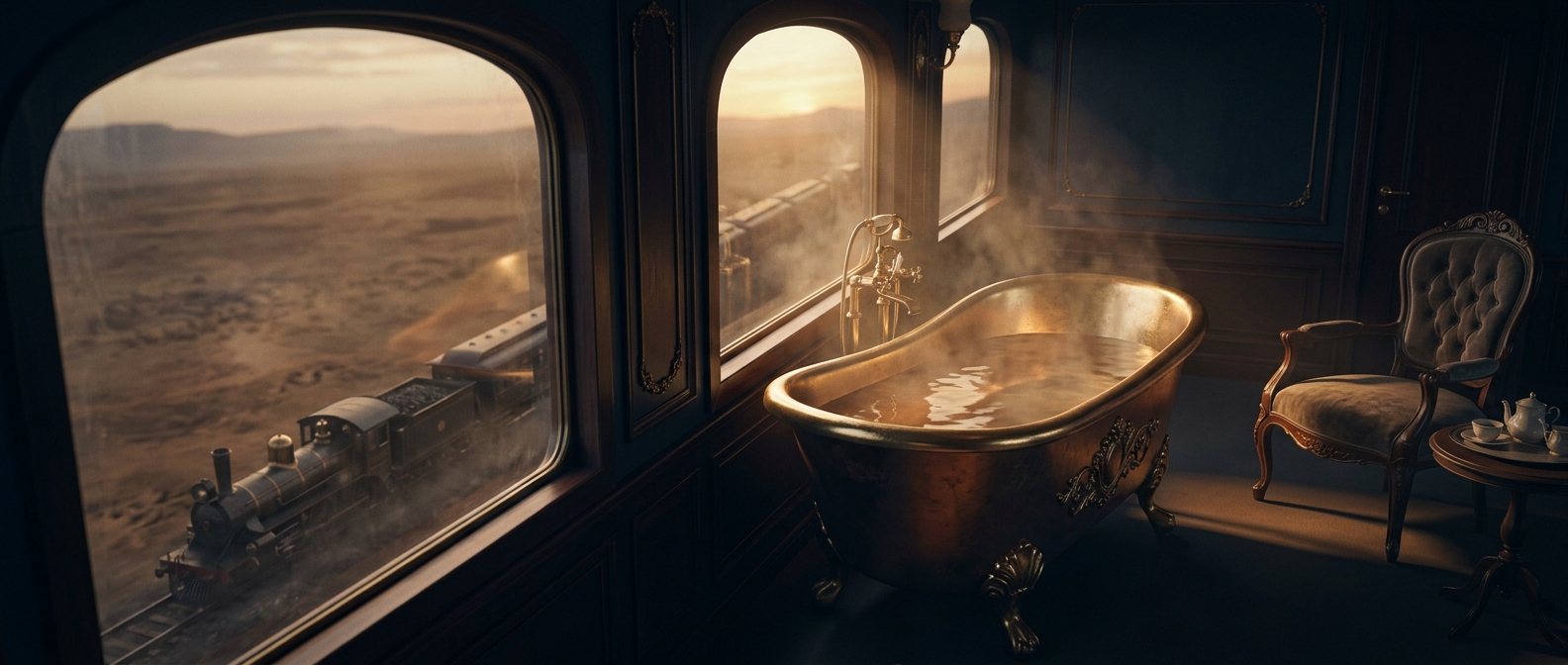
The Blue Train de Luxe turned a private bathroom into a viewing place. Its bathtub let passengers watch the South African landscape slide past—and, when elephants appeared, see them without leaving the train. The appeal was the unlikely pairing: a familiar sign of indoor comfort set against wildlife moving freely outside.
That experience depended on more than a window. A train carriage is a narrow, moving space, so fitting a bath meant making room for a fixed washroom while keeping the rest of the passenger accommodation usable. And the view was never a performance on schedule: elephants could only be seen if they happened to be near the railway as the train went by.
Luxury measured in unusual comforts
The detail captures a particular idea of rail luxury in the 1920s. The journey itself became part of the holiday, with comfort carried along rather than waiting at the destination. A bathtub offered privacy and ease; the window turned the passing countryside into entertainment.
There was also a distinctive contrast in the experience. The passenger could remain warm and settled inside while watching a large wild animal in its own environment outside. The bath did not bring elephants to the train; it made an unpredictable sight possible from a place of unusual comfort. That is what makes the detail memorable: even a routine act of washing could become a way to watch South Africa go by.