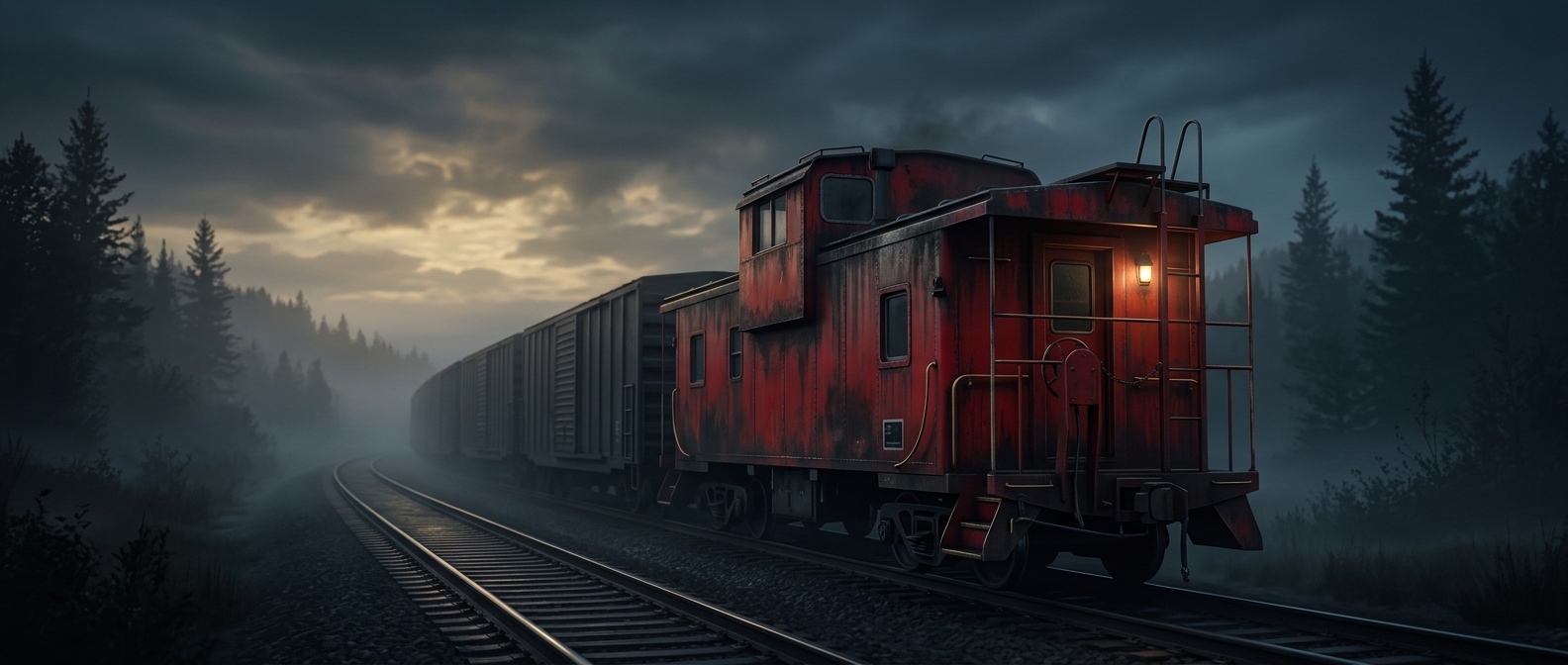
A color chosen for a dirty job
A coal-fired locomotive sent smoke and fine black soot into the air around the train. As the train moved, wind and turbulence carried that grime along the cars, where it could settle on exterior paint. The caboose, exposed to the same conditions as the rest of the train, needed a finish that would not make every coating of soot stand out.
Red helped. Against a dark, saturated surface, black residue was less conspicuous than it would have been on a pale-colored car. That did not keep the caboose clean; it made the dirt less visually obvious between washings and repainting.
Practical color, visible train
The caboose also had a safety role: crew members rode in it and watched the train from the rear. Its color was part of making the car noticeable, while its darker red finish was practical in the grimy world of coal-era railroading.
So the paint served two everyday needs at once: it helped the caboose stand out as a railway car without advertising every trace of soot. The result was a familiar bright-red car whose appearance was shaped as much by maintenance as by visibility.