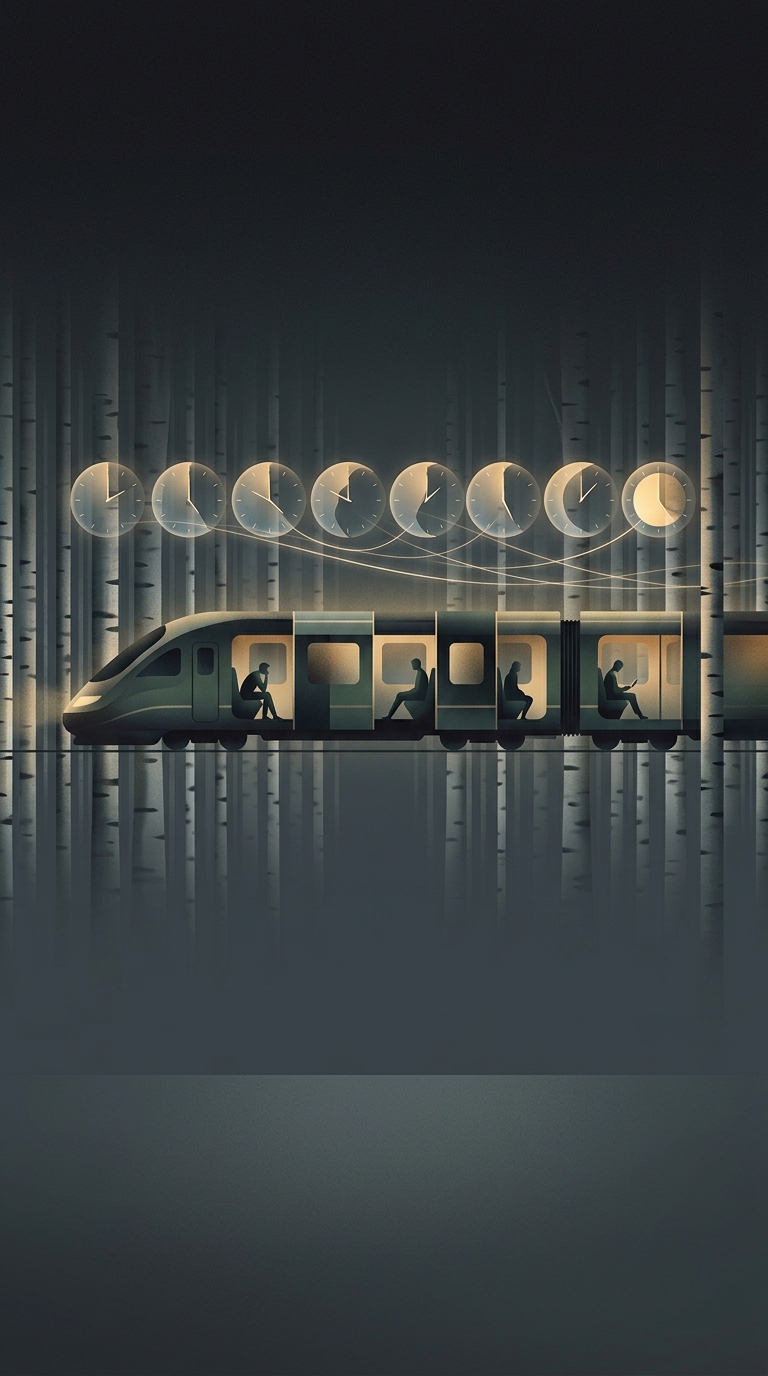
A railway built to make distance traversable
The Trans-Siberian is not one uninterrupted wilderness crossing. It is a working railway linking Moscow with cities and towns across Russia, carrying passengers through changing landscapes and inhabited regions. Its route runs east across the Urals and Siberia before reaching the Pacific coast at Vladivostok. That continuous line turns a distance that would be difficult to cover overland into a journey with a bed, meals, and regular stops.
The train becomes a small moving world
On a week-long trip, the railway’s rhythm matters as much as the scenery. Stations interrupt long stretches of travel, giving passengers brief chances to step onto the platform, buy food, or stretch before the train moves on. Inside, shared sleeper compartments make privacy scarce: luggage, bunks, and the routines of several travelers occupy the same small space. The practical bargain is simple—less personal room in exchange for carrying what you need across a vast distance without changing trains.
Watching the country change
The route’s appeal lies partly in how gradual the change is. Forest, open land, settlements, and major stops pass outside the window not as a quick succession of tourist sights but as the everyday geography of a continent-sized country. Each hour adds another small piece to the experience, while the train’s repeated routine makes the scale tangible. By the time the Pacific appears at the journey’s end, the distance has been measured not only in miles, but in days spent living aboard the railway.