Why a planet appears to turn around
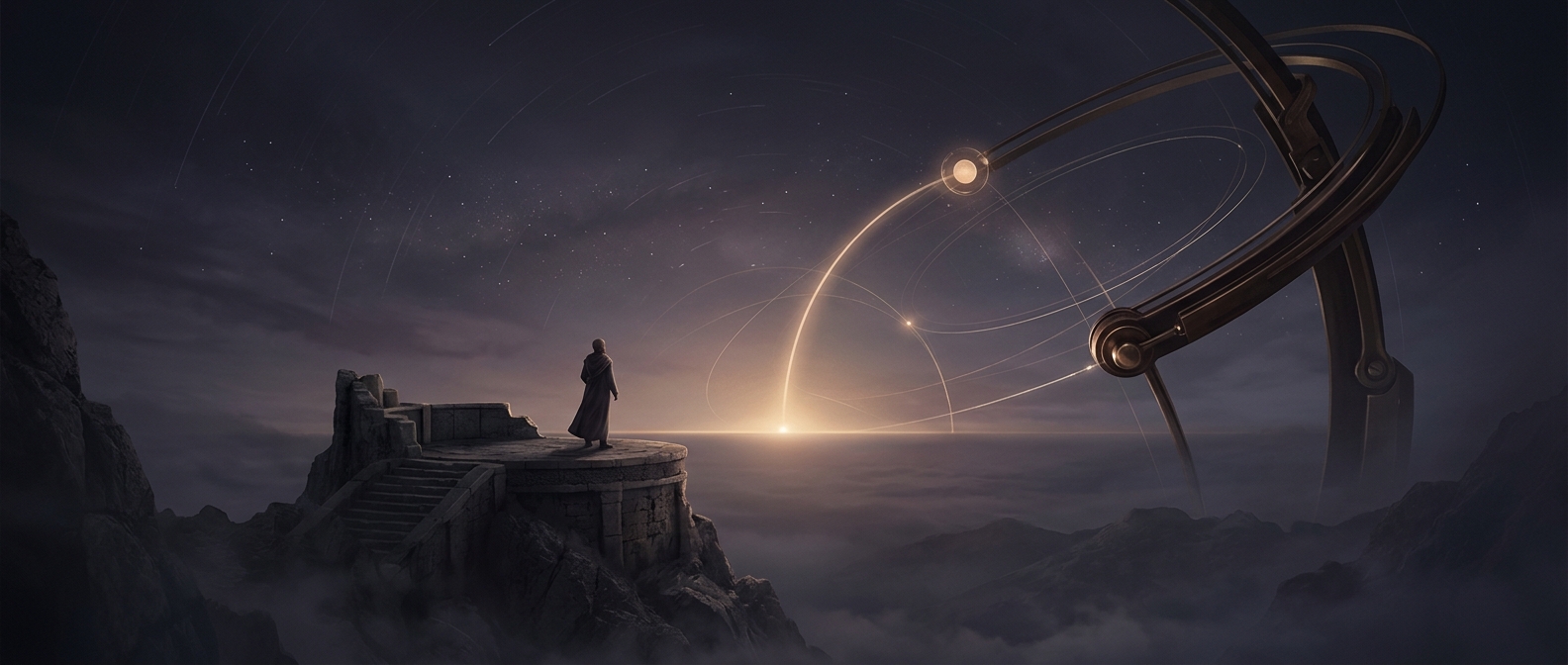
Retrograde motion is a change in viewpoint, not a planet physically reversing course. As Earth and the other planets travel around the Sun at different speeds, their positions shift against the distant stars. When Earth draws level with an outer planet and moves past it, that planet can appear, night by night, to drift backward before resuming its usual direction. The same kind of apparent reversal occurs when an inner planet’s changing position makes it seem to loop against the stars.
The effect unfolds over days or weeks, so it can look like a distinct phase in the sky. That visible pause-and-reversal is the pattern astrology uses as a symbol.
From a sky pattern to a planning metaphor
In astrology, retrograde periods are commonly treated as times when ordinary forward momentum may falter. A delay can be read not just as an inconvenience but as a prompt to revisit a decision, unfinished business, or a plan that needs adjustment. The interpretation gives a recurring celestial pattern a role in everyday life: it becomes a calendar for caution and review.
That symbolism does not mean the planet’s apparent motion mechanically causes a missed appointment or a stalled project. It describes an astrological framework for interpreting timing. The memorable contrast is between the sky’s orderly geometry and the human experience of having to retrace a step before moving on.