How a House System Becomes the Standard
In astrology, a house system is a method for dividing a birth chart into twelve sections, or houses. Different systems can place the boundaries differently, so the same planet may fall into a different house depending on the method used. Placidus became influential not because its time-based calculations were proven superior, but because its results were made widely available.
Printed Tables Turned a Method into a Habit
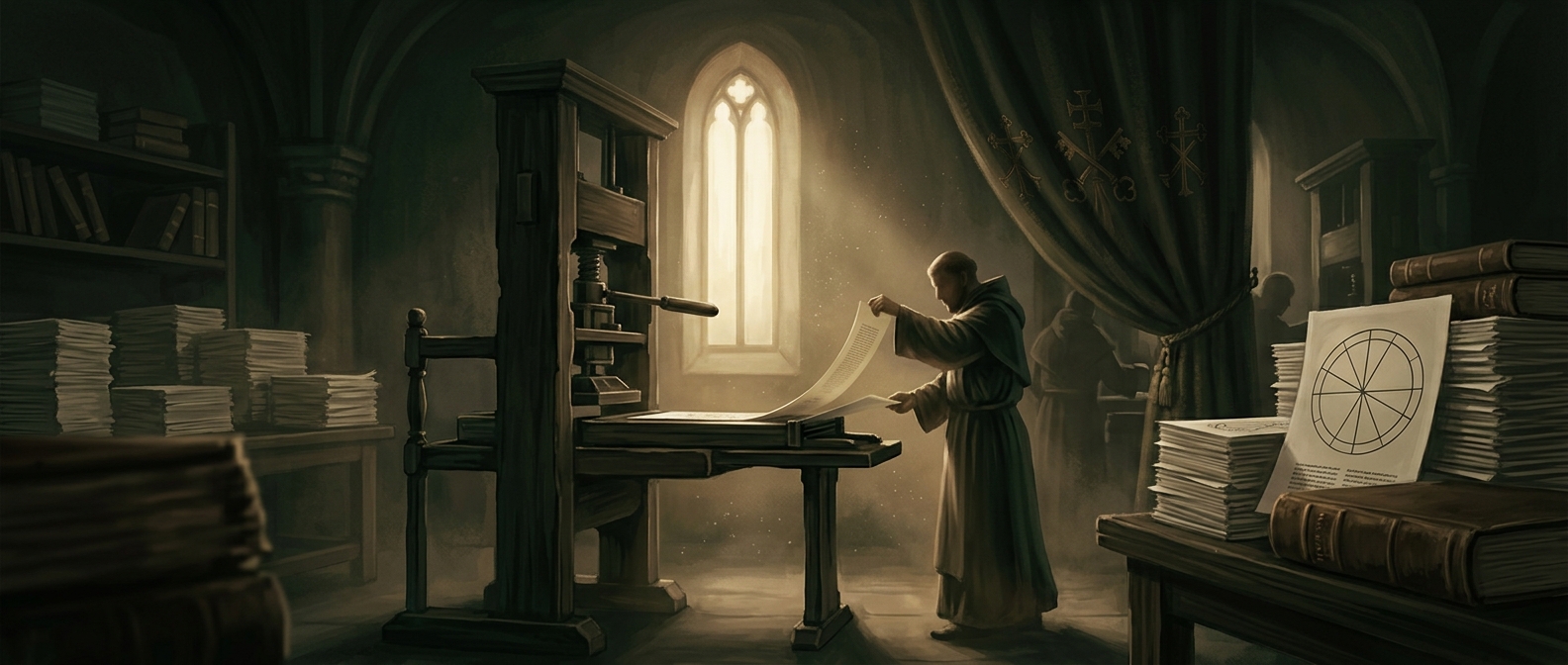
Calculating house cusps—the boundaries between houses—by the Placidus method depended on time-based calculations. Printed tables and almanacs let astrologers look up or derive those boundaries without having to work everything out from scratch. In an era when the Catholic Church held strong control over printing and distribution, access to those publishing channels could give one system a practical advantage over more than 30 alternatives.
Once astrologers had Placidus tables in hand, they could use the method consistently and teach it to others. That made it easier for later books and practitioners to build on the same conventions. Availability created familiarity, and familiarity encouraged further use—a cycle that can make a technical choice feel like the natural default.
The result was a standard shaped as much by the reach of printed tools as by the mathematics behind them: a house system could spread because it was convenient to consult, not because every astrologer had concluded it was the best one.