How Printed Tables Helped Placidus Spread
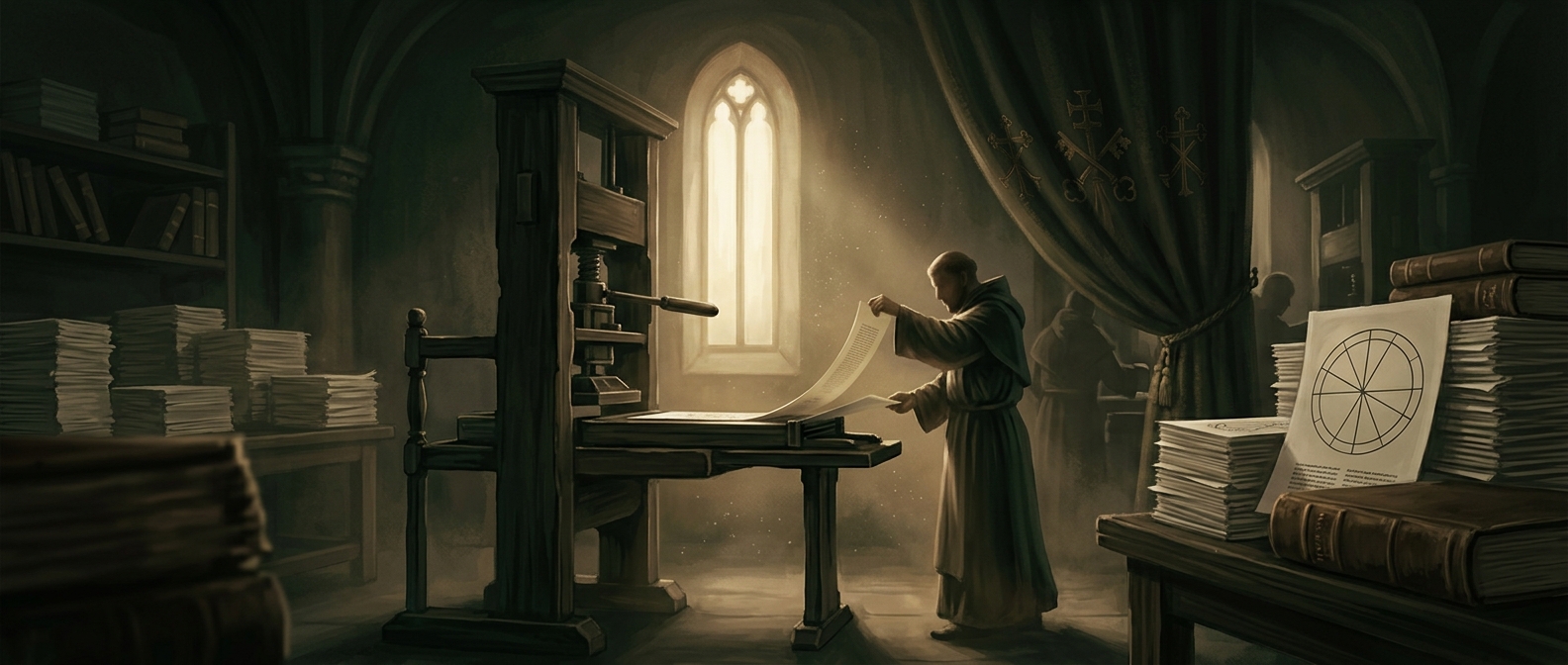
An astrologer working before calculators needed more than a chart of the planets. To place planets into astrological houses, the astrologer also needed to calculate the house boundaries—called cusps—for a particular birth time and location. Printed tables turned much of that work into lookup: find the relevant entries, then make a smaller set of calculations by hand.
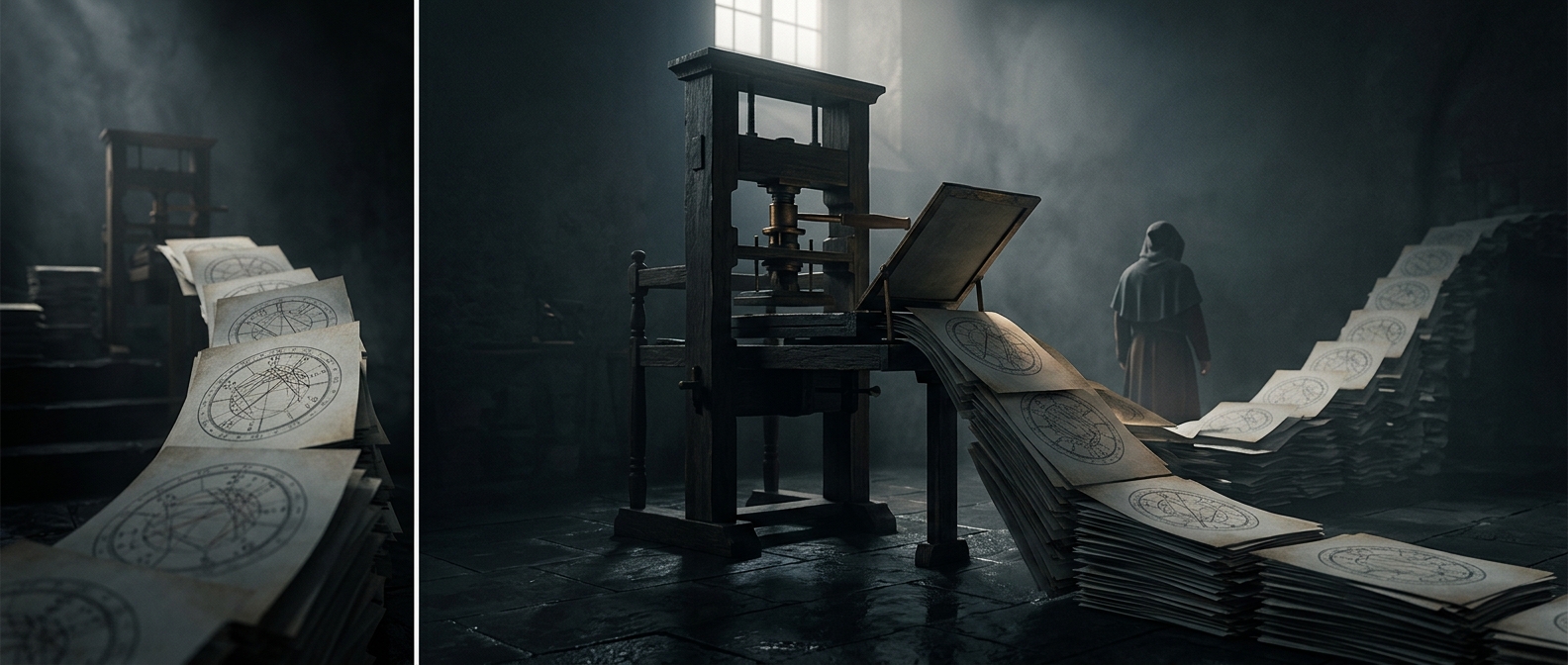
Placidus was one system for dividing the sky into houses, and its tables circulated widely in nineteenth-century almanacs. If those tables were cheaper to produce in usable form than comparable tables for competing systems, publishers had a practical reason to print them. More copies meant more astrologers could use the method without calculating every chart from scratch.
Availability Became a Habit
That convenience could reinforce itself. Students learned the system their teachers and manuals used; astrologers encountered it in the reference books available to them; and publishers had reason to keep supplying a format readers already knew. The printing press did not establish that Placidus was astrologically truer. It helped make the system easier to obtain and use, giving it an advantage that could persist through custom and instruction.
House systems are different rules for mapping the sky onto twelve chart sectors, so choosing one can change which house a planet occupies. Placidus’s history is a reminder that a method’s prominence may reflect not only its ideas, but also the cost and convenience of reproducing the tools people need to apply it.