A Life Told Through Solitude
Mary of Egypt is remembered in Christian tradition as a woman who withdrew into the desert and lived there alone for about forty years. The story is not a modern biography: it comes from a religious life, a form of writing that recounts a holy person’s life to teach a spiritual lesson. Its details are therefore best understood as part of a tradition about repentance and transformation.
What the Desert Meant
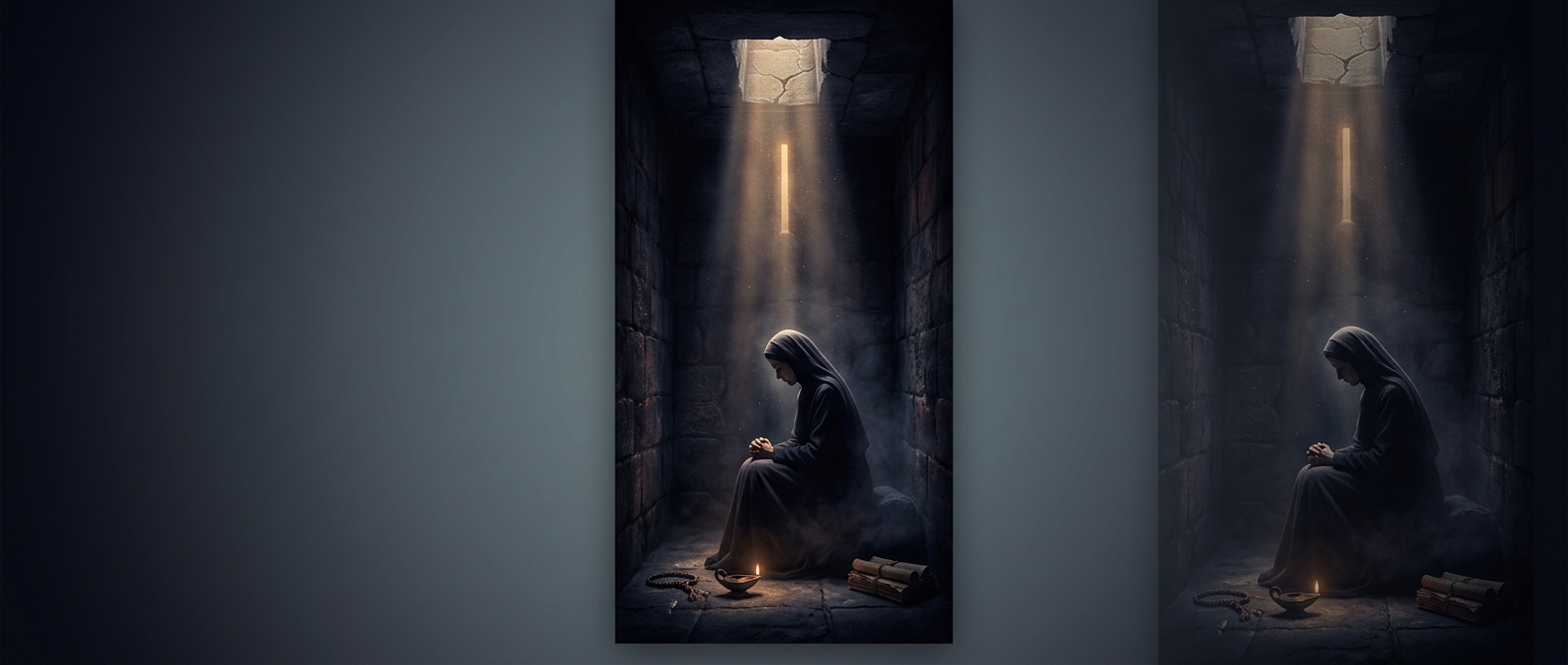
In the story, Mary’s isolation follows a dramatic change of direction. She leaves ordinary society and enters a harsh landscape where food, shelter, and human company are scarce. The desert is more than a backdrop: in Christian ascetic practice, withdrawal from daily comforts was a way to devote oneself to prayer and confront habits that had shaped one’s life. Asceticism means deliberately giving up comfort or pleasure for a religious purpose.
The account presents her long solitude as the consequence of that commitment. It does not describe a social experiment or a practical survival plan; it frames endurance in spiritual terms. That distinction matters because the story’s point is not simply that a person can survive alone, but that a life understood as disordered can be redirected through sustained discipline.
Why the Story Endured
Mary’s tale became memorable because it makes repentance visible: a change of heart is expressed through a life radically unlike the one she had left behind. The forty years also give the transformation a scale that ordinary anecdotes cannot. In the tradition, solitude is not an escape from responsibility so much as the setting in which her new devotion becomes the central fact of her life.