The 297 years that supposedly never happened
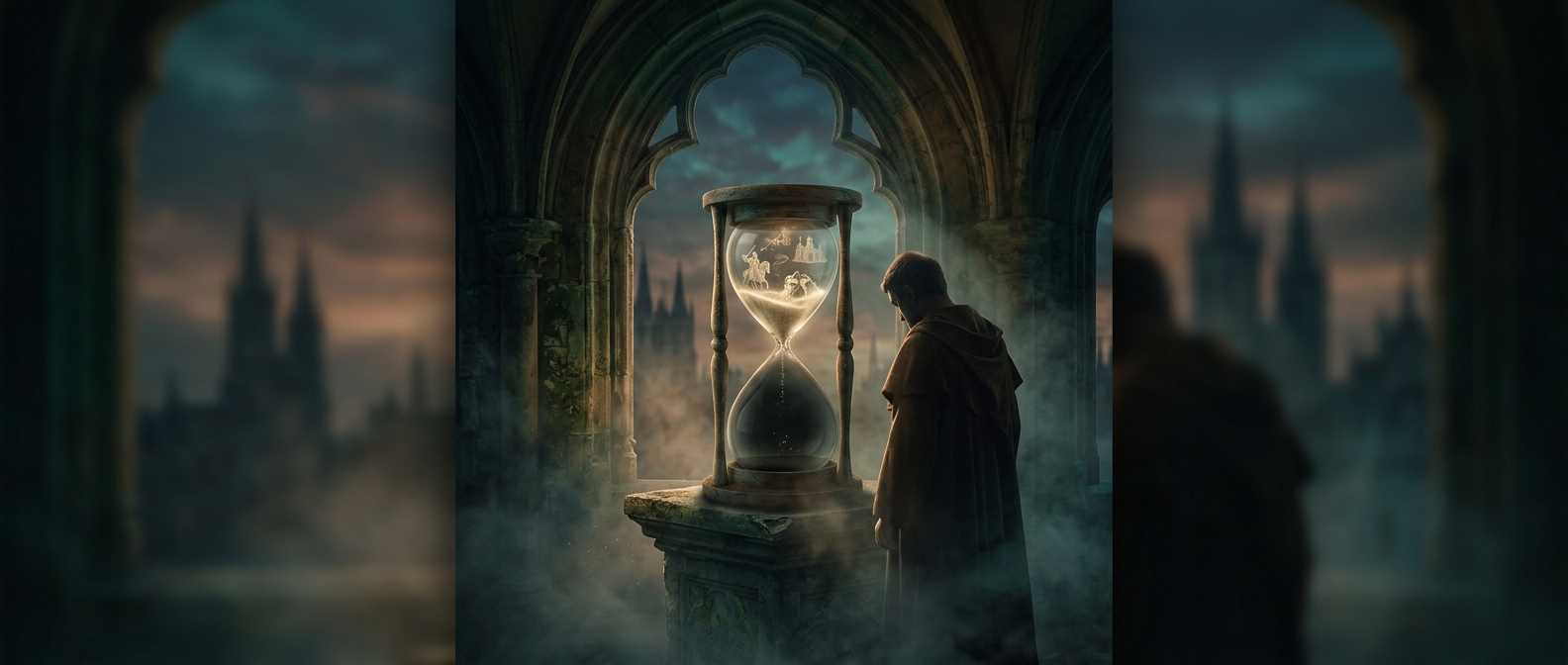
The “phantom time” theory was proposed by German historian Heribert Illig. He argued that roughly 297 years—from 614 to 911—were inserted into the historical record, making the calendar centuries ahead of its true course. On that arithmetic, the year 2000 would really have been about 1703.
Illig’s proposed plot centered on Holy Roman Emperor Otto III, who ruled near the end of the disputed period, and Pope Sylvester II. In the theory, they arranged to rewrite the chronology so Otto could claim to rule at the millennium. The alleged motive was legitimacy: placing his reign at a moment with powerful religious significance would make his authority seem ordained by history.
Why the calendar alone cannot settle it
The theory draws attention to a real complication: calendars have not always matched the astronomical year exactly. When the Gregorian calendar replaced the Julian calendar in Catholic Europe in 1582, it corrected a drift that had accumulated over centuries. But that adjustment does not imply that centuries were added to history. It was a change in how dates were counted, not evidence that generations of events were invented.
To establish a missing interval, historians would need more than a suspicious-looking calendar. They compare written records from different regions and traditions, and check them against physical evidence such as dated objects, buildings, and astronomical events. These lines of evidence fit the disputed centuries into a continuous chronology; they do not leave a 297-year gap.
A theory tested against many clocks
A coordinated forgery would have had to alter records and material traces across societies far beyond Otto’s reach, including accounts that did not depend on his court. The proposed “phantom” years also contain observable events whose dates can be checked against astronomical cycles. Those independent cross-checks make the theory an intriguing challenge to think through, but not a credible replacement for established chronology: the Middle Ages were not skipped, and the present is not secretly in the 1700s.