A machine imagined as a historical receiver
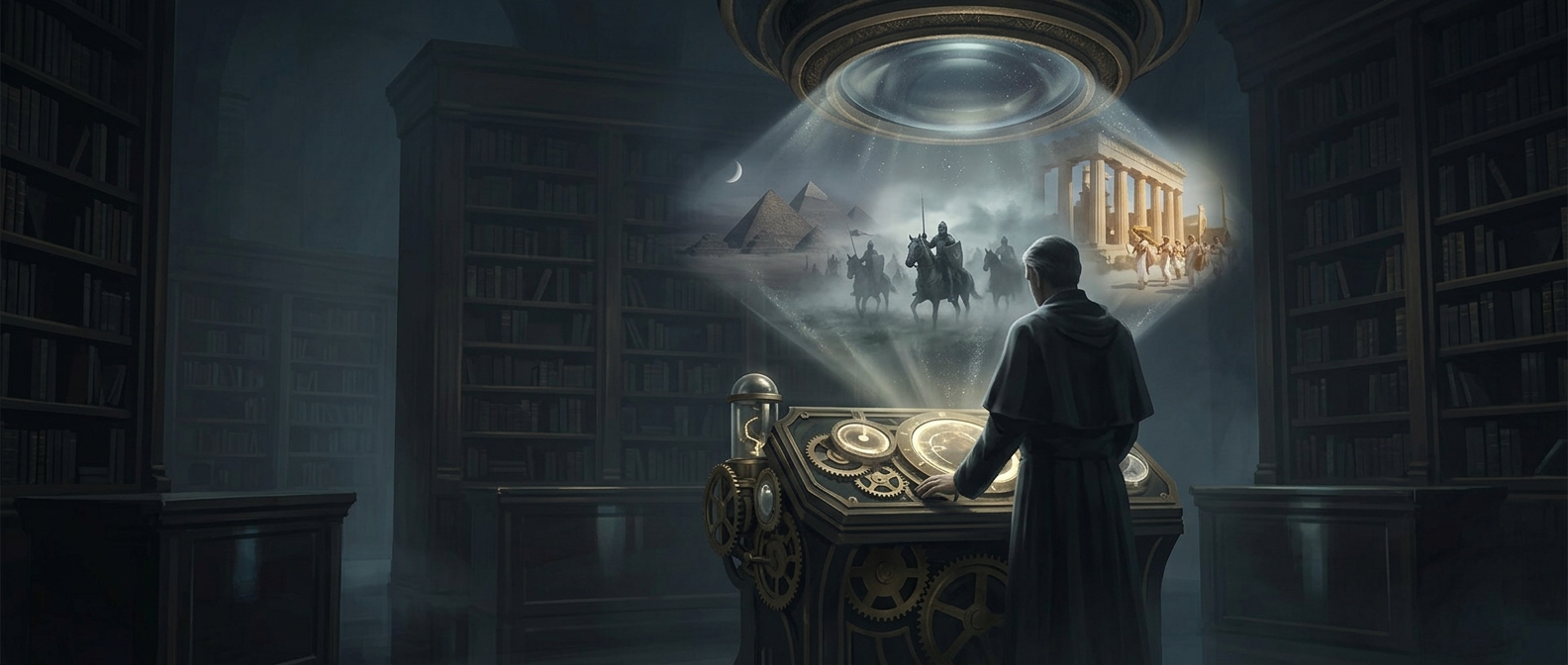
Father Pellegrino Ernetti, an Italian Benedictine monk, described the Chronovisor not as a vehicle that carried people through time but as a device that could “tune in” to the past. In his account, events left behind signals that the machine could detect and reconstruct as sound and images—rather like a radio receiving a transmission, except the broadcast was supposed to come from history.
That idea offered a striking answer to a difficult question: if the past cannot be revisited, could it at least be observed? Ernetti said the instrument let its operators witness past events, including episodes from the life of Jesus. The claim depended on an extraordinary premise: that traces of an event persist in a form a machine can recover and turn into a scene.
The missing device
Ernetti said he had worked with other scientists to build the Chronovisor, but he did not provide blueprints or a working instrument that others could inspect. Without those, there was no way for independent researchers to test how it supposedly detected historical signals, separated one event from another, or converted them into recognizable images and voices.
That gap is central to the story. A time machine that can be demonstrated invites replication; a machine known only through its creator’s account remains an intriguing claim. The Chronovisor’s lasting appeal lies in the image it gave to an old human wish: not merely to learn what happened, but to look in on the past as if it were still unfolding.