Four elements, twelve signs
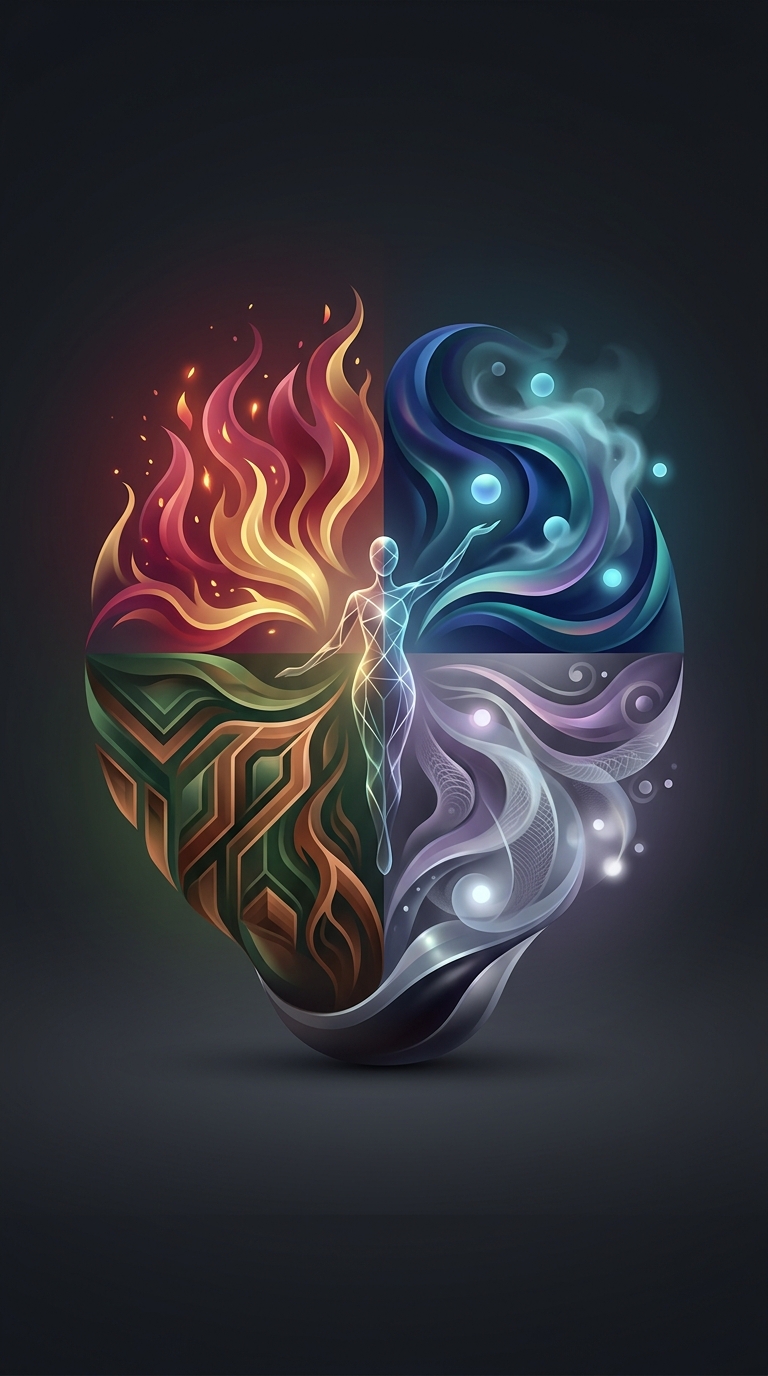
In Western astrology, the four elements are a way of sorting the zodiac’s twelve signs into four groups of three. Aries, Leo, and Sagittarius are fire; Taurus, Virgo, and Capricorn are earth; Gemini, Libra, and Aquarius are air; Cancer, Scorpio, and Pisces are water. Astrologers use these groups as broad temperamental patterns: fire suggests energy and initiative, earth steadiness and practicality, air thought and exchange, and water feeling and responsiveness.
The assignment works as a symbolic vocabulary, not a separate prediction for each person. A sign’s element offers one lens within a larger chart, which also considers such factors as the planets and their positions.
Greek ideas behind the scheme
The framework draws on ancient Greek natural philosophy, which described the physical world through four basic elements: fire, earth, air, and water. Greek medicine developed a related theory of bodily fluids, or humors—including blood, phlegm, and yellow and black bile—and connected health and temperament with their balance.
These were linked ways of making sense of nature and the body, but the elements were not simply four bodily fluids under different names. Over time, astrological traditions brought the elemental scheme into their own system of classifying signs and character.
From nature to temperament
The appeal of the scheme is its compactness: a familiar image of fire, soil, wind, or water becomes shorthand for a style of responding to life. “Earth,” for example, suggests attention to what is tangible; “air” points toward ideas and communication. The old medical language helps explain why these categories came to seem like descriptions of temperament as well as of the natural world.
That inheritance is why an astrological element can sound both cosmic and personal: it joins a sign to an ancient attempt to explain how the world—and the people in it—fit together.