What celestial advice meant in a Mongol campaign
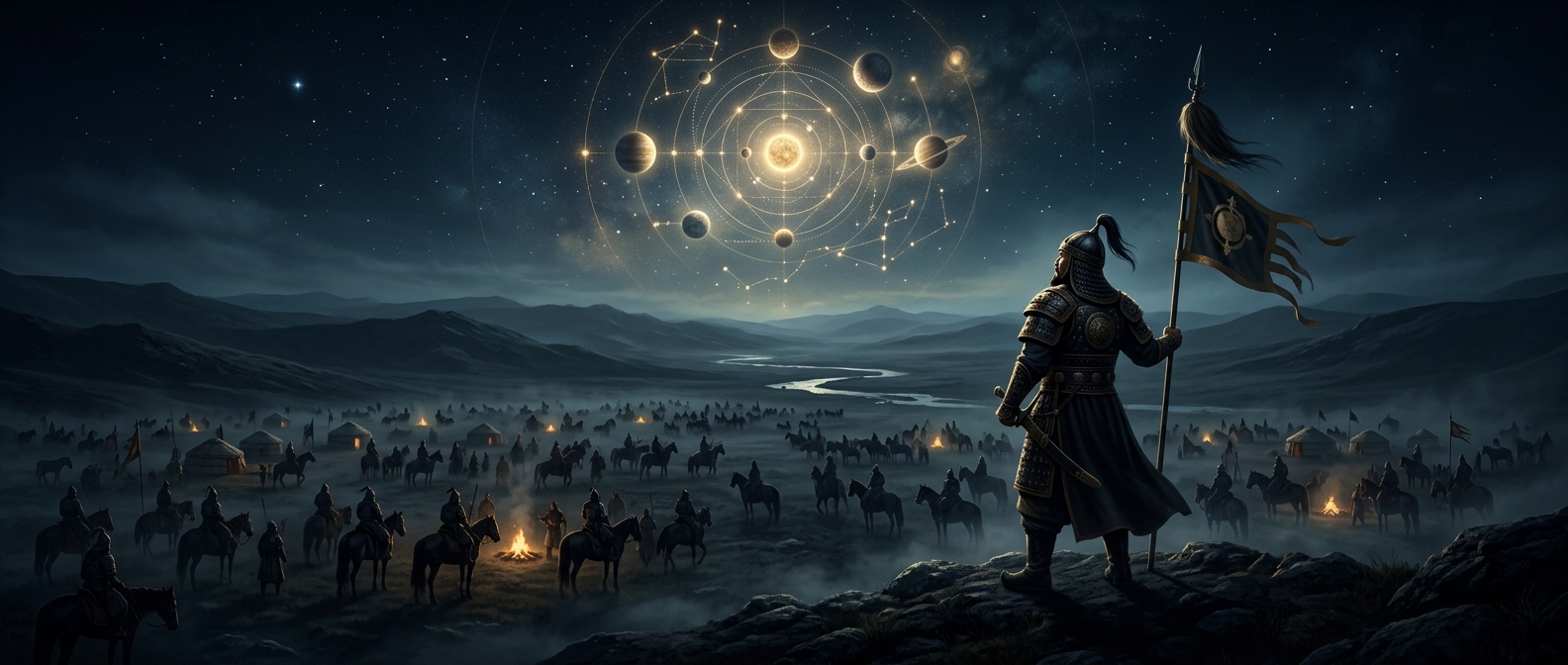
Reports that Genghis Khan traveled with an astrologer point to a world in which political and military decisions could be read alongside signs from the sky. For Mongols, the sky was not merely a clock: belief in Eternal Heaven gave celestial order spiritual significance. An astrologer or diviner could interpret what that order seemed to say about timing, danger, or a ruler’s prospects.
That did not make astrology a substitute for command. Mongol campaigns depended on decisions about routes, supplies, weather, horses, and the movements of opposing armies. Celestial counsel, where sought, belonged among the ways a ruler might judge a moment—not a mechanical rule that could calculate a guaranteed victory.
Why timing mattered beyond the stars
A campaign could be delayed for practical reasons that also made a chosen date feel auspicious. Armies needed workable conditions for moving people and horses; scouts needed information; commanders needed to coordinate forces over long distances. Waiting could improve those conditions, while an interpretation of omens could give a decision religious weight and help present it as aligned with a larger order.
The striking idea is not that the planets made battle safe. It is that, in Genghis Khan’s world, choosing when to act could involve both earthly intelligence and a search for signs above. A favorable moment had to make sense on the ground as well as in the heavens.