A prediction could become a test of loyalty
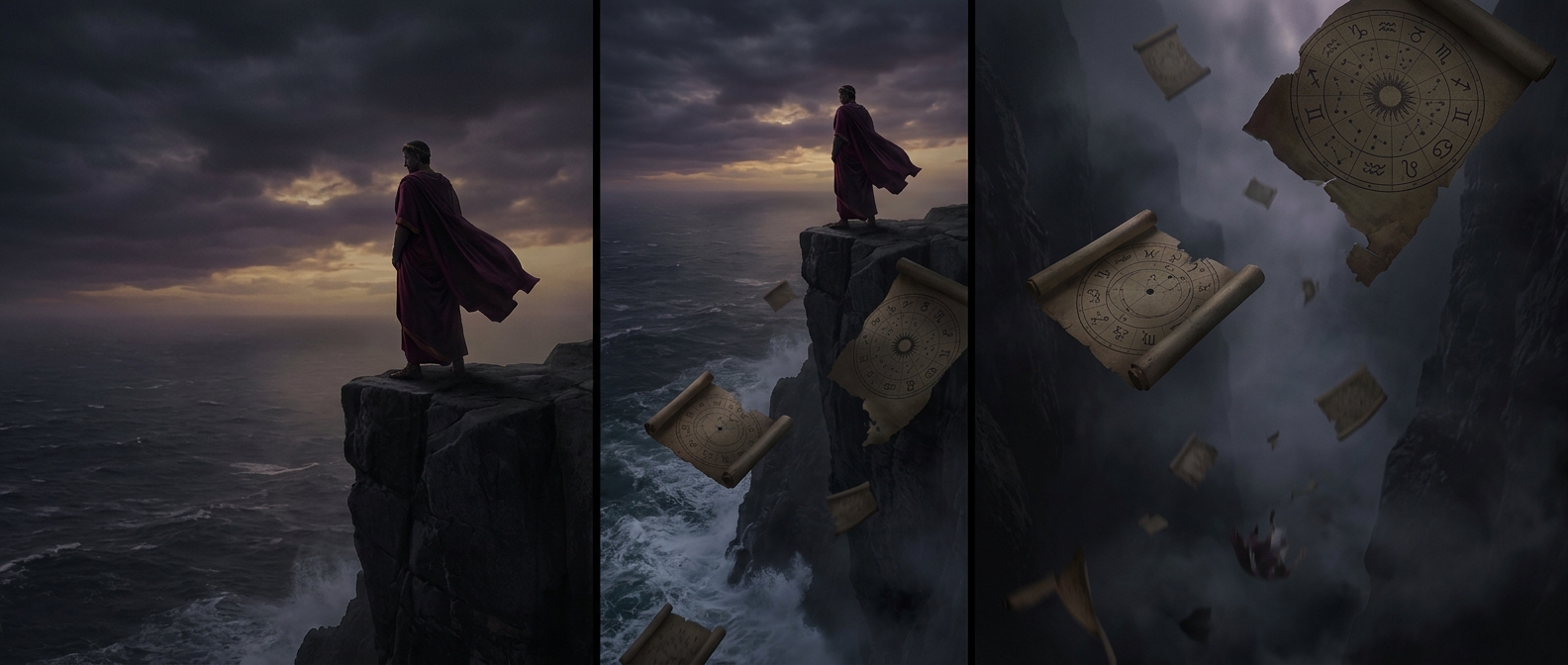
The story of Tiberius and the astrologers on Capri turns a courtly pastime into a matter of life and death. In the account, the emperor did not merely ask what the stars foretold: he tested whether astrologers could tell him what he wanted to hear. A prediction that failed to flatter him could be treated as a failure of judgment—with a fatal consequence.
That threat changed the astrologer’s task. A forecast had to sound persuasive, but it also had to avoid displeasing the ruler. Vague language might offer room to reinterpret a prediction later; too much confidence could make an error impossible to explain away. Under Tiberius, the tale presents, even uncertainty had to be managed carefully.
Why the setting mattered
Capri was not simply a scenic retreat. Tiberius ruled the empire while living there, and people seeking influence or favor had reason to pay attention to his moods. Astrology offered a way to speak about the emperor’s future without treating it as ordinary political advice. That could make an astrologer useful at court—and vulnerable there too.
The cliff story is best understood as an ancient report about the dangers of serving an unpredictable ruler, not as a dependable record of a routine procedure. Its lasting force lies in the predicament it describes: when a powerful person demands a favorable forecast, the person asked to predict the future may be judged less on accuracy than on whether the answer pleases.