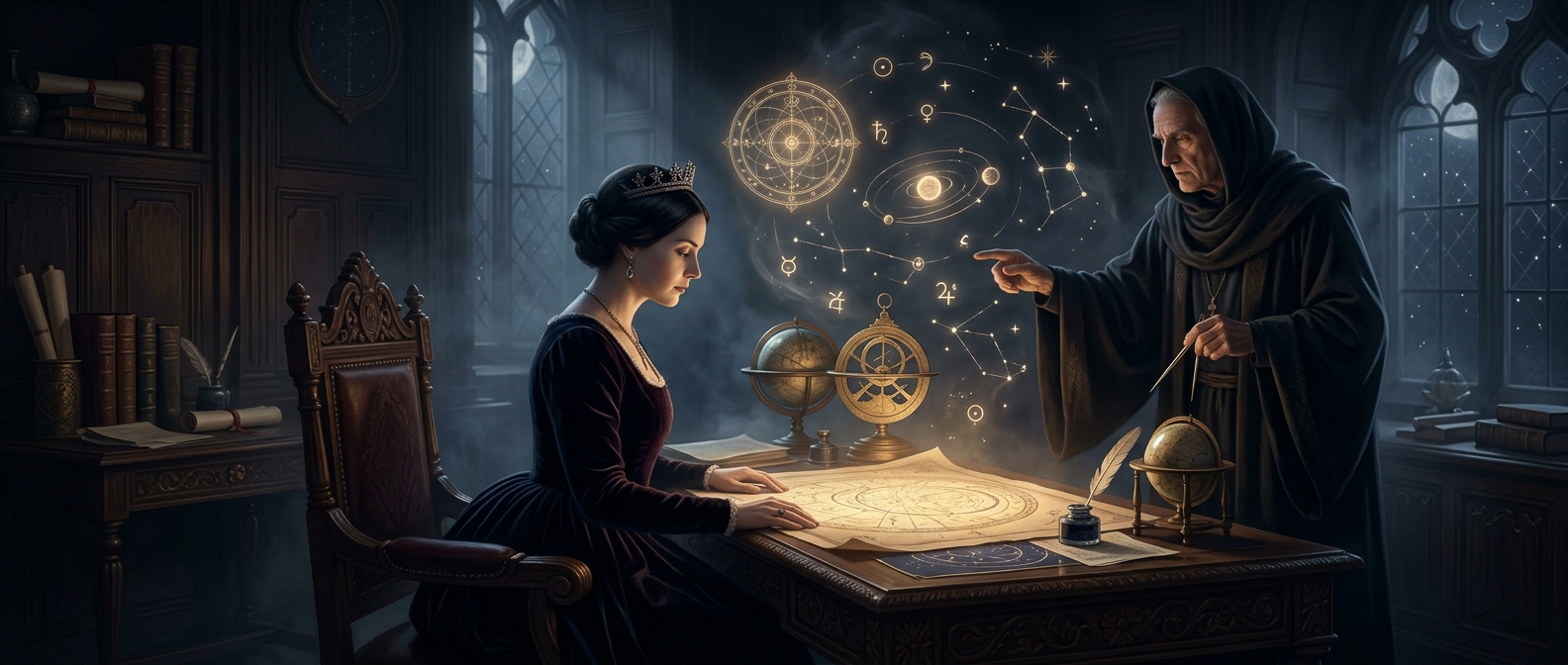
Astrology at the royal household
Keeping an astrologer on the payroll suggests more than a passing curiosity: it made astrological counsel an ongoing part of the Queen’s private world. An astrologer typically interpreted the positions of the Sun, Moon, and planets in relation to a person’s birth or a particular moment, using those patterns to offer guidance. The practice supplied a personal lens for thinking about character, timing, and uncertainty—questions that formal government could not settle.
Industry and the occult coexisted
The Victorian era’s reputation for machinery, measurement, and practical reform can make royal interest in astrology seem contradictory. But industrial change did not erase older spiritual and symbolic ways of making sense of life. People could value scientific and administrative methods in one setting while turning to astrology or other esoteric practices in another. Those approaches served different needs: one sought to measure and manage the material world; the other offered meaning or counsel in matters that felt unpredictable.
The intriguing detail is the contrast inside the royal household itself: the age of industrial logic also left room for a paid astrologer. That does not show that astrology guided Victoria’s public decisions, but it does reveal that modernity and mysticism were not always competing sides of a single choice.