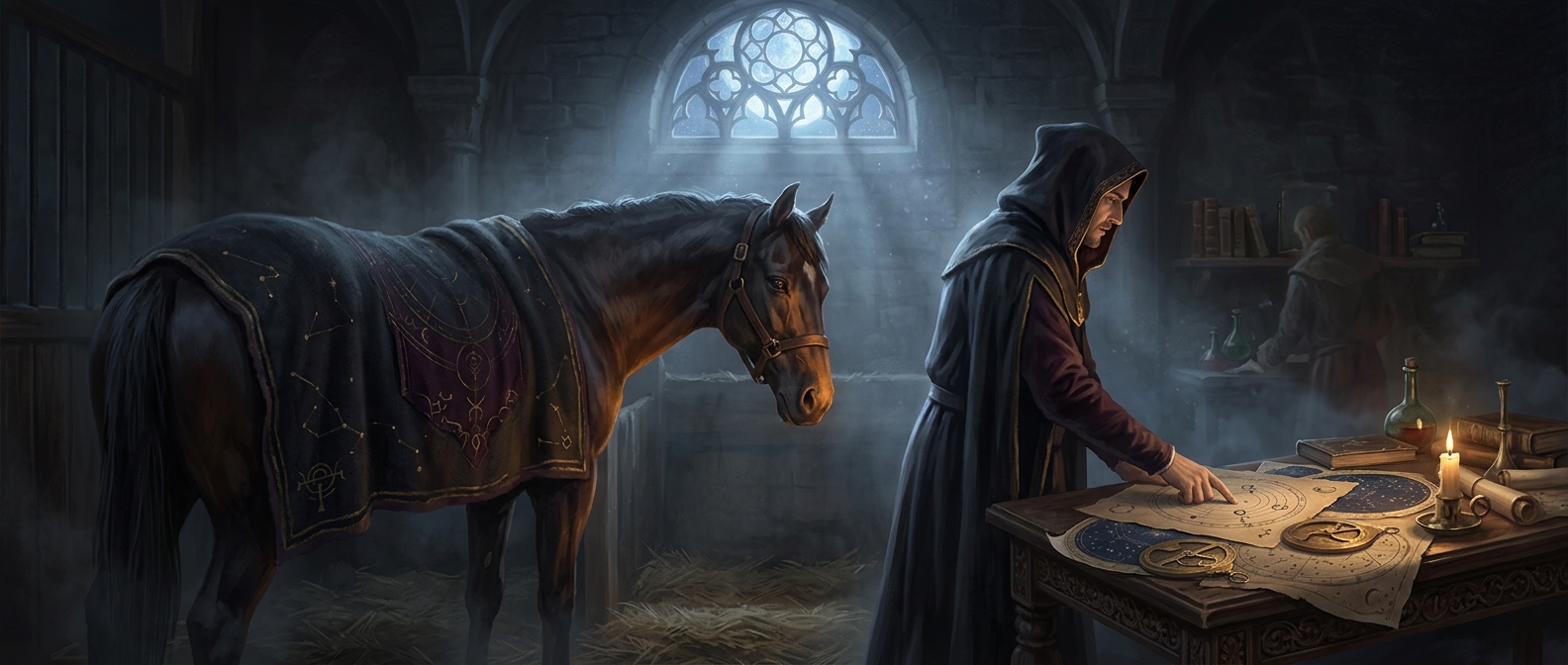
When a Horse’s Illness Became a Question for the Stars
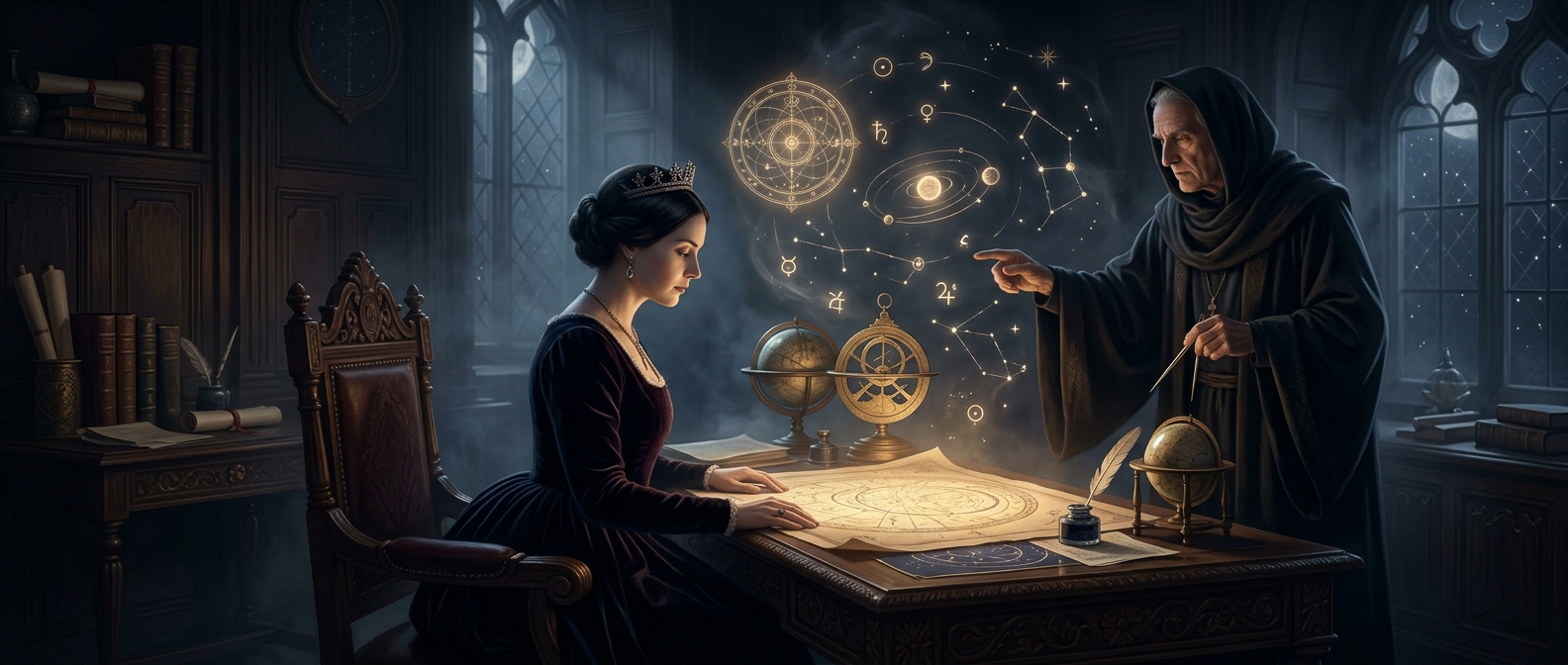
In Elizabethan England, astrology could be treated as a practical tool for interpreting illness, not merely as a way to predict a person’s future. Many people understood the heavens and earthly life as connected: the positions of planets were thought to offer clues about events below, including sickness. In that worldview, an animal’s illness could be read through the same celestial framework as a human one.
A horoscope, or astrological chart, mapped the sky for a particular time. A practitioner could use it to interpret what might be behind a sickness or how it might unfold. The chart did not replace every other kind of care; it offered another way to make sense of an uncertain problem in an era without modern veterinary diagnosis.
Why Consult a Cunning Folk?
“Cunning folk” were local practitioners associated with practical forms of healing and divination. Their work varied, but astrology could be part of the services they offered. For an owner facing a sick horse, consulting one was a way to seek an explanation when the cause was unclear—and perhaps guidance about what to do next.
The animal mattered in concrete terms. Horses were valuable working animals, so an illness could threaten a household’s labor, travel, or income. Turning to the stars was not a sign that the horse was unimportant; it reflected how seriously its sickness could affect its owner.