Why astrology threatened free will
For early Christian theologians, astrology raised more than a question about whether star charts worked. If the positions of the planets fixed a person’s character and choices, then human beings might not be morally responsible for what they did. That sat uneasily with Christian teaching that people could choose between good and evil and would answer for those choices.
Augustine made this conflict central to his criticism. He argued that treating celestial patterns as determinants of human behavior weakened free will and, with it, the logic of sin, repentance, and judgment. Astrology also risked assigning divine authority to created things—or, in some Christian accounts, opening the door to demonic deception. The concern was therefore theological as well as practical: who, or what, was understood to govern human life?
Condemnation and consultation could coexist
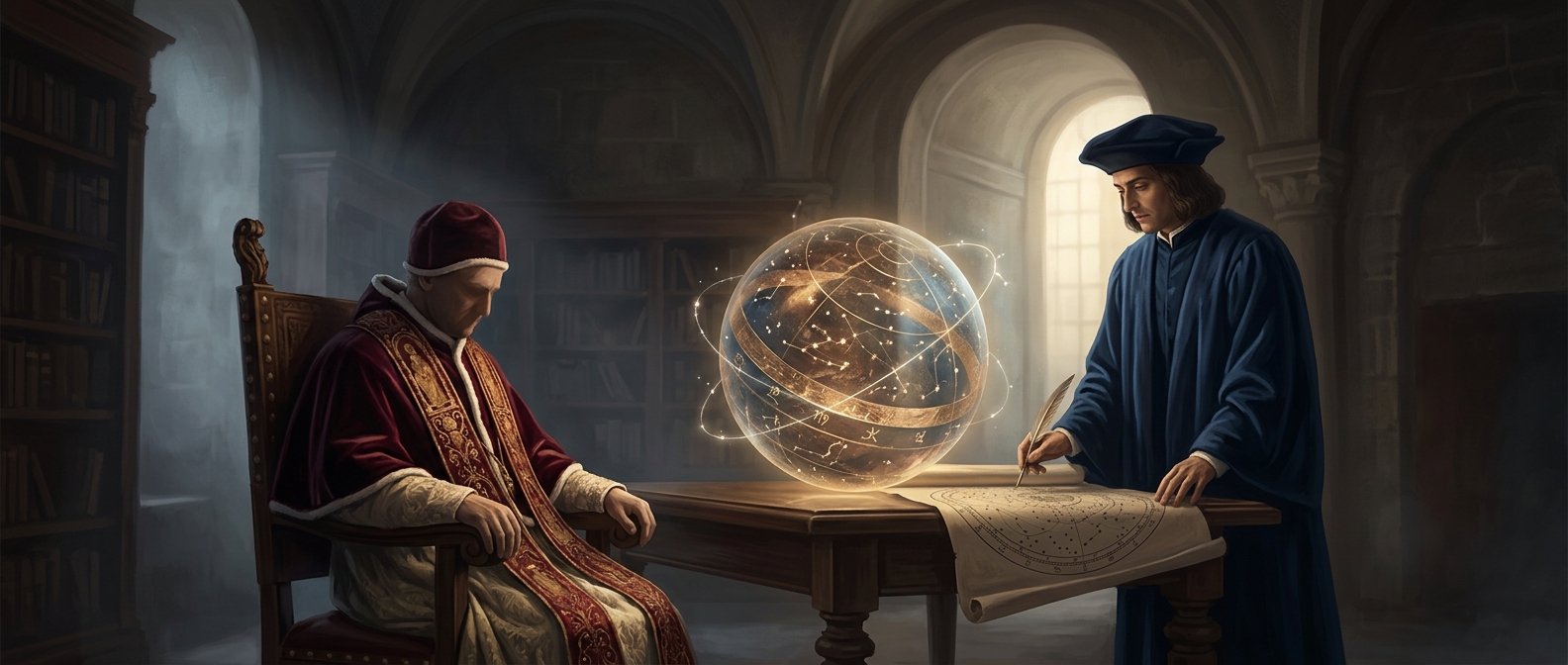
That opposition did not prevent astrology from attracting powerful patrons. In Renaissance courts, including the papal court, astrologers could be consulted for practical decisions: choosing an auspicious date for a public event or interpreting signs thought to warn of political danger. Such use treated astrology less as a complete account of human destiny and more as a tool for timing or prediction.
The two positions remained in tension. Church leaders could reject the claim that stars ruled the will while still living in a culture where rulers sought forecasts and favorable dates. A pope’s private consultation did not settle the theological debate; it showed how official doctrine and elite practice could diverge, especially when people hoped celestial signs might offer an advantage in uncertain political times.