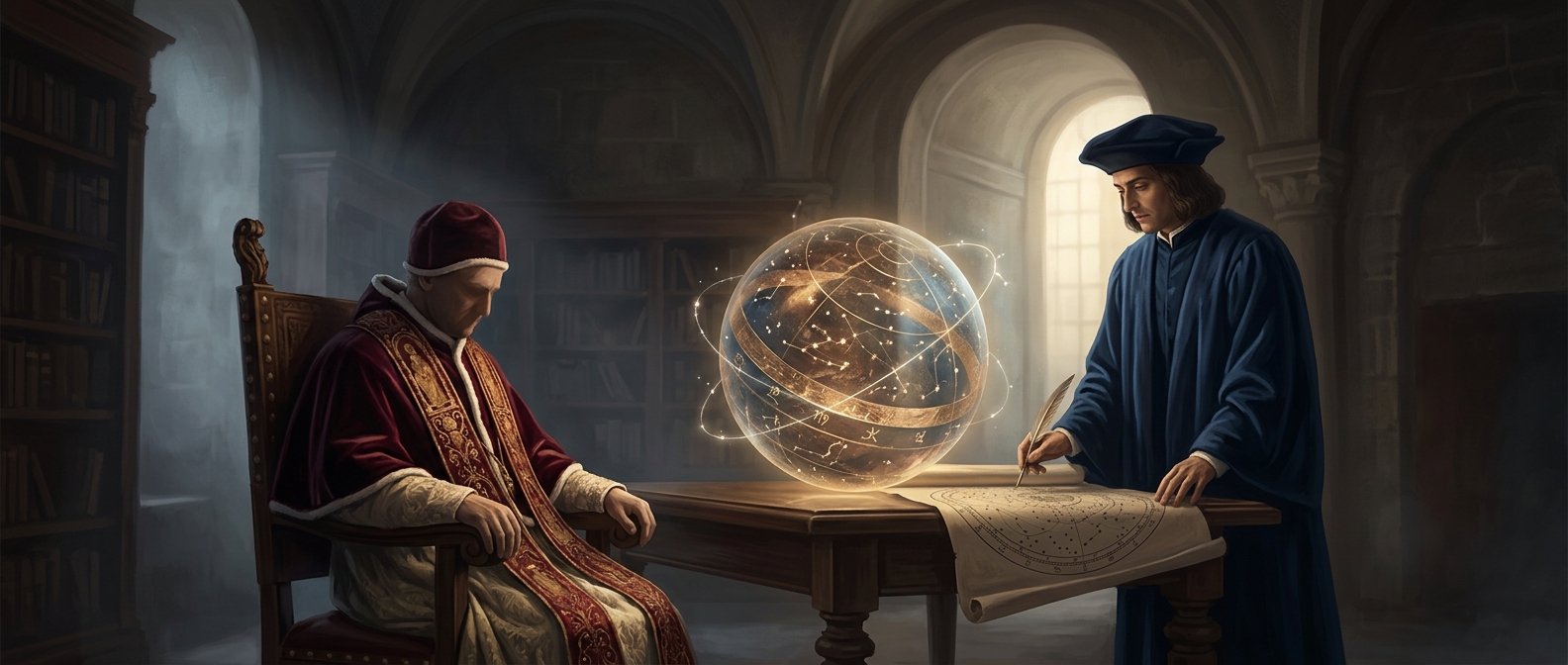
Choosing the Hour in Renaissance Rome
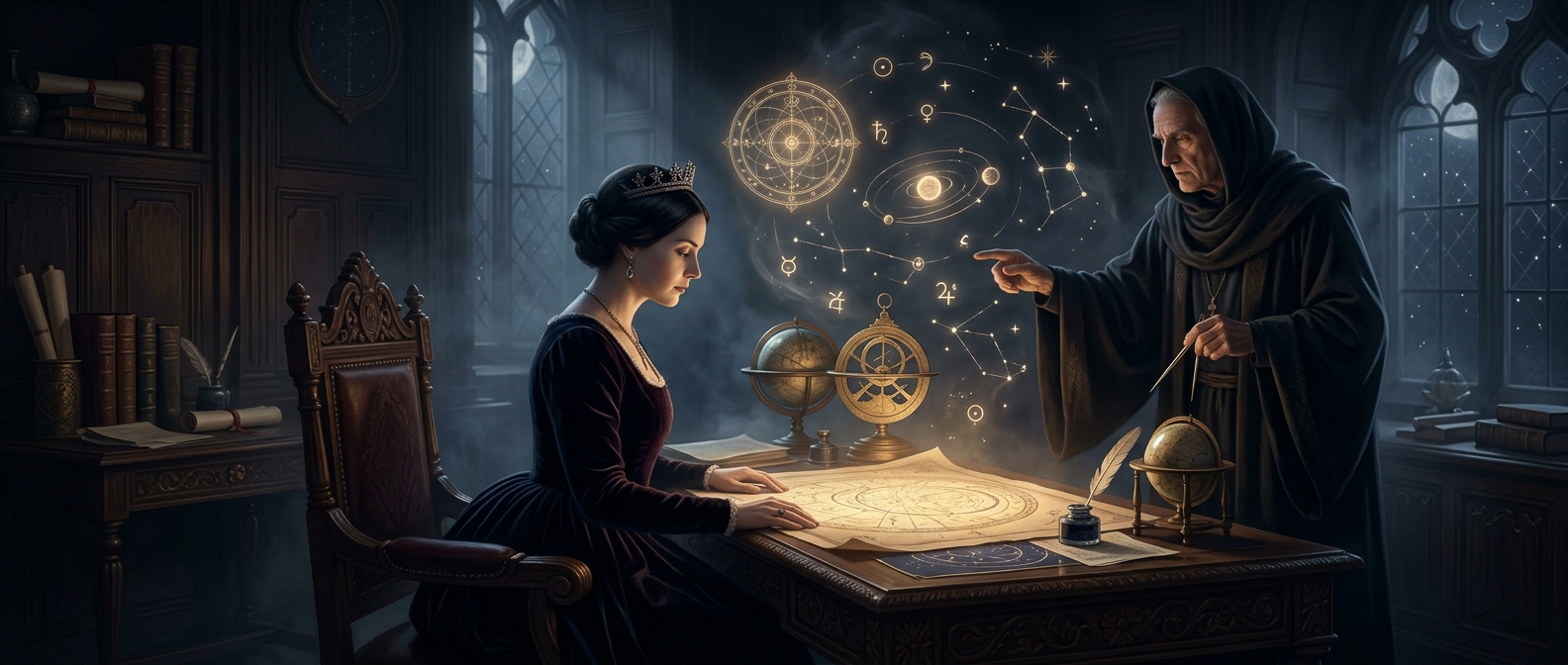
Astrology was not simply fortune-telling at the papal court. A personal astrologer could cast a horoscope for a proposed moment, mapping the positions of the planets and zodiac signs to judge whether the timing favored a particular action. This branch, often called electional astrology, worked backward from a decision: rather than asking what a birth chart said about someone’s life, it asked when to begin something.
That made timing a practical concern. A meeting, ceremony, or military blessing could be delayed or scheduled for a moment thought to have more favorable celestial conditions. The astrologer did not make the political decision; the pope and his advisers did. Astrology offered an additional way to weigh uncertainty in a world where diplomacy and warfare were difficult to predict.
A Learned Practice with Limits
Renaissance astrology drew on the idea that the heavens influenced events on Earth. It sat uneasily alongside Christian teaching when it seemed to claim that stars fixed human choices or overruled divine will. But many people distinguished between predicting unavoidable fate and reading the heavens as signs that might help guide human action. That distinction allowed astrological counsel to coexist with religious authority, even as its boundaries remained contested.
For popes, the practice carried a pointed implication: sacred office did not remove the ordinary risks of politics. Celestial advice could help frame a choice, but it could not guarantee its outcome. The striking detail is that even decisions made at the center of the Church might be treated as questions not only of what to do, but of when the heavens seemed to favor doing it.