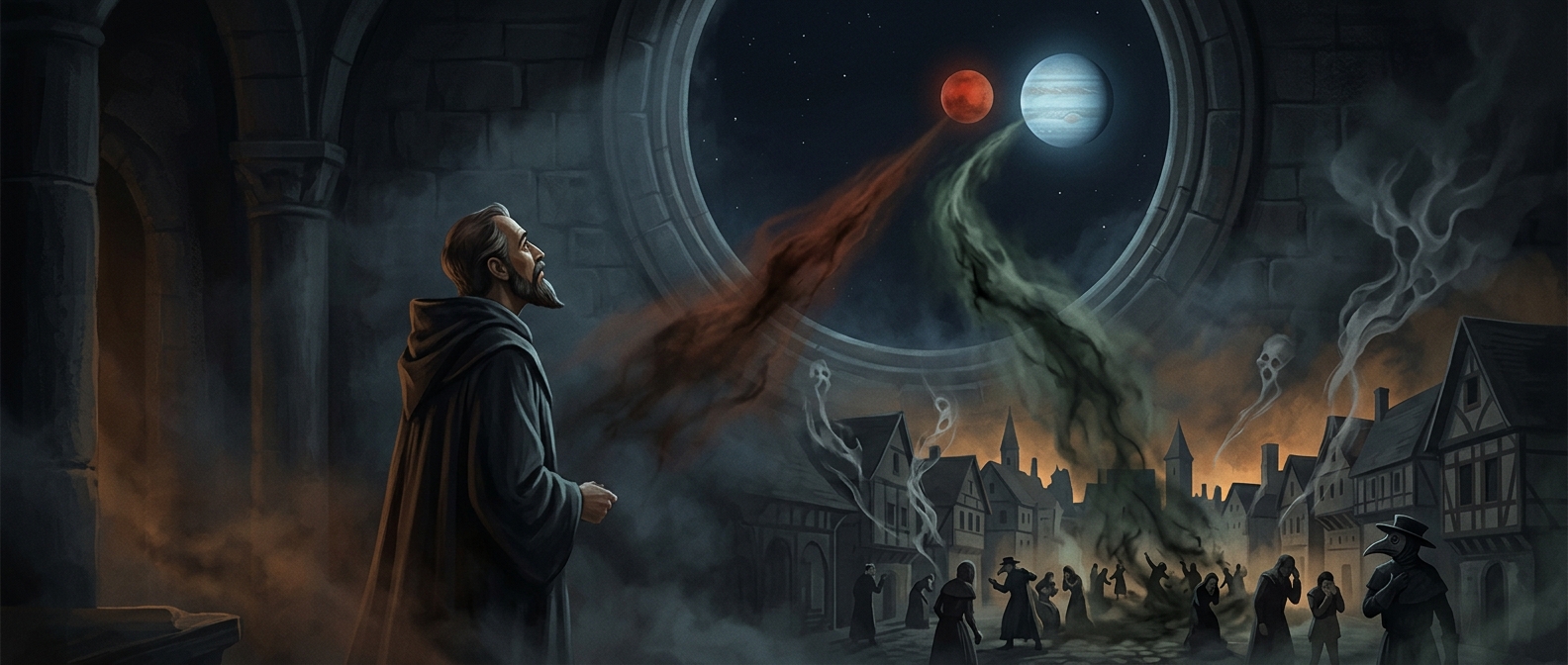
A plague explained from the sky
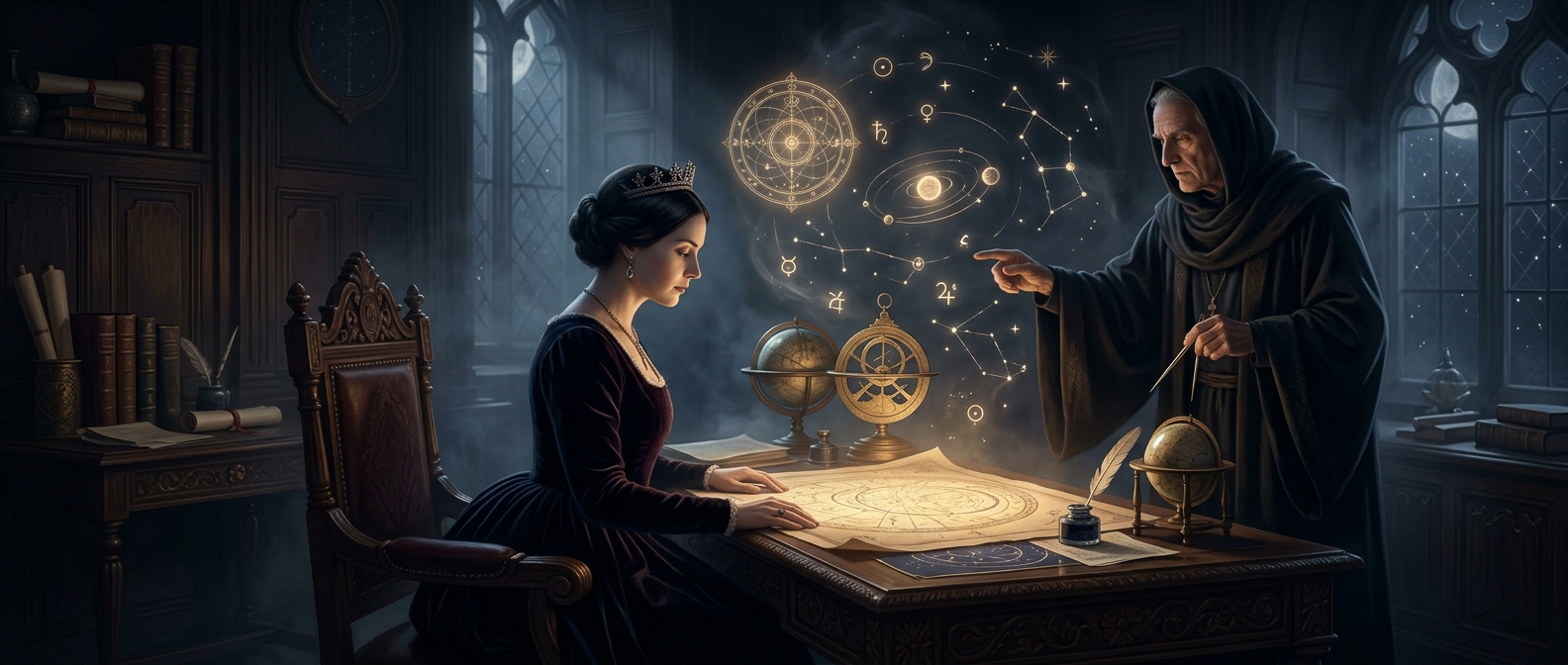
In 1348, the University of Paris’s medical faculty attributed the plague to a conjunction of Saturn, Jupiter, and Mars in Aquarius. A conjunction occurs when planets appear close together in the sky. To the faculty, this was not merely an unusual sight: it was a possible cause of events on Earth.
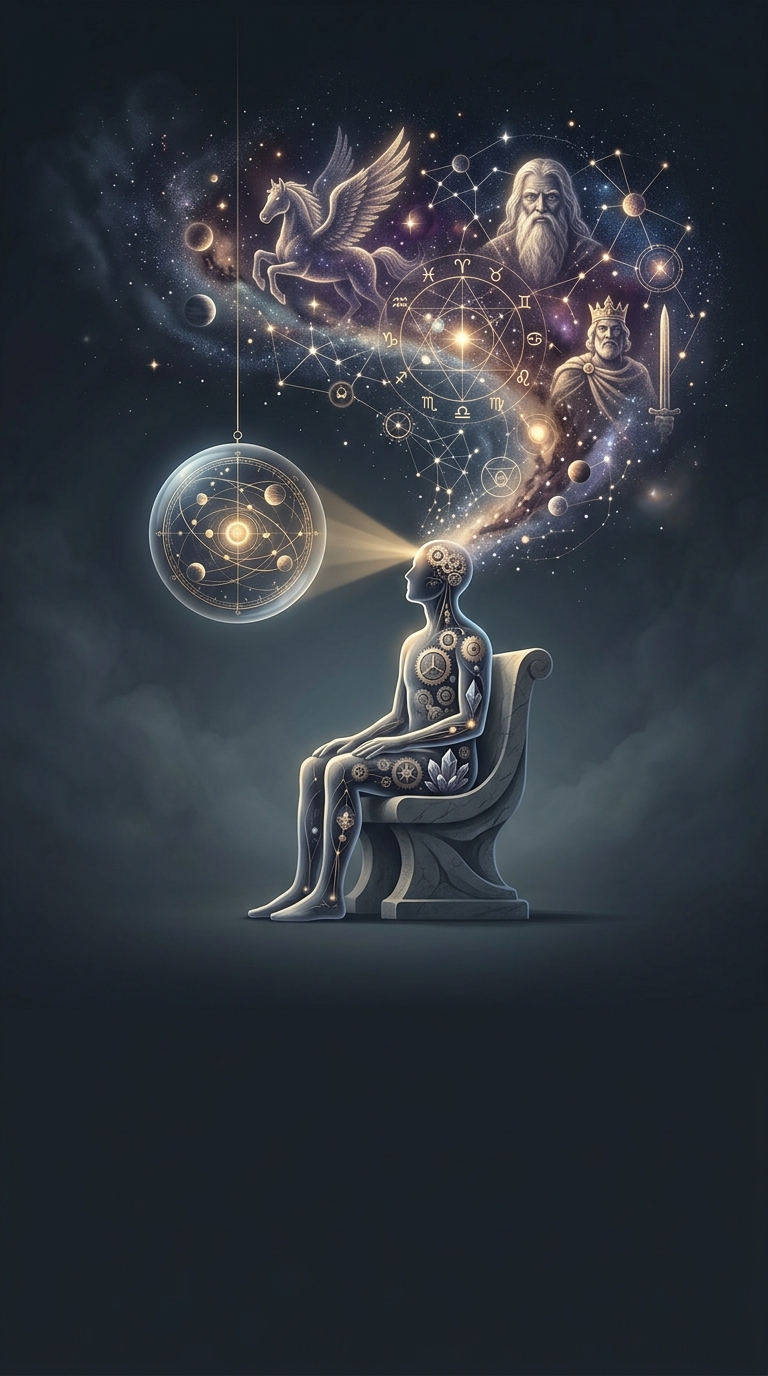
Medieval natural philosophy treated the heavens as active influences on the world below. Astrologers and physicians thought planetary arrangements could alter the air, seasons, and conditions inside the human body. In the Paris explanation, the conjunction helped produce harmful changes in the atmosphere. The idea fit a medical framework in which people could fall ill when the surrounding air was corrupted.
Why the explanation made sense then
People did not yet know that plague is caused by bacteria, or how infected fleas and other routes can spread it. A catastrophe moving across regions demanded an explanation, and the sky offered a way to connect distant outbreaks to a single cause. Astrology also belonged to learned medicine: interpreting the heavens was part of trying to understand when illness might arise and what conditions made people vulnerable.
That account was wrong about the cause, but it shows how physicians reasoned with the knowledge available to them. The planets were not a substitute for explanation; they were part of the explanatory system. The Paris faculty’s conclusion is a striking example of a medical institution using that system to make sense of a disaster whose infectious mechanism remained unseen.