When New Learning Looked Like Magic
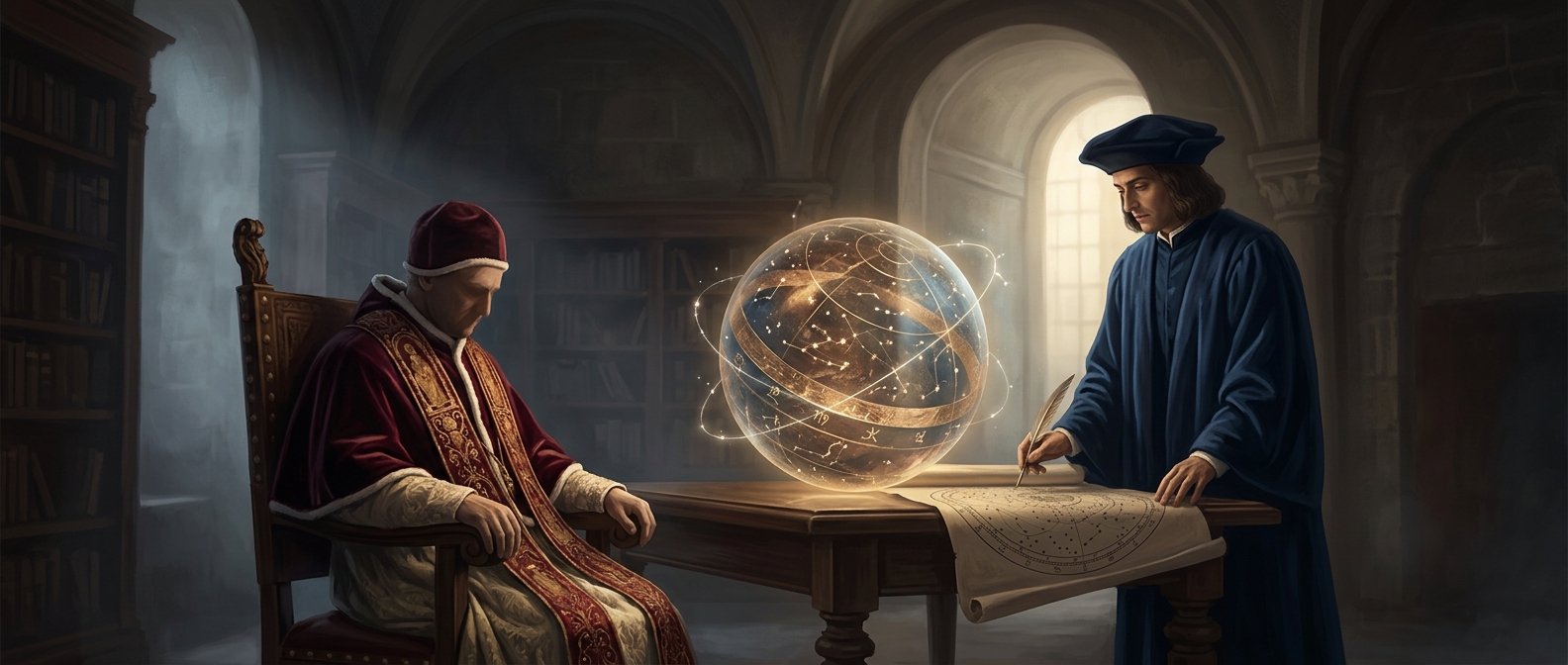
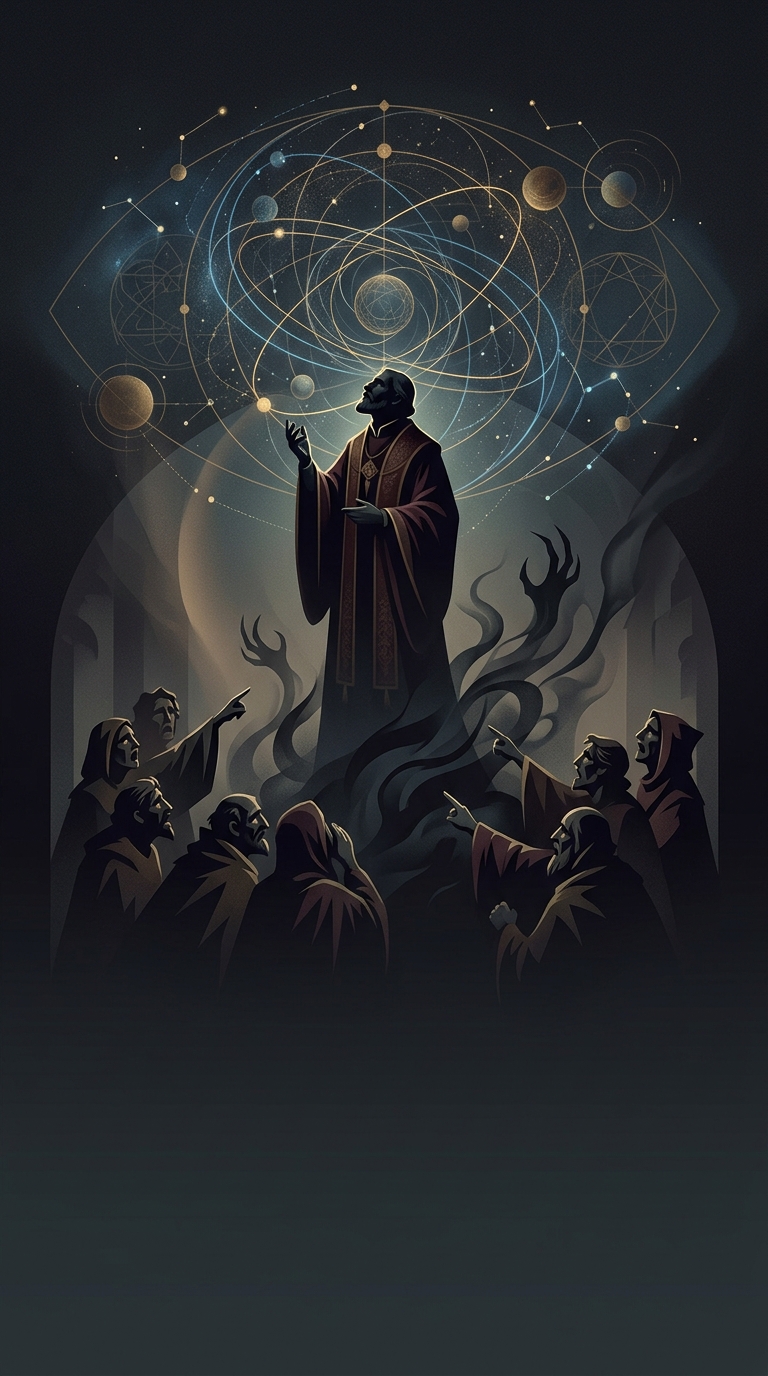
Gerbert of Aurillac, who became Pope Sylvester II in 999, learned from mathematical and astronomical traditions circulating in Iberia. In medieval Europe, the boundary between learned calculation and what later generations called “magic” could look blurry. Astrology—the study of how the movements of celestial bodies were thought to relate to earthly events—was then treated as a serious field of knowledge, not simply as occult entertainment.
A scholar who could calculate with unfamiliar methods, interpret the heavens, and draw on Arabic learning might seem to possess more than ordinary skill. Stories later cast Gerbert as a sorcerer who had dealings with the devil. Those tales reveal how his reputation could be reshaped by wonder and suspicion; they should not be confused with evidence that he practiced sorcery or that all his contemporaries feared him.
Making Calculation Visible
Gerbert is also associated with promoting an abacus for teaching and calculation. In this context, an abacus was a board or surface on which counters could be moved to represent numbers. Rather than writing out every step, a learner could shift counters between place-value columns and see how a calculation changed.
That practical method mattered in a scholarly world where arithmetic was often taught through written rules and verbal explanation. The abacus made numbers tangible: move a counter, and a quantity changes before your eyes. Gerbert’s legacy therefore sits at an intriguing intersection. The same appetite for knowledge that made mathematical tools useful could make their practitioner seem mysterious—and, in later legend, supernatural.