From Nile calendars to personal horoscopes
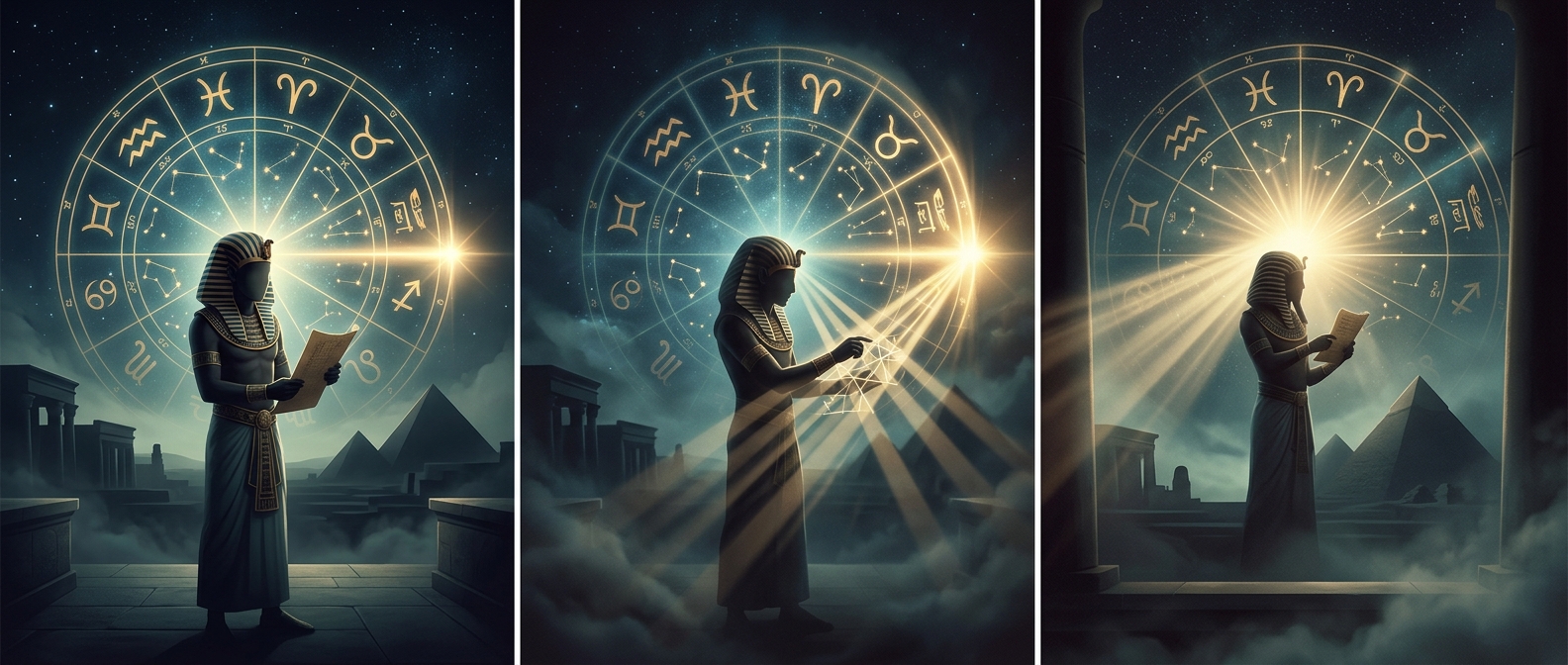
Before astrology became a system for interpreting a person’s birth, Egyptian and Babylonian sky-watchers used the stars in different ways. In Egypt, groups of stars called decans helped mark the hours of the night and organize the calendar. The yearly return of Sirius before sunrise was especially important: it coincided with the season when the Nile’s flood was expected, making the star a practical marker of the agricultural year.
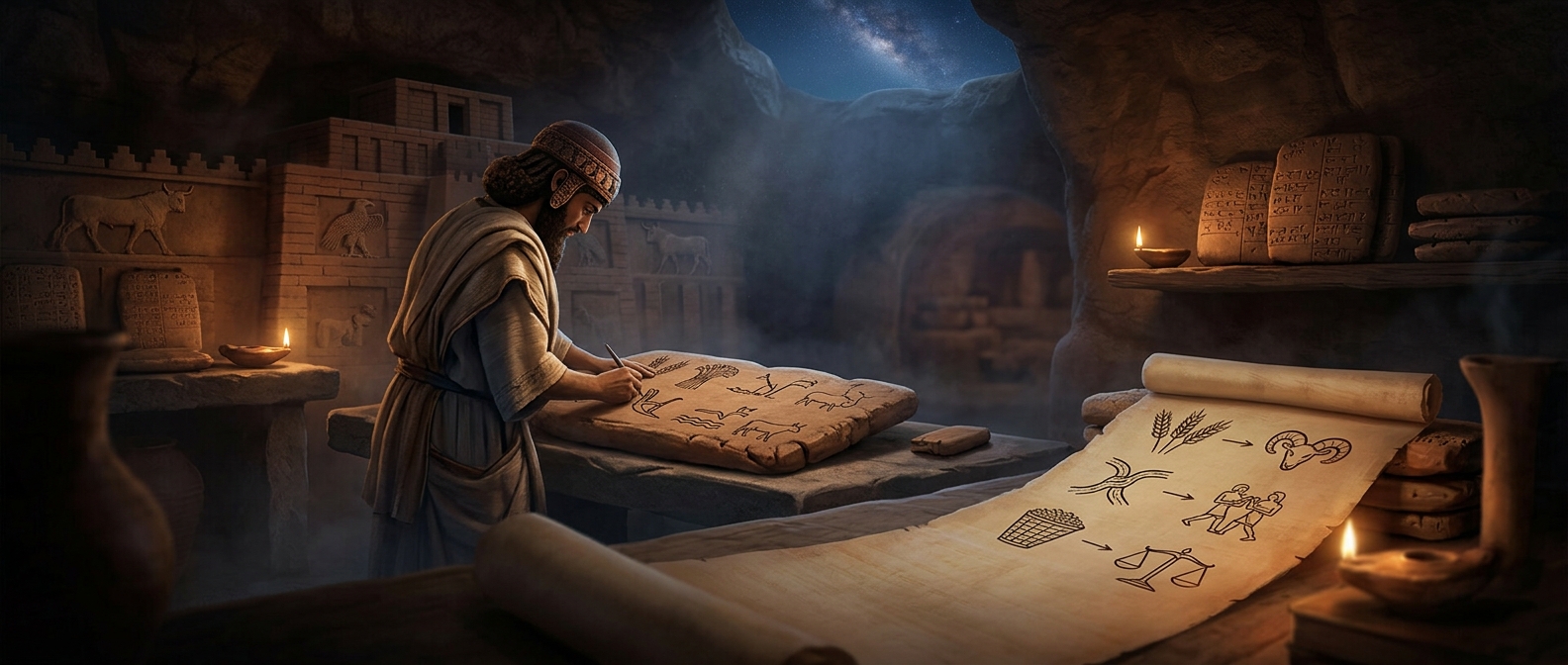
Babylonian scholars developed a different tool: a band of the sky divided into twelve zodiac signs, alongside traditions of reading meaning in the movements of planets. Their observations supplied much of the framework later used to cast horoscopes.
A meeting in the Hellenistic world
Alexander’s conquest of Egypt in 332 BCE brought Egypt into a wider Greek-ruled world connected to the eastern Mediterranean and Near East. The blending that followed was gradual, not a single act of merging charts. Scholars and practitioners could draw on Babylonian zodiacal methods, Egyptian star lore and calendars, and Greek ideas about nature and fate.
The result was a more elaborate kind of astrology. A chart could map the positions of the Sun, Moon, and planets against the zodiac at a particular time, then interpret those positions as signs of character or future events. Egyptian decans could also be fitted into this system, linking older ways of dividing the night sky with the newer zodiac framework.
A practical sky gains a personal meaning
That shift changed what star knowledge was for. Sirius still announced a season with consequences for farms and communities, but the sky could now also be read as a pattern specific to an individual. The same heavens that helped Egyptians anticipate the Nile’s rhythms became part of a broader language for interpreting human lives.