A championship turns a feud into a contest
In professional wrestling, a belt is more than a prize passed between performers. It is a visible sign that one wrestler has something the other wants—and that the conflict can be settled in a match. A personal grudge can stretch across weeks of insults and attacks; the championship gives that grudge a clear endpoint: who leaves with the title?
That clarity matters in a form of entertainment built around movement and spectacle. A belt can be raised above a crowd, held out of reach, or taken from its owner in a sudden attack. Viewers do not need a long explanation to understand what those actions threaten. The belt makes an abstract claim to status tangible.
The object carries the story between matches
A championship storyline often unfolds outside the ring: a challenger interrupts a celebration, an ally turns on a champion, or a title is withheld during a dispute. The belt gives these scenes a common focus. Even when the wrestlers are not competing, the audience can see what is at stake and track who currently possesses it.
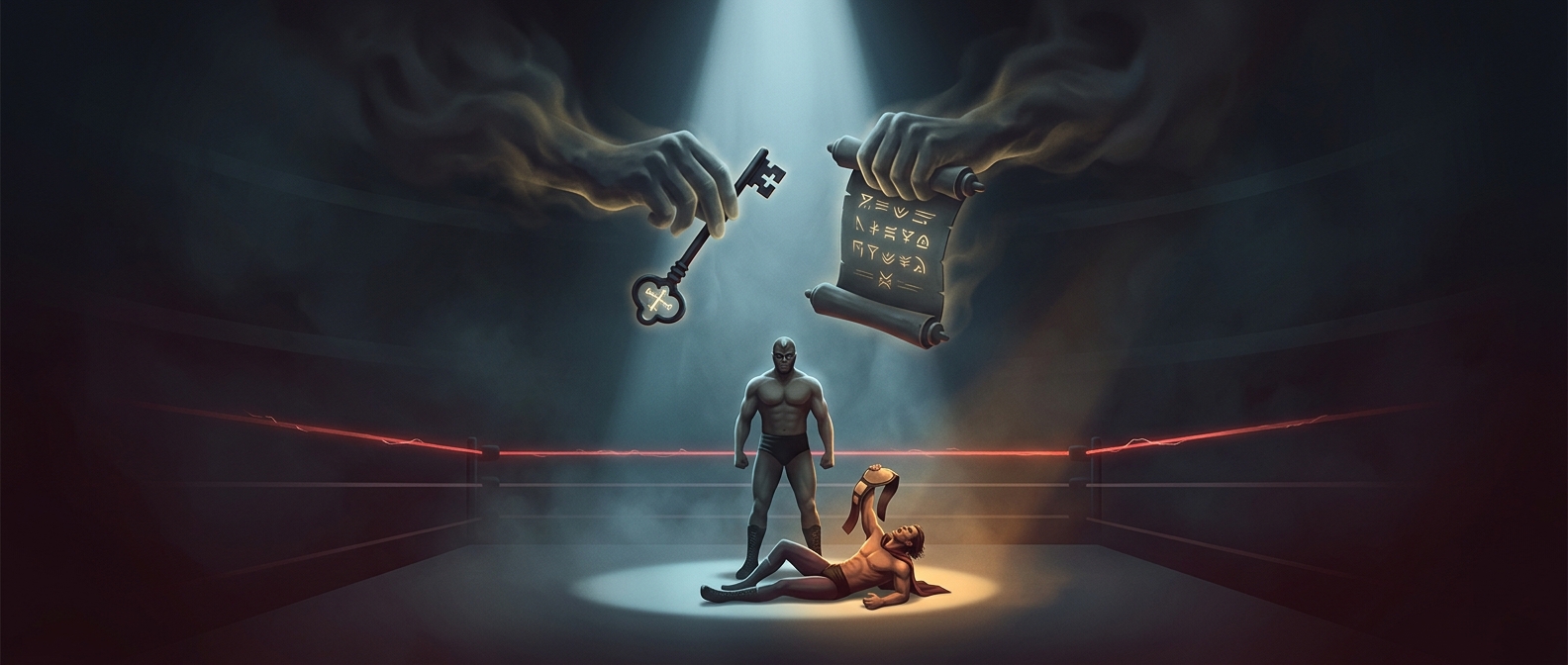
Its physical presence also helps make a title change feel consequential. The winner can hold the belt aloft; the former champion is left without the object that publicly marked their position. That image communicates a reversal before anyone needs to explain its implications.
The symbol can matter beyond the performance
The championship’s importance within a wrestling company depends on how that company presents and books it. Winning a major title may signal that a performer is being placed in a leading role, while losing it can redirect a storyline. But the belt does not automatically guarantee a particular career outcome. Its force comes from the meaning the promotion and audience have built around it.
That is why a piece of costume can carry the weight of an entire feud: the story has taught viewers to read it as both the prize and the proof of who stands on top.