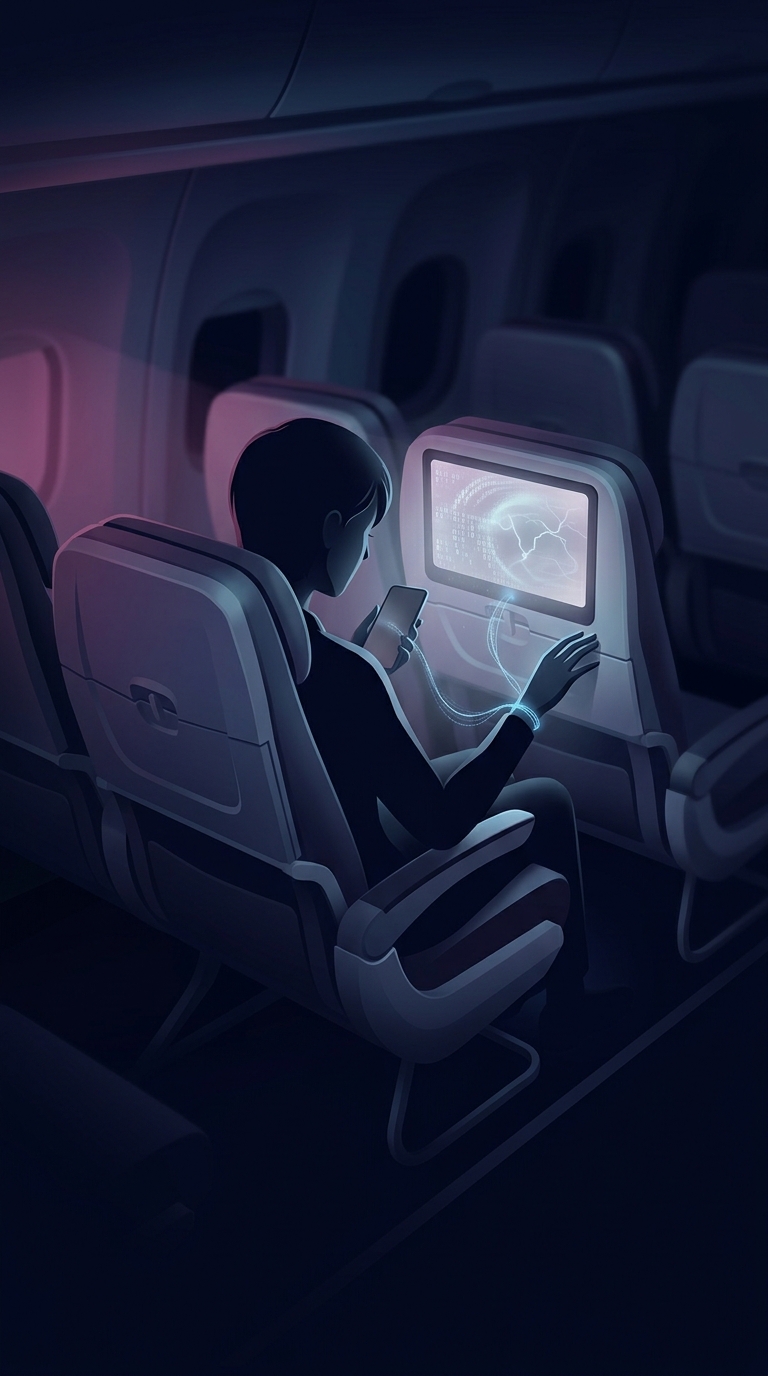
Why airlines keep screens in the seatback
A phone is personal, but an airline cabin has to serve thousands of passengers at once. Seatback screens give the carrier a built-in way to offer movies, shows, flight information, and safety content without asking travelers to download an app, bring headphones that work with their device, or rely on a charged battery. The screen is already in place when the passenger sits down.
That matters most on long flights, where entertainment is part of the onboard experience and passengers may want to watch for hours. A seatback display also works for travelers who do not have a compatible smartphone or prefer not to use one. Airlines can make the content and interface consistent across the cabin instead of depending on a mix of personal devices and software.
The screen is only part of the cost
Installing an entertainment system means fitting equipment into seats and connecting it to the aircraft’s power and data systems. Airlines also need the hardware that stores or distributes content, along with software, updates, and maintenance. Because aircraft equipment must meet aviation requirements, a change is more involved than swapping a television in a living room. The system is typically planned as part of a cabin design or refurbishment, not as a casual add-on.
Screens and their supporting equipment add weight, and weight matters: an aircraft must carry and move every installed component. Airlines therefore weigh the expense and fuel penalty against what passengers expect and what the system contributes to the travel experience. On some routes or aircraft, streaming entertainment to passengers’ own devices can reduce the need for seatback hardware. But that approach still depends on a working onboard network and a device with enough battery and compatibility.
A choice shaped by the whole cabin
The decision is not simply “screen or smartphone.” Airlines are choosing between a shared, installed service and a lighter system that shifts more responsibility to passengers. A seatback screen costs more than its display: it buys the airline a dependable entertainment option that is ready for the person in every seat.