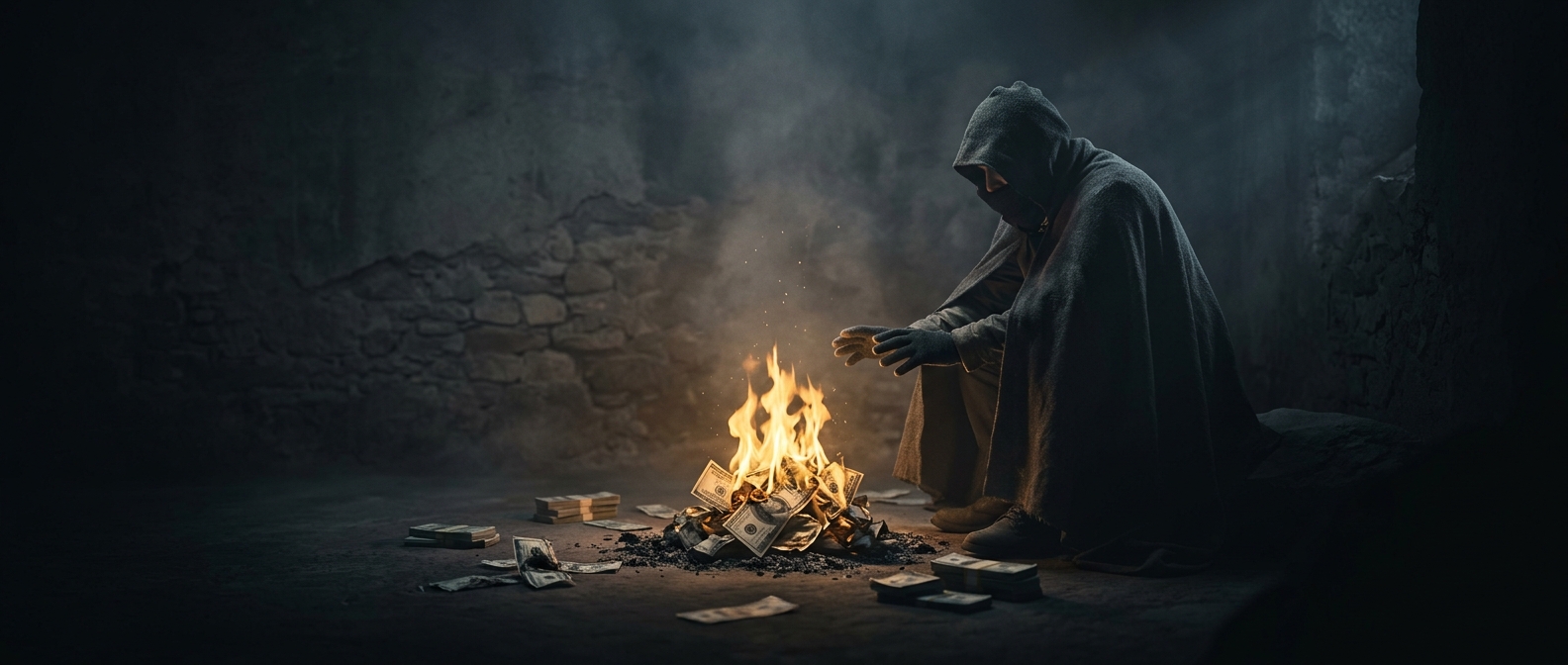
Cash was useful only if it could make heat
The story turns on a blunt difference between wealth and usable resources. Pablo Escobar’s money could buy nearly anything under ordinary conditions, but a stack of banknotes could not protect his family from cold while they were hiding in the mountains. If his daughter was showing signs of hypothermia—a dangerous drop in the body’s temperature—the immediate need was warmth, not purchasing power.
Burning cash converted a financial asset into heat on the spot. Paper burns quickly, so the money would have made a temporary fire rather than a lasting source of warmth. But when a person is cold and there is no practical way to buy fuel, even a short-lived flame can matter more than what the bills might be worth later.
The cost of being unable to spend
The episode also captures a particular vulnerability of illicit wealth: it is valuable only when its owner can safely use it. A fugitive cannot simply walk into a shop, arrange delivery, or rely on ordinary infrastructure without risking discovery. Money hidden away may be a fortune in accounting terms and still fail to provide food, shelter, or fuel at the moment those things are needed.
That is the economic reversal behind the image. Under normal circumstances, cash represents choices; in hiding, it can become dead weight—or kindling. The reported sum makes the sacrifice striking, but the deeper point is that access, not nominal value, determines what money can do. In that cold moment, a fire was more useful than a fortune.