Naadam turns the open steppe into the arena
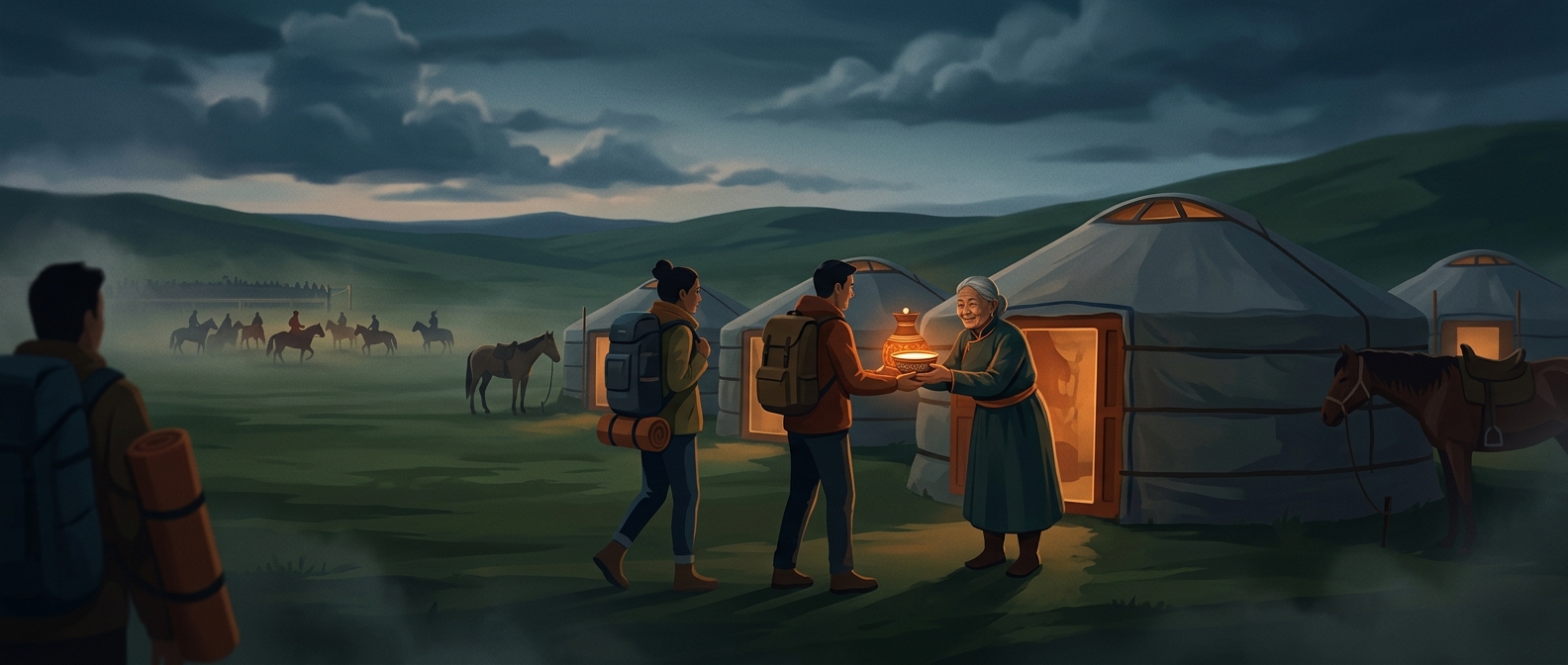
Naadam is not staged around a single stadium. In Mongolia’s summer festival, horse races run across open country, while wrestling and archery bring competitors and spectators together at local grounds. The setting matters: the races follow broad stretches of steppe rather than a tight track, making the landscape itself part of the contest.
The festival’s three events—wrestling, archery, and horse racing—are often described as tests of strength, precision, and endurance. Their combination also reflects Naadam’s roots in older public gatherings and military training, though today the festival is a national celebration rather than a rehearsal for war.
Why the jockeys are children
Naadam horse races are cross-country endurance contests, not short sprints around an oval. Distances vary by race and horse age, and some routes extend for many kilometers. Children commonly ride because their lighter weight places less burden on a horse over a long run. The winning horse matters most: the race is traditionally judged by the horse’s finish, not by a jockey’s position on a track or a rider’s time.
That format makes the race feel different from conventional horse racing. Spectators may follow the horses over open ground, and a rider’s skill includes staying balanced and guiding the animal over uneven terrain. The child jockey is visible, but the horse’s stamina is the central measure.
Wrestling without weight classes
Mongolian wrestling has no weight divisions, so competitors of very different sizes can meet. Wrestlers wear distinctive outfits, including an open-chested vest, and perform an eagle-like dance before bouts. A match ends when one wrestler falls and touches the ground with a body part other than the feet or hands.
Together, the events make Naadam a contest of individual ability on a national scale: a wrestler’s balance, an archer’s aim, and a horse’s endurance all become public spectacles against the steppe itself.