How a kitchen problem became butter chicken
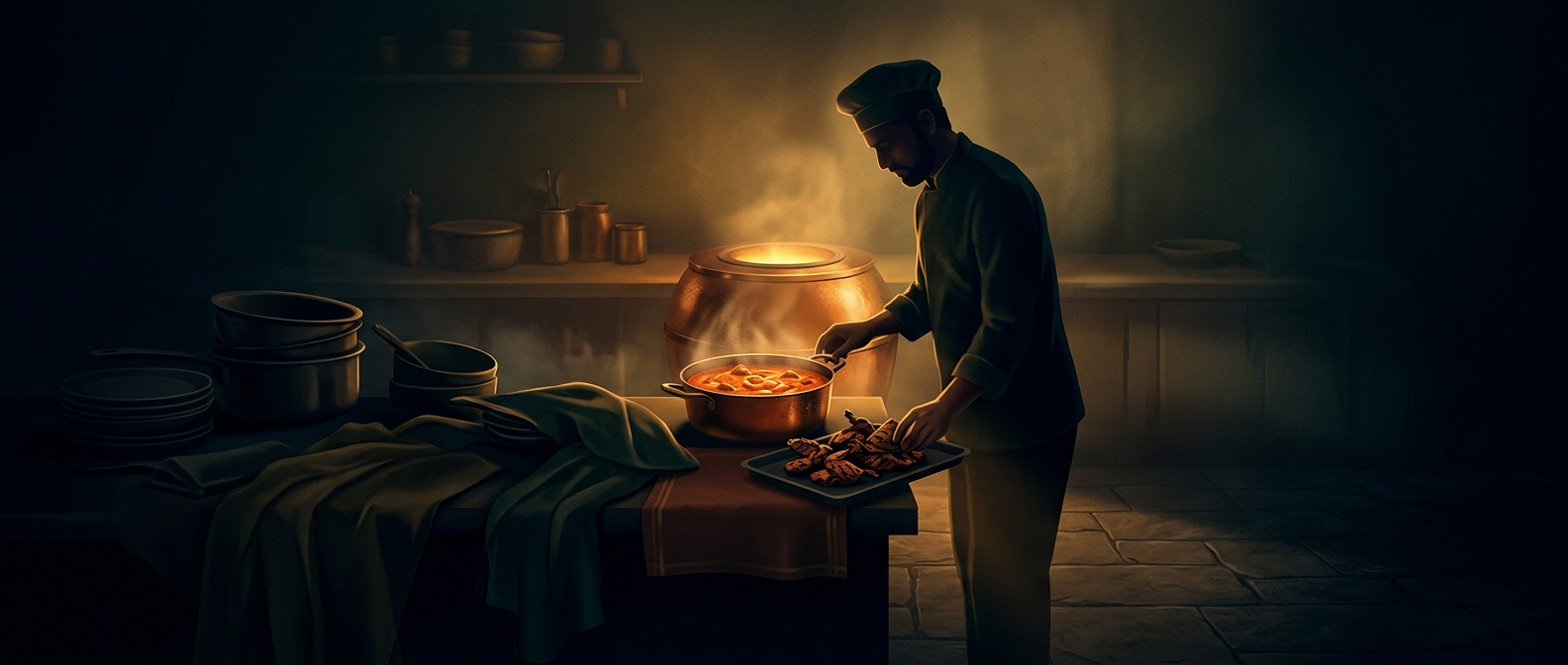
Tandoori chicken is cooked in a very hot clay oven. That heat gives it smoky, browned edges, but chicken that sits after cooking can lose moisture and turn tough. For a Delhi restaurant in the 1950s, leftover pieces were not just a serving problem: they were valuable food that could otherwise go to waste.
The fix was to simmer them in a sauce built from butter, tomato, and cream. The warm liquid softened the chicken as it heated through, while butter and cream added richness and tomato brought acidity to balance it. Spices tied the sauce to the smoky flavor already on the meat. Rather than disguising the tandoori cooking, the sauce made it part of a new dish.
From practical reuse to a restaurant staple
That transformation is the useful detail behind butter chicken’s origin story. The dish depends on a contrast: pieces of charred, oven-cooked chicken become tender and easy to eat in a smooth, generous sauce. A kitchen’s need to make yesterday’s cooking appealing again produced a preparation that could stand on its own.
In Delhi, the result also joined two familiar approaches—tandoor-roasted meat and a cooked, spiced gravy—on one plate. What began as a way to give leftover chicken another life became a dish people seek out for the combination itself: smoky meat softened by a buttery tomato sauce.