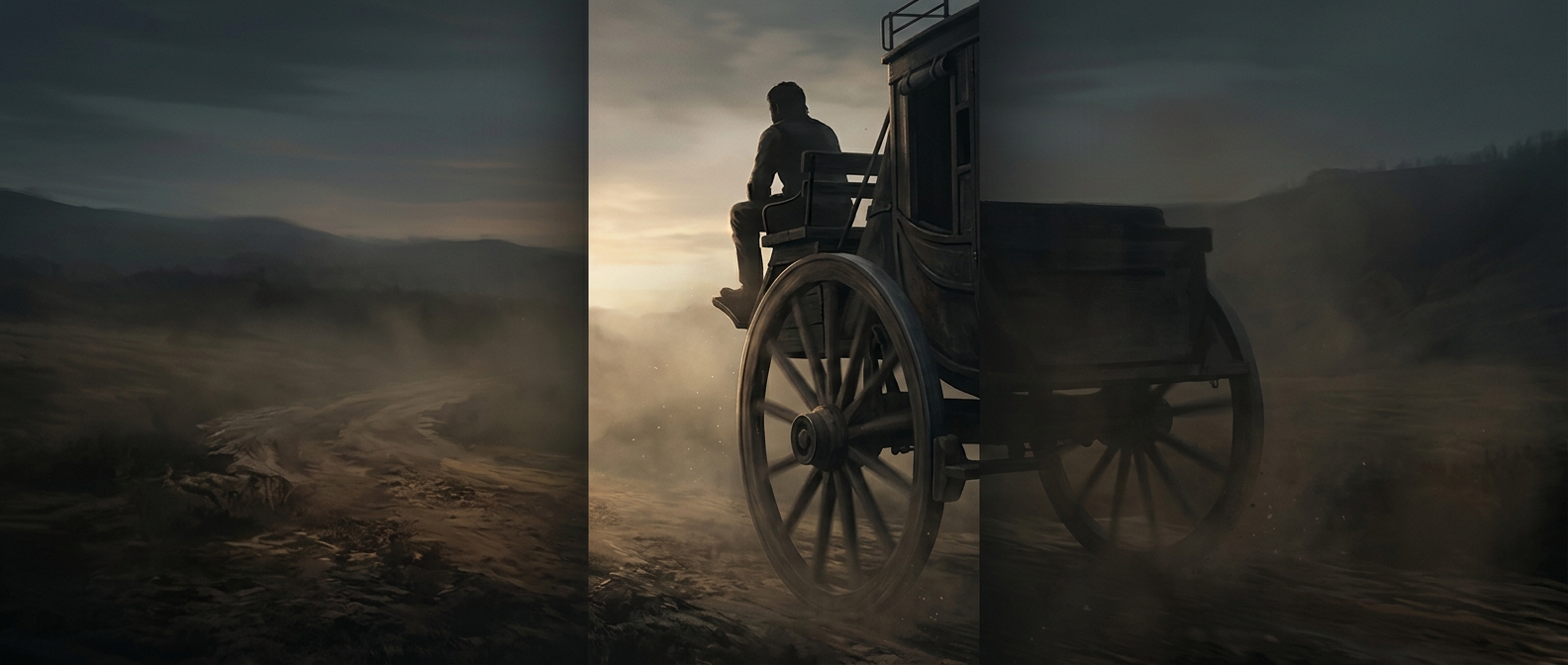
A seat built over the working end of the coach
A stagecoach driver needed a clear view of the road and the horses pulling the vehicle. On some coaches, the driver sat on a wooden plank mounted high over the front wheels, close to the steering gear. That position made it easier to watch the team and guide the coach, but it put the driver directly above the part of the vehicle that moved and jolted with every turn and bump.
Why the ride was so rough
The front wheels followed ruts, stones, and holes first. As they rolled over uneven ground, their movement traveled through the axle and frame into the plank. Because the seat was rigidly attached there, it could not isolate the driver from those jolts; the driver was bounced along with the coach’s front end.
That did not necessarily mean the whole coach had no suspension. Some coaches used flexible leather straps to support the body, but a driver perched on a rigid plank above the front axle still felt the road sharply. The seat traded comfort for a useful view and a close position from which to handle the horses.
A job that demanded balance as well as skill
The driver had to manage reins and steering while staying upright on an exposed seat, often in bad weather and over rough roads. The arrangement makes the coachman’s role easy to picture: not sheltered inside the vehicle, but perched over its turning front end, feeling much of the road through the seat.