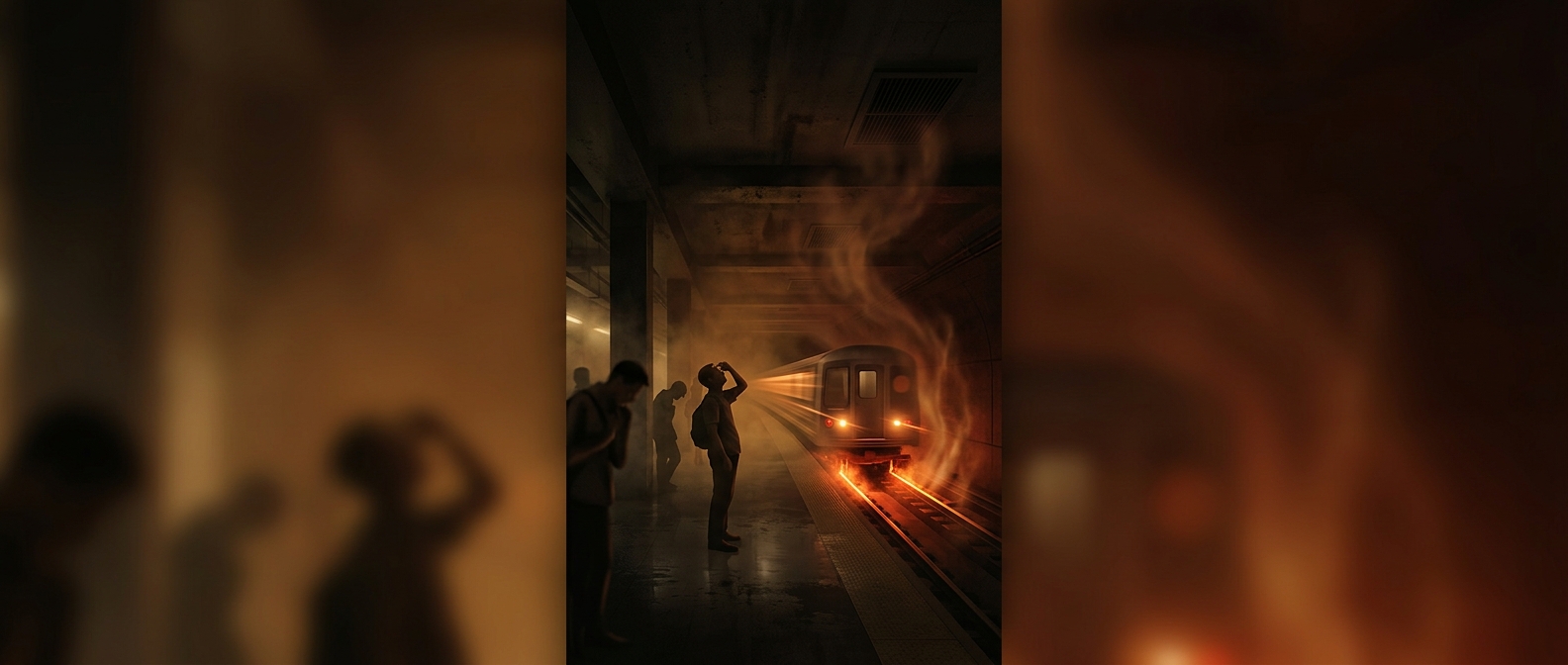
Each stop leaves heat behind
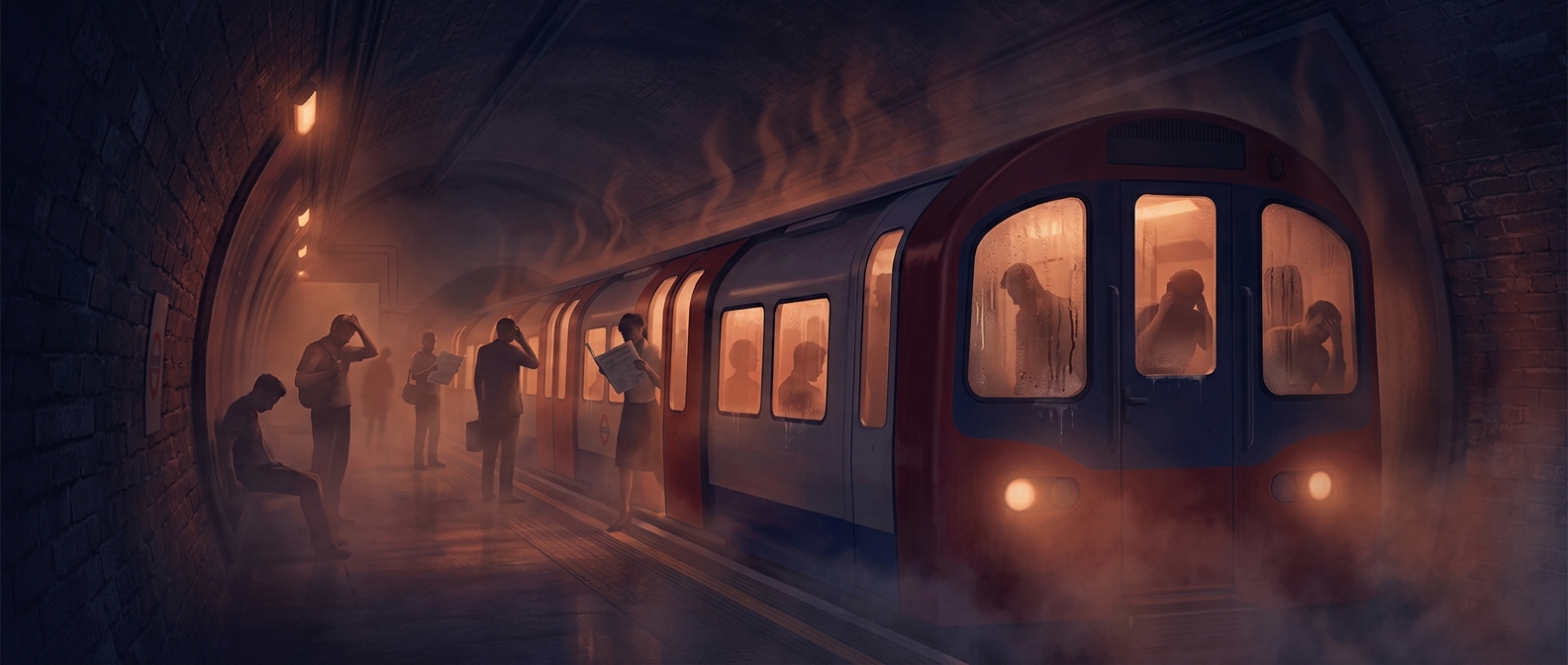
A moving train carries kinetic energy—the energy of its motion. When friction brakes slow it, brake pads press against rotating surfaces, turning some of that motion into heat. A train making frequent stops repeats the process, so the heat is released along the route rather than at one distant destination.
Some trains can recover part of their braking energy electrically and use it again. But friction braking still contributes heat, particularly when it is needed to finish a stop or when energy cannot be returned to the power system.
Why the platform holds on to it
Underground stations have limited contact with outdoor air. Heat from trains warms the rails, tunnel walls and surrounding structure; those surfaces then release it back into the space. Ventilation can carry heat away, but it has to move air through long, confined tunnels and stations that are repeatedly warmed by passing trains.
A train also pushes air ahead of it and draws air behind it. That moving air can make a platform feel briefly gusty without making it feel cool: it is circulating air through a warm underground environment. Crowds add some body heat, but the train’s repeated braking helps explain why the station can stay warm even when few people are waiting.