The rock itself became part of the design
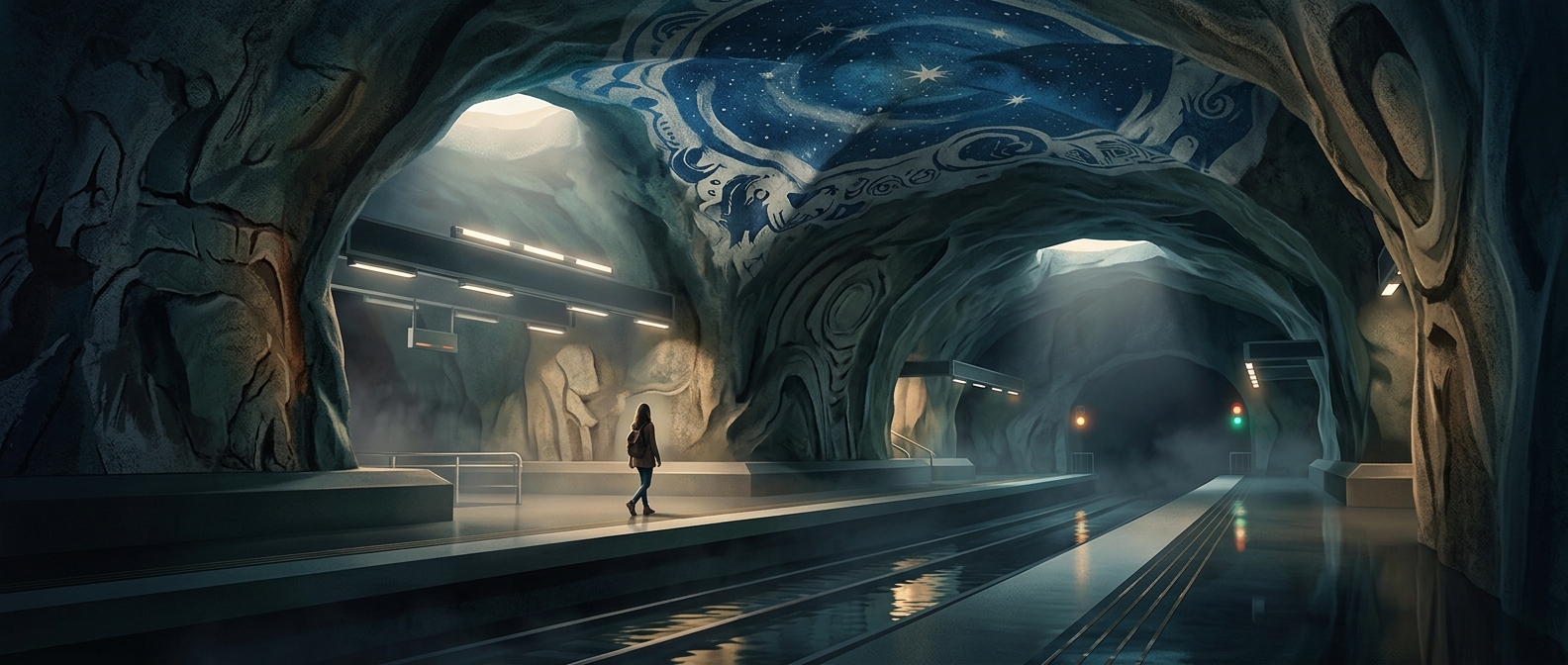
Stockholm’s subway art grew out of an engineering choice. In many places, tunnels and station halls were excavated directly into the city’s bedrock. Rather than flattening every surface into a uniform, finished interior, designers let the irregular rock remain visible and covered it with sprayed concrete. The result was a cavernous setting unlike the tiled corridors familiar from many other metros—and one that artists could treat as a canvas.
That setting shaped the art. Murals could follow the contours of the walls, while color and lighting made rough, underground spaces easier to recognize and more inviting to move through. In some stations, the artwork is not simply hung on the architecture; it works with the rock, the concrete, and the station’s scale.
A public project, not a gallery added later
Art entered Stockholm’s subway as part of the system’s design in the 1950s. The idea was to bring art into an everyday public space, where passengers would encounter it without buying a ticket to a museum or setting aside time for a visit. Over the decades, artists worked in stations across the network, using different materials and styles rather than imposing one look everywhere.
That history explains why a trip can feel like a sequence of distinct rooms. The art helps give each station a recognizable character, while the exposed rock recalls how the space was made. The unusual atmosphere comes from the meeting of infrastructure and artistic choice: the subway’s tunnels were shaped by the bedrock, and the design chose to make that fact visible.