The Turnaround Is a Timed Changeover
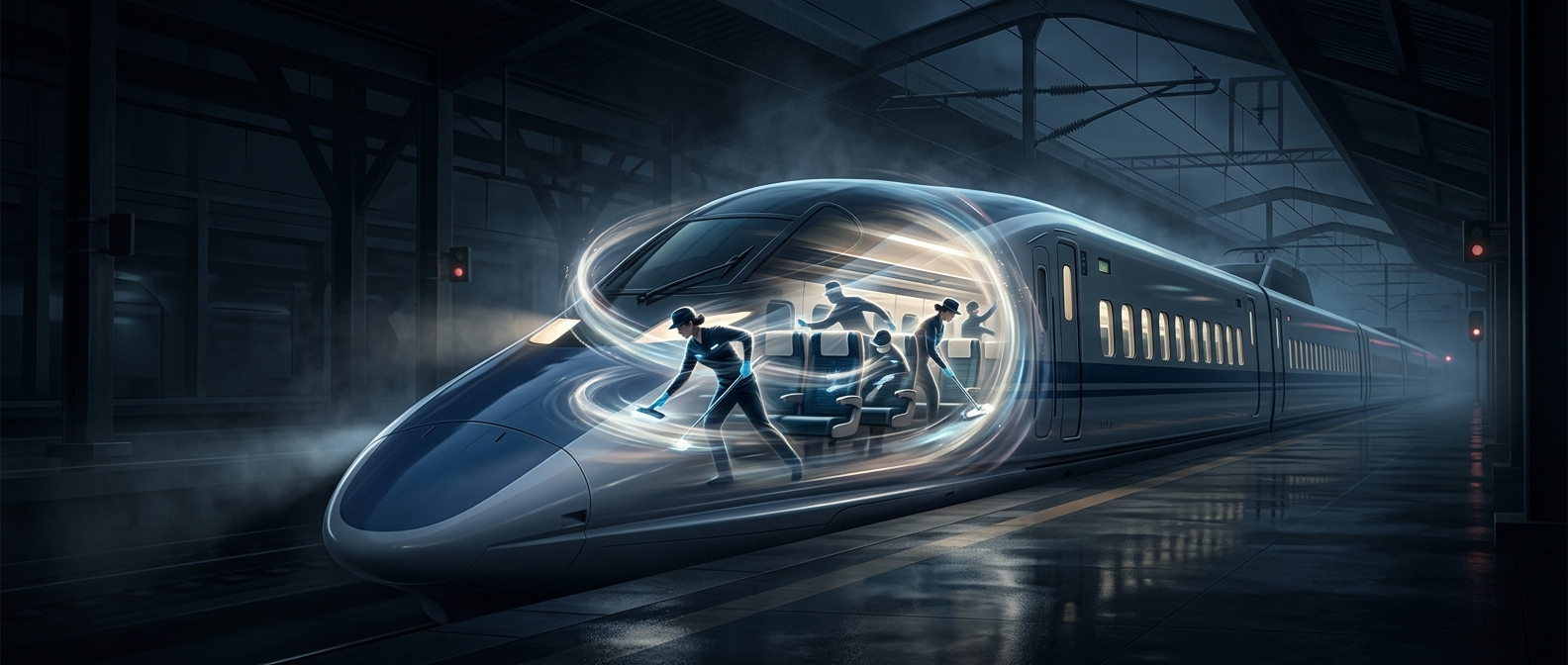
A train that has just delivered a full load of passengers cannot simply take on the next group as it stands. The interior has to be reset quickly, while the train is between scheduled runs. On Japan’s bullet trains, that means treating the carriage like a room being prepared for its next occupants: used surfaces are cleared, litter is removed, and seats are repositioned where needed.
The seat turn is especially practical on routes where a train reverses direction. Many Shinkansen seats can swivel, so crews can turn a row together rather than leave passengers facing backward on the return leg. It is a small mechanical feature that makes the cabin easier to reset without moving the seats themselves.
Why the Work Has to Be Coordinated
A short turnaround leaves little room for one task to wait on another. Crews work through the car in an organized sequence, resetting the seating and cleaning the areas passengers have used. Trays and floors matter because they collect the visible evidence of the previous trip; a quick, systematic pass helps make the whole carriage feel ready, not merely empty.
That reset is part of operating a high-frequency railway: the train must be prepared for another departure without turning each stop into a long layover. The next passengers encounter a cabin that feels newly arranged, even though the same train has just completed another journey.