The gate is waiting for a valid fare
A subway turnstile is more than a set of bars that happens to rotate. Its reader checks a card or ticket, and a control system uses that result to release the turnstile’s locking mechanism for a passage. If the fare is not accepted, the mechanism stays engaged, so the arms cannot complete their usual rotation.
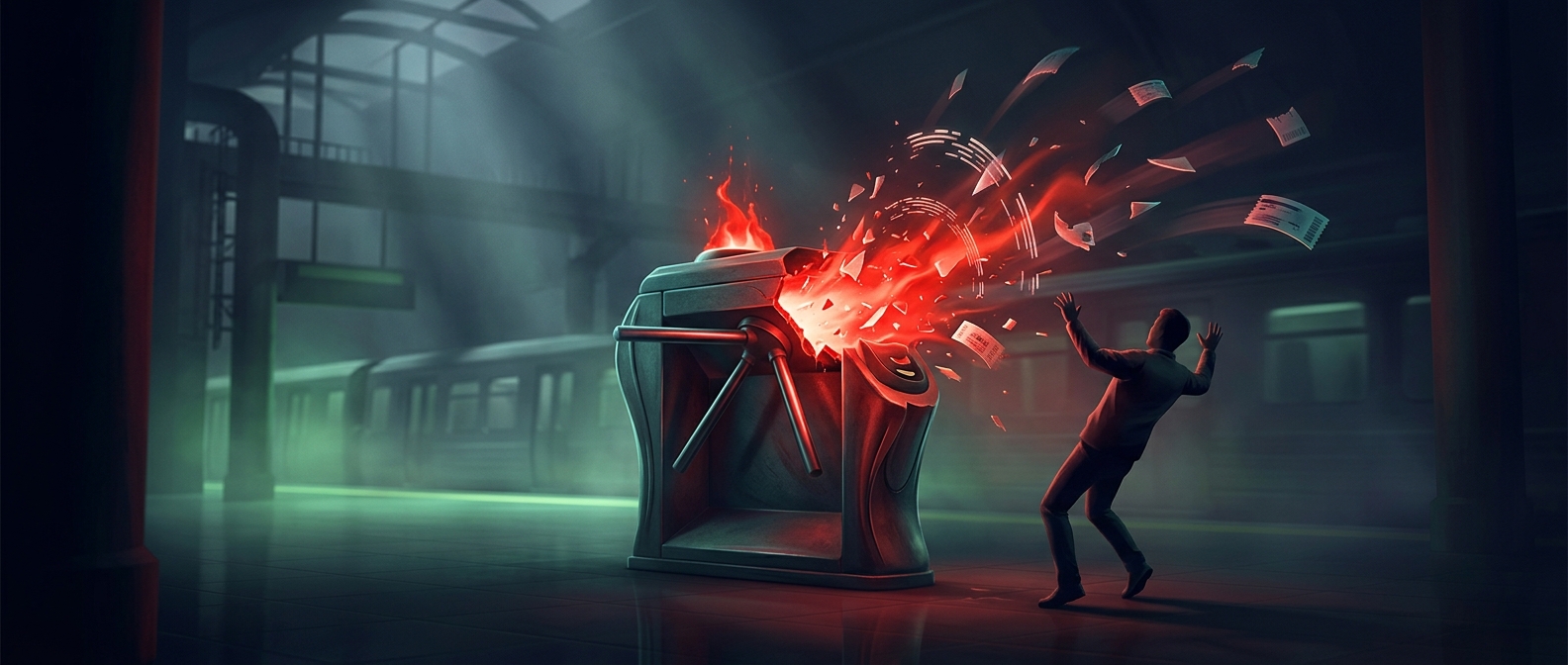
That difference can be hard to read in the moment. A rider sees an open path and starts walking, but the metal arm meets the body’s forward motion instead of yielding. The result is a sudden stop: the person’s momentum carries them into the barrier while the barrier remains fixed.
Why the stop feels so abrupt
People often approach a gate at walking speed and expect the bars to move with a light push. But a locked arm is designed to resist rotation, not to slow a rider gradually. Even a small mismatch—a missed tap, an unreadable card, or a declined fare—can turn an ordinary step into an awkward collision.
Turnstile designs vary, and some newer gates use doors or other barriers rather than rotating arms. But the basic tradeoff is the same: the entrance must stay closed when the system has not authorized passage, while opening quickly when it has. At a traditional turnstile, that decision is expressed mechanically in an instant: accepted fare, moving arm; failed read, sudden resistance.