Why Wuppertal’s train runs above the river
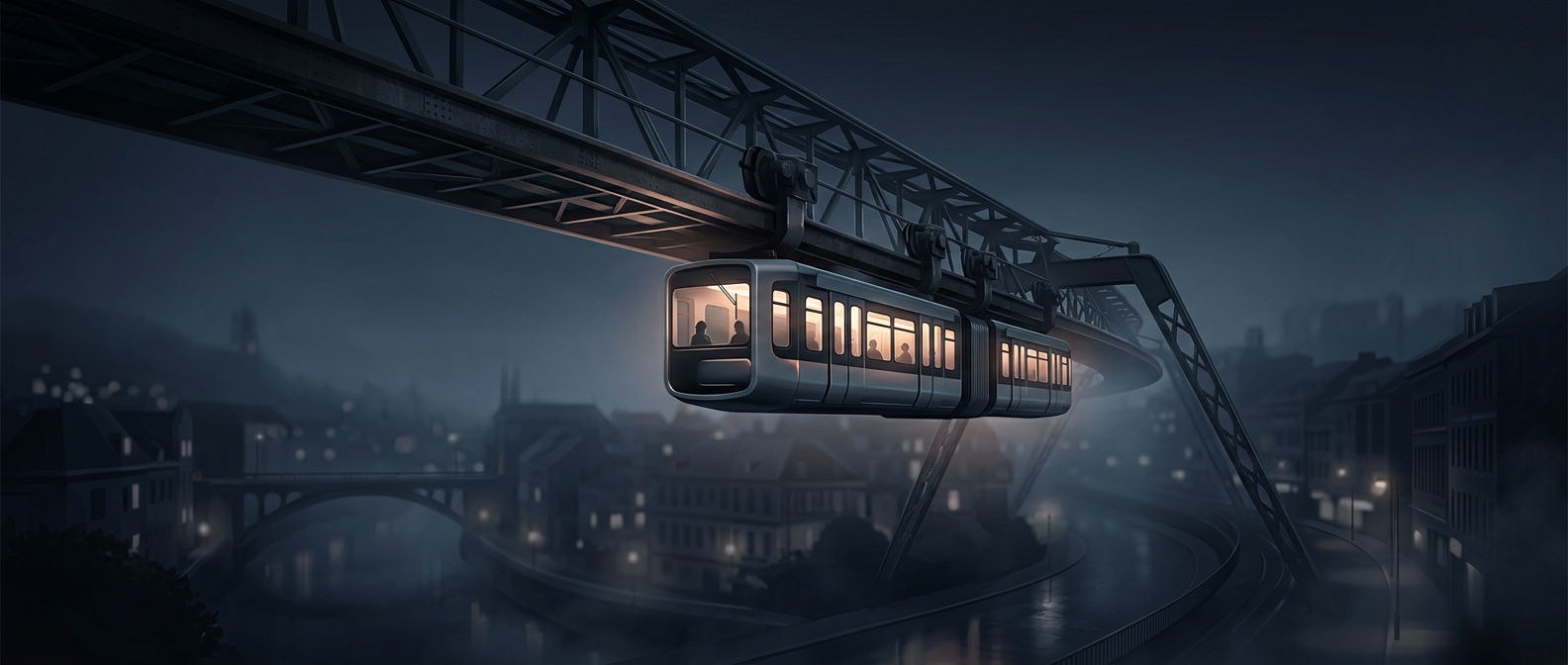
In Wuppertal, Germany, the suspended train follows the narrow valley of the Wupper River, where steep slopes and closely packed buildings leave little room for a conventional railway. Instead of placing rails on the ground, engineers carried the track overhead. The result is the Wuppertal Suspension Railway, a working part of the city’s public-transport network.
How a suspended train stays on track
The cars hang from wheeled assemblies that travel along a steel rail above them. Electric motors move the assemblies forward, while the rail guides and supports the train; the passengers’ cars swing below rather than riding on top of the track. This arrangement keeps the railway clear of the river and much of the street traffic below.
That does not make the journey a free-swinging ride. The cars are attached to guided running gear, and the route is built to carry them around bends and through stations. From inside, though, the unusual viewpoint makes familiar parts of the commute feel different: the river, roads, and rooftops pass beneath the windows.
A route shaped by the city
The elevated line opened in 1901, linking communities along the valley without requiring a ground-level corridor through them. Its path alternates between stretches over the river and sections above streets, adapting to the built landscape rather than following a single uninterrupted waterway.
The tradeoff is visible from the platform: the railway needs substantial overhead supports and a dedicated structure, but it occupies far less ground than a surface line would. For Wuppertal, the river is not just scenery below the train—it is part of the narrow route that helped make this distinctive form of commuting practical.