Why an empty street doesn’t make a red signal feel optional
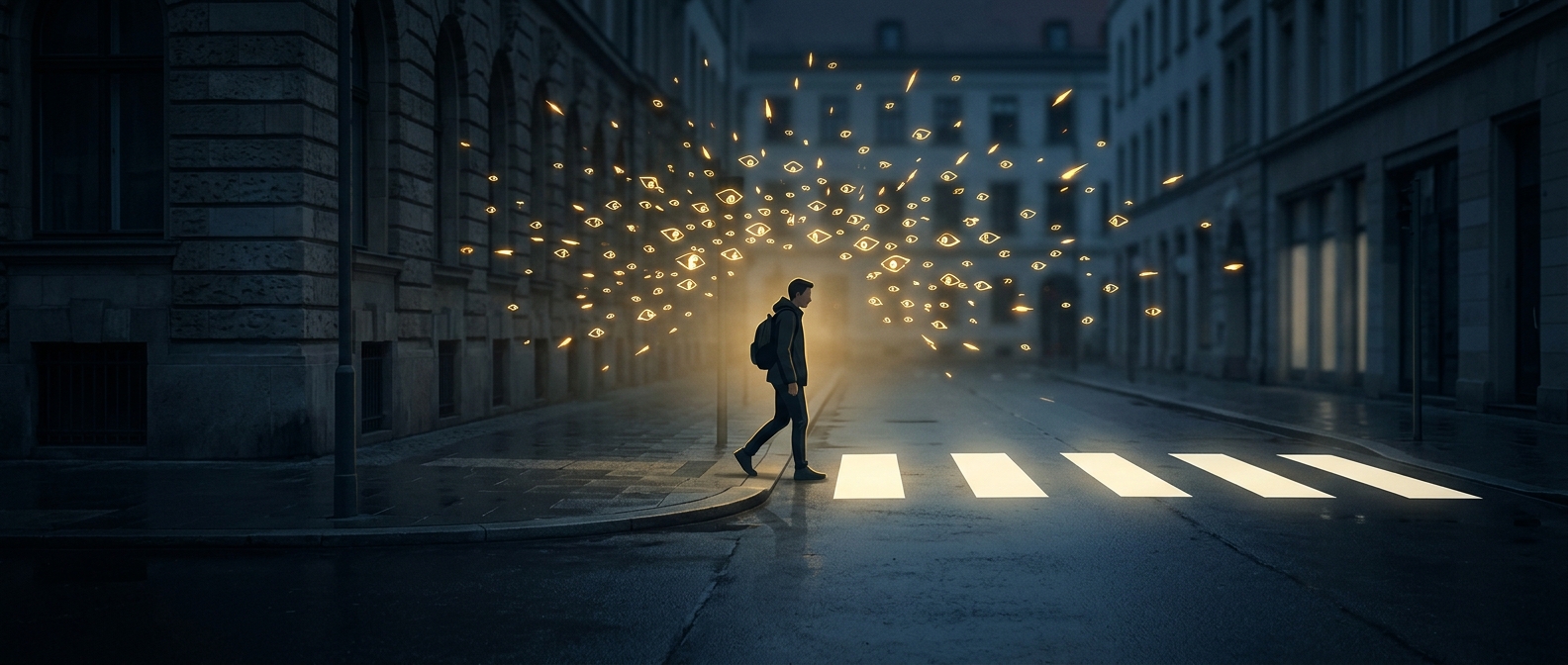
In Germany, a pedestrian signal is treated as a traffic rule, not merely a suggestion to wait until a car appears. Crossing against the red light can therefore draw disapproval even when the road looks clear. The point is partly predictability: drivers, cyclists, and pedestrians share intersections more safely when people follow the same signals rather than making individual guesses about whether a crossing is safe.
That logic matters because a street can look empty while a vehicle is approaching from outside a pedestrian’s view. A turning car, bicycle, or vehicle moving quickly through the junction may arrive before someone who has stepped off the curb expects it. Waiting for the signal creates a common cue for when to cross; it does not depend on each person correctly judging every angle and speed.
The example children are watching
The reaction is also about what children learn from adults. A child who sees a grown-up cross on red may take away a simple rule: the signal matters only when a car is visible. Adults who wait, even when they could probably make it across, reinforce a more consistent lesson—cross when the light permits it.
That helps explain why a seemingly harmless shortcut can provoke a scolding from a stranger. The objection is not necessarily that a car is about to hit the person crossing; it is that public behavior helps set expectations for everyone nearby, including children who may copy it later.
A small wait with a public purpose
The norm can feel strict when the intersection is quiet, but its purpose becomes clearer in the moments when judging traffic is difficult: at a busy junction, near a turning vehicle, or with a child beside you. Following the signal makes the crossing less dependent on individual risk-taking—and keeps the adult example as legible as the light itself.