A look is not always a challenge
If someone holds your gaze longer than you expect, it can feel pointed. But eye contact has no universal social meaning: what one visitor reads as hostility may be, for the other person, ordinary attention or simple curiosity. In Germany, some people are less inclined to quickly look away in public than visitors from cultures where avoiding strangers’ eyes is a stronger courtesy.
Public spaces make the difference
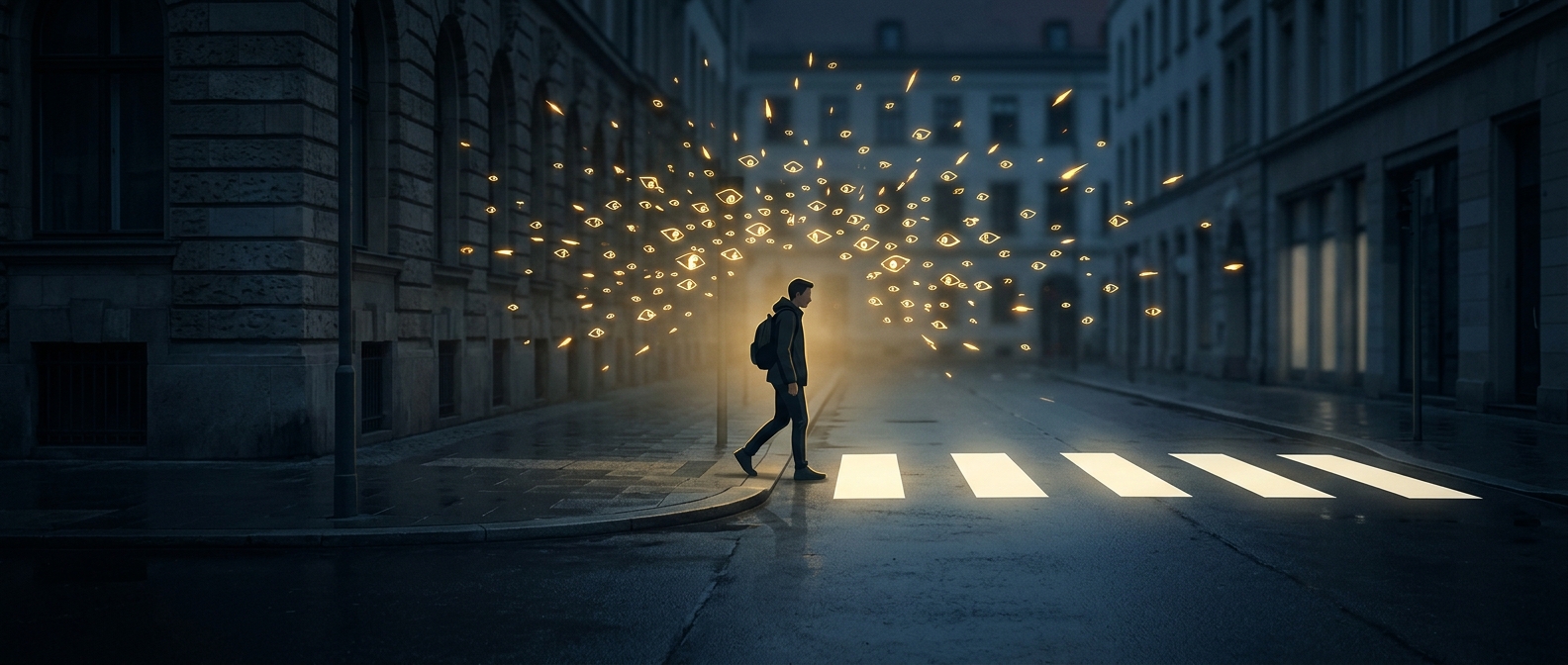
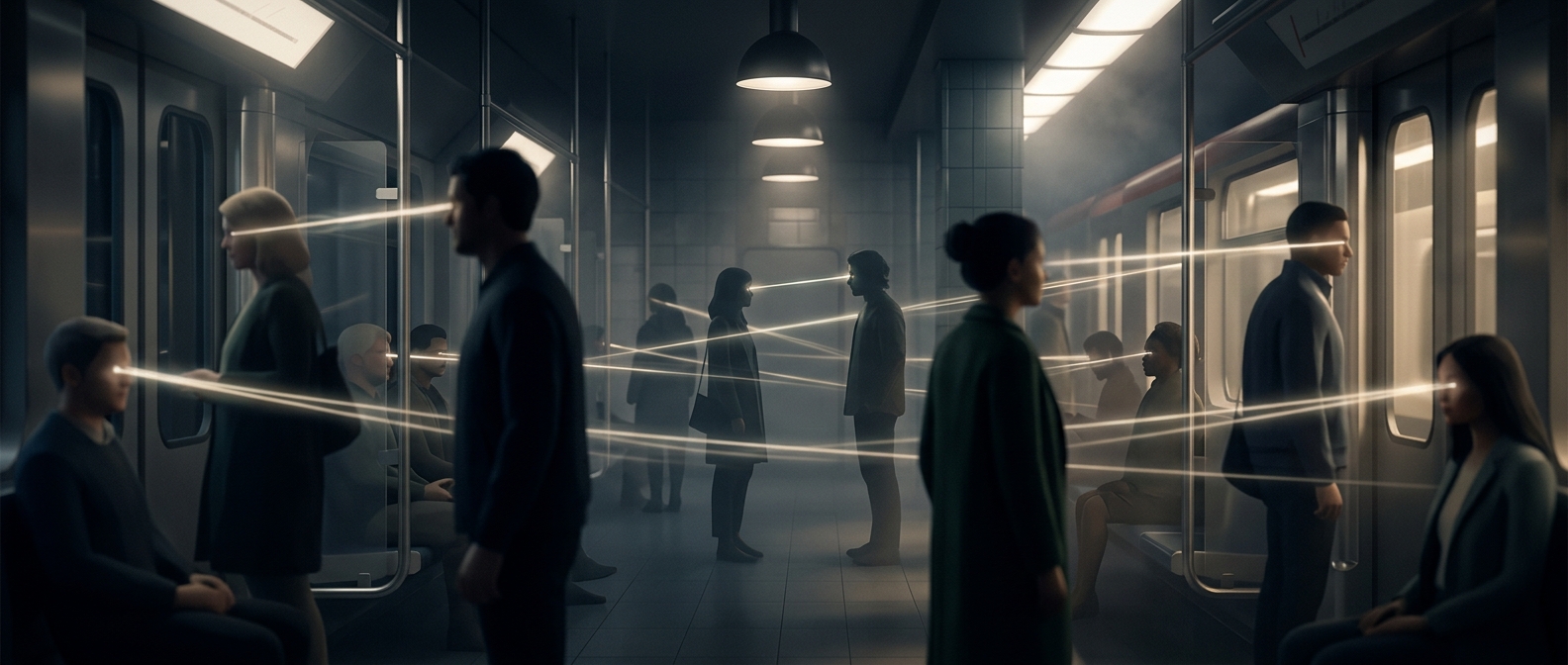
On a quiet train, in a village shop, or while waiting at a crossing, there may be little else to look at—and a person who stands out can attract a second glance. That attention does not necessarily signal disapproval or an invitation to interact. It may end as soon as the person has taken in what caught their eye.
There is no single German rule about staring; habits vary by person and setting. A sustained look can still feel intrusive, and direct eye contact can carry different meanings in a conversation than it does across a train carriage. The useful travel cue is what follows the look: a relaxed expression and no approach often mean there is nothing to answer. A smile or a brief nod is enough if you want to acknowledge it; you do not need to treat every glance as a confrontation.