A Fare You Could Count in Stones
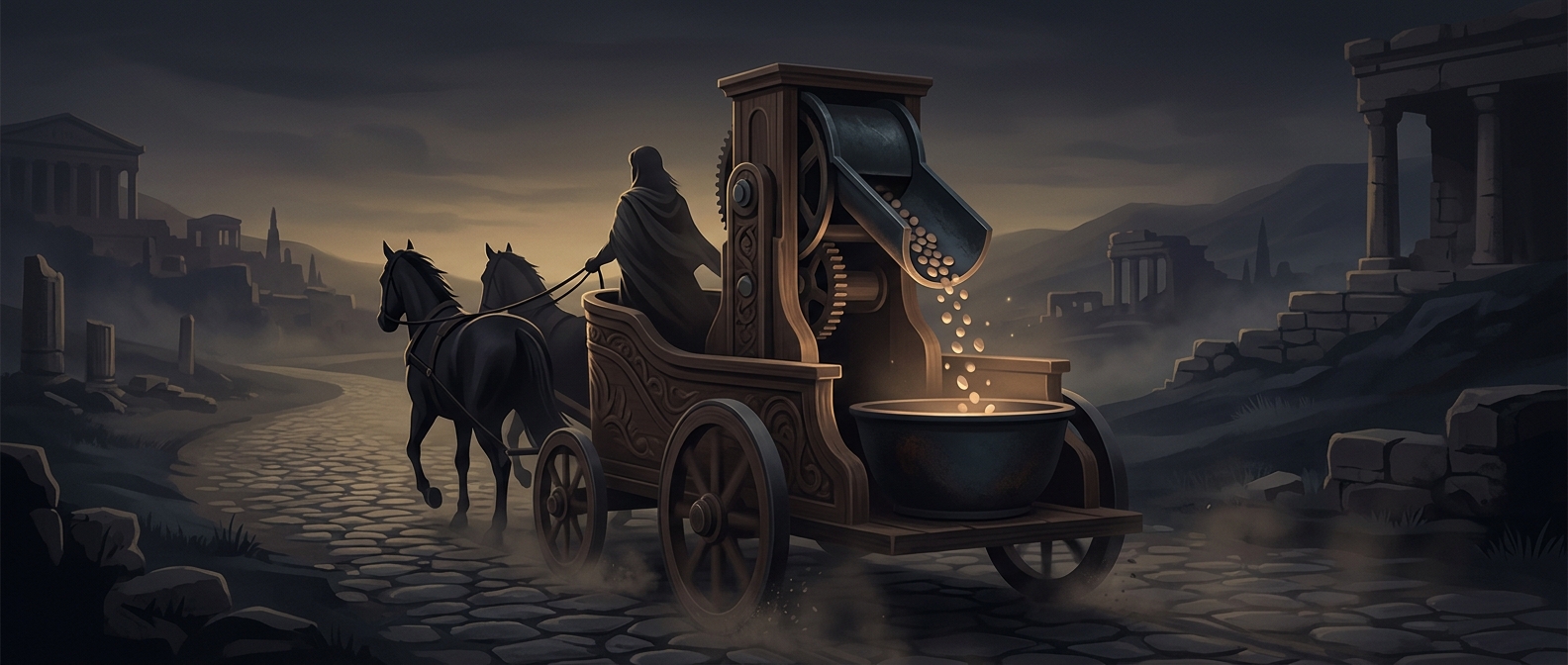
At the end of a ride, the driver did not have to rely on memory or estimate the distance from the journey’s route. A metal bowl held a running tally: one pebble for each distance unit traveled. Counting the stones turned that tally into the fare.
The arrangement separated two jobs that can easily blur together. Distance was recorded as the trip unfolded; payment was worked out afterward. That made the fare visible and checkable to both driver and passenger, at least in principle: the pile of pebbles was a physical record of how far the vehicle had gone.
A Simple Tally, Not a Modern Meter
A pebble could not measure distance by itself. Some part of the system had to register each unit of travel and add the corresponding stone to the bowl. The surviving description does not explain how that step worked, so the bowl is best understood as the counter—not as the device that sensed the road.
The idea is strikingly practical. Instead of displaying a number, the system represented each unit with a separate object. At the destination, the fare could be settled by counting what had accumulated during the ride. The result was an early form of pay-by-distance bookkeeping: a journey left behind a small, tangible trail of its cost.**