The canal’s towpath did the work of an engine
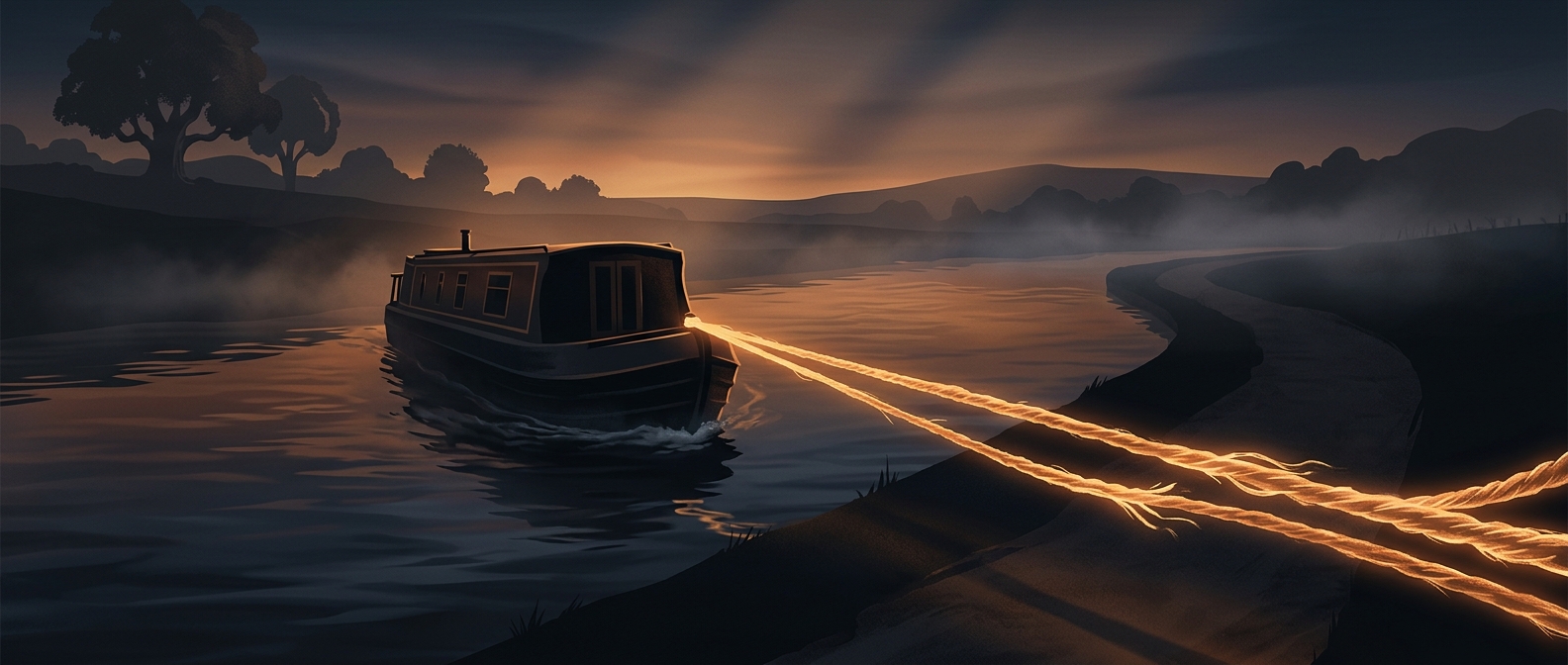
A canal boat could move without a motor because its power source stayed on land. A long line connected the barge to a horse, a team of workers, or another hauling force on the bank. As the pull traveled through the rope, it drew the boat forward through the water. The path beside the canal—called a towpath—was therefore part of the transport system, not merely a walking route.
A rope changed how the boat had to be steered
Pulling from one side tends to turn a boat toward the bank. The person steering had to counter that sideways force, using the rudder to keep the barge aligned and clear of the canal edge. A long towline helped: with the boat trailing behind the hauler, the pull could draw it forward without requiring the horse to move beside the hull.
Canals suited this method because their sheltered, relatively calm water offered little current or open-water wave action to fight. Their carefully controlled route also made slow, steady travel workable. But bends and obstacles demanded attention: the boat, rope, hauler, and towpath all had to pass through the same narrow corridor.
Passengers traveled at the pace of the pull
The arrangement traded speed for a dependable way to move heavy loads with the power available. Passengers shared that slow progress, while the hauler’s pace and the canal’s curves set the rhythm of the journey. The striking detail is that a boat seemingly moving under its own momentum was often being pulled along by someone walking beside it.