A desk at the back of the train
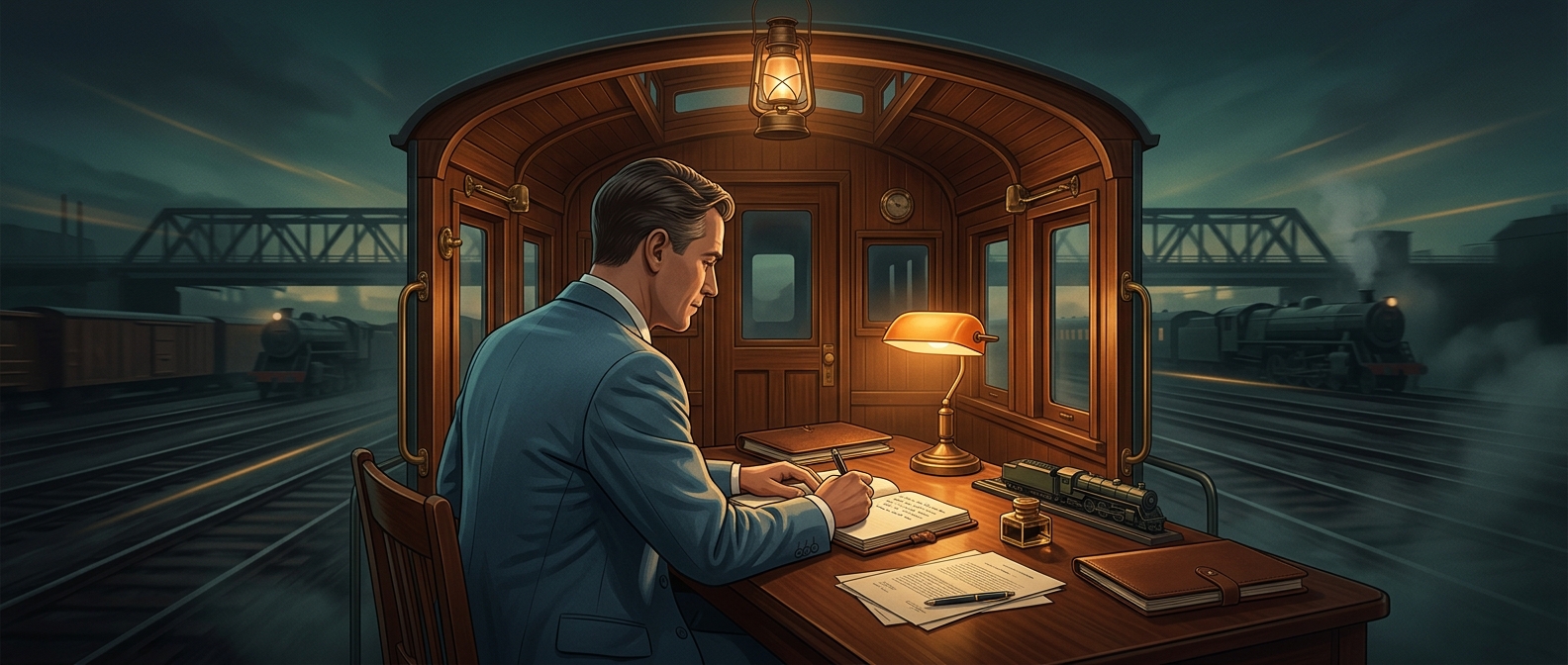
Before onboard computers made railroad records easier to manage, a caboose gave the conductor a place to work while the train was underway. The conductor was responsible for the train’s paperwork and coordination, not just riding along. Bills and other operating documents helped track what the train carried and where it needed to go; the caboose turned those duties into work that could happen between stops.
Why the office rode behind
The caboose was attached at the rear, where the crew could keep watch on the train as well as handle records. Its interior served as a modest workspace and, on longer trips, a place for crew members to rest. Depending on the car’s design, raised windows or an enclosed platform gave a view along the cars—a useful complement to the conductor’s paperwork.
That arrangement made the caboose more than a spare passenger car. The conductor had to keep documents organized amid vibration, jolts, and the steady motion of the train. The work was practical rather than comfortable: a moving office where records could be checked and duties carried out without waiting for the train to reach its destination.
The paperwork had a journey of its own
Those documents connected the train’s movement to the people managing freight at stops and yards. A conductor could make progress on the administrative side while the locomotive kept moving, so the caboose carried both crew and the information needed to manage the trip. Its office was small, but it traveled with the train it helped keep accounted for.