A working city’s transport archive
Střešovice is more than a place to park old trams: it preserves the vehicles and equipment that made Prague’s street-level transit work. The depot’s collection spans several generations of the city’s network, allowing visitors to see how a tram changed as materials, power systems and passenger needs changed. A wooden-bodied car and a later steel one are not just different styles; they belong to different stages of urban transport.
Why the Tatra cars became familiar
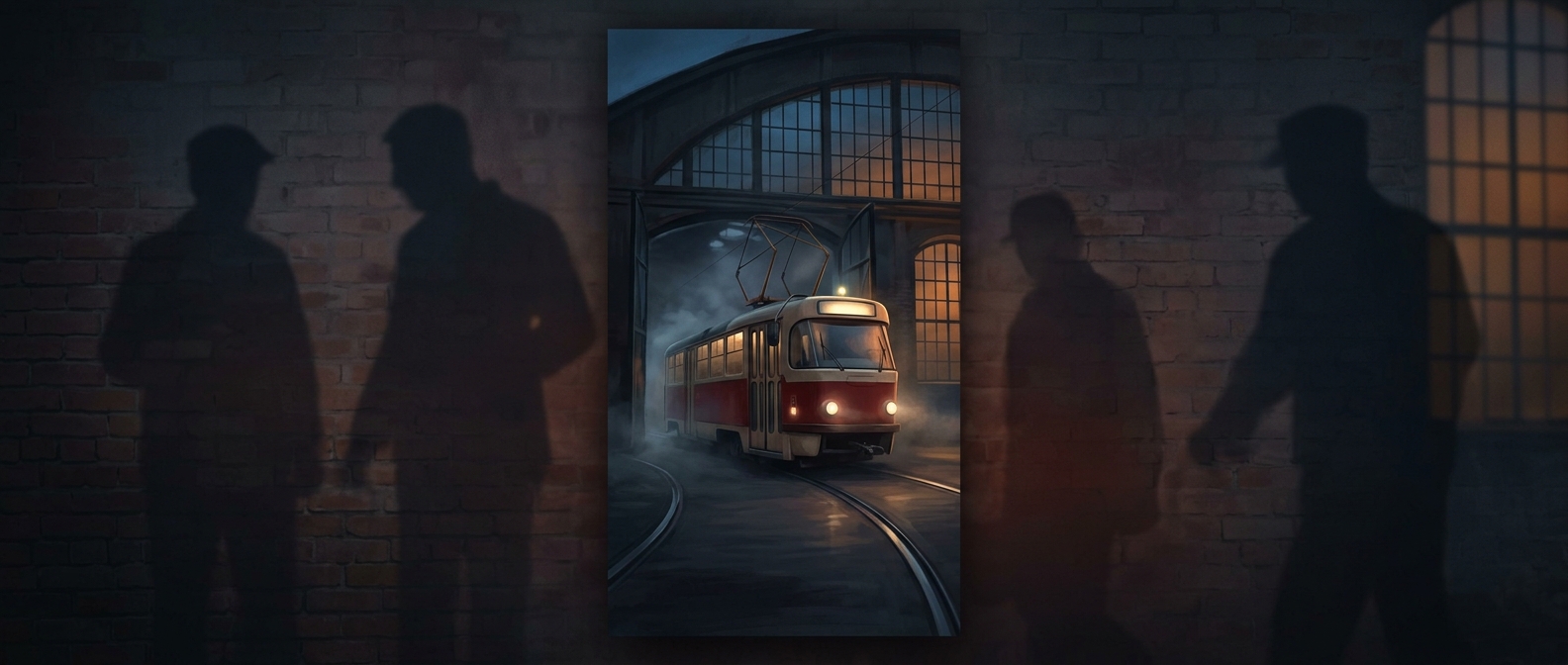
Among the most recognizable vehicles are Tatra trams, built in Czechoslovakia during the communist period. They were products of an industrial system that favored durable vehicles made in large numbers for cities across the Eastern Bloc. Their red-and-cream paint and rounded bodies became part of Prague’s everyday streetscape—not because they were museum pieces at the time, but because they carried ordinary passengers to work, school and home.
That history is easiest to grasp from inside a car. Narrow aisles, hard-wearing fittings and the view through the windows show how a tram was designed for repeated service, not simply for display. On a heritage ride, the same vehicle moves through streets that have since acquired newer cars and modern infrastructure. The contrast makes the preservation feel practical: Prague’s transport past is still legible at street level, rolling along the tracks rather than sealed away behind glass.