A timetable built around connections
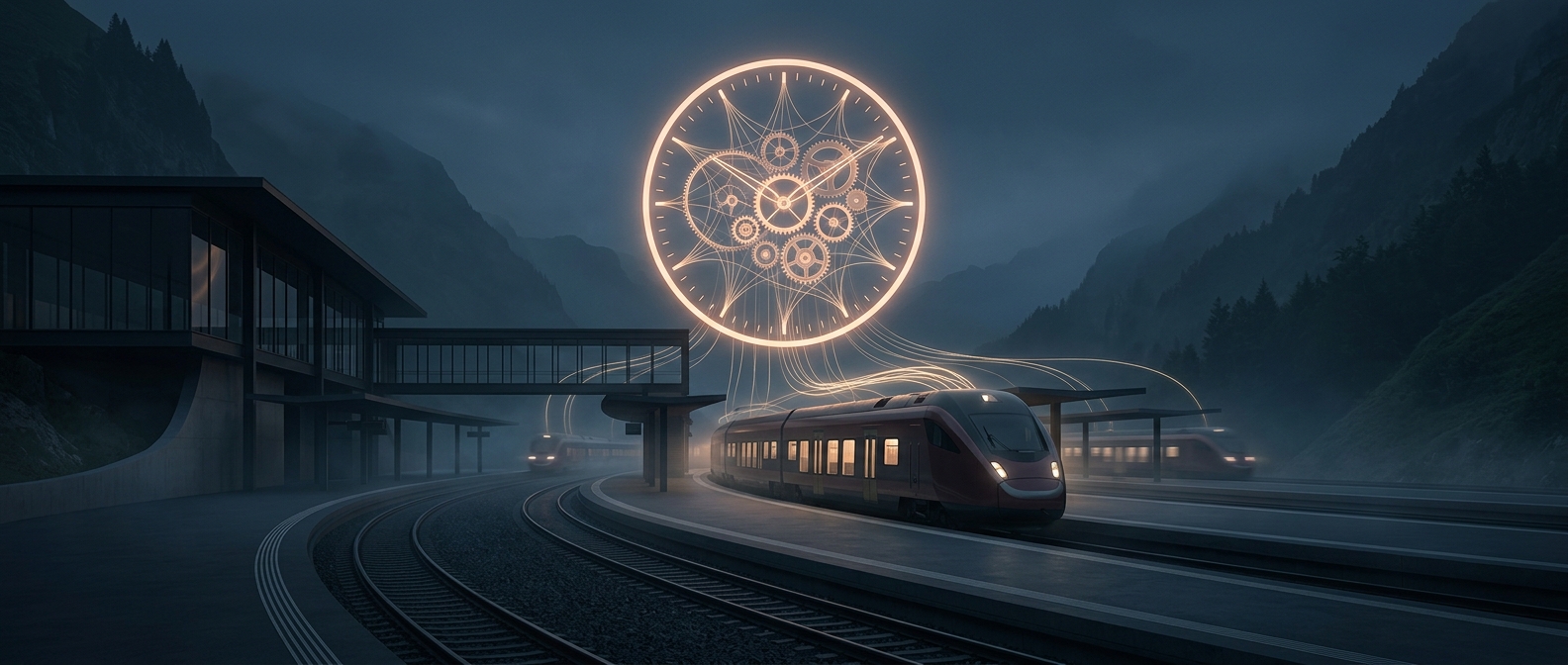
Swiss trains run on tightly coordinated schedules, not just isolated departure times. Many routes are planned so trains arrive at major stations shortly before a cluster of departures, giving passengers a chance to change trains. Those departures then carry people onward to the next set of connections.
That pattern is often called a clock-face timetable: trains repeat at regular intervals, such as every half-hour, so the same connections recur throughout the day. A train leaving at 10:03 is part of a larger sequence, and even a small delay can affect passengers and trains farther along the network.
Why the minute matters on the platform
The printed time is the train’s scheduled departure, not a signal to begin boarding. Staff need time to close doors and prepare the train to leave, so boarding can end before the listed minute. A passenger arriving at 10:03 may find that the train is already preparing to depart—or has gone.
This precision helps make transfers predictable, but it leaves little room for a last-second dash. The practical rule is simple: be on the platform before the departure minute, especially when the train is part of a connection.