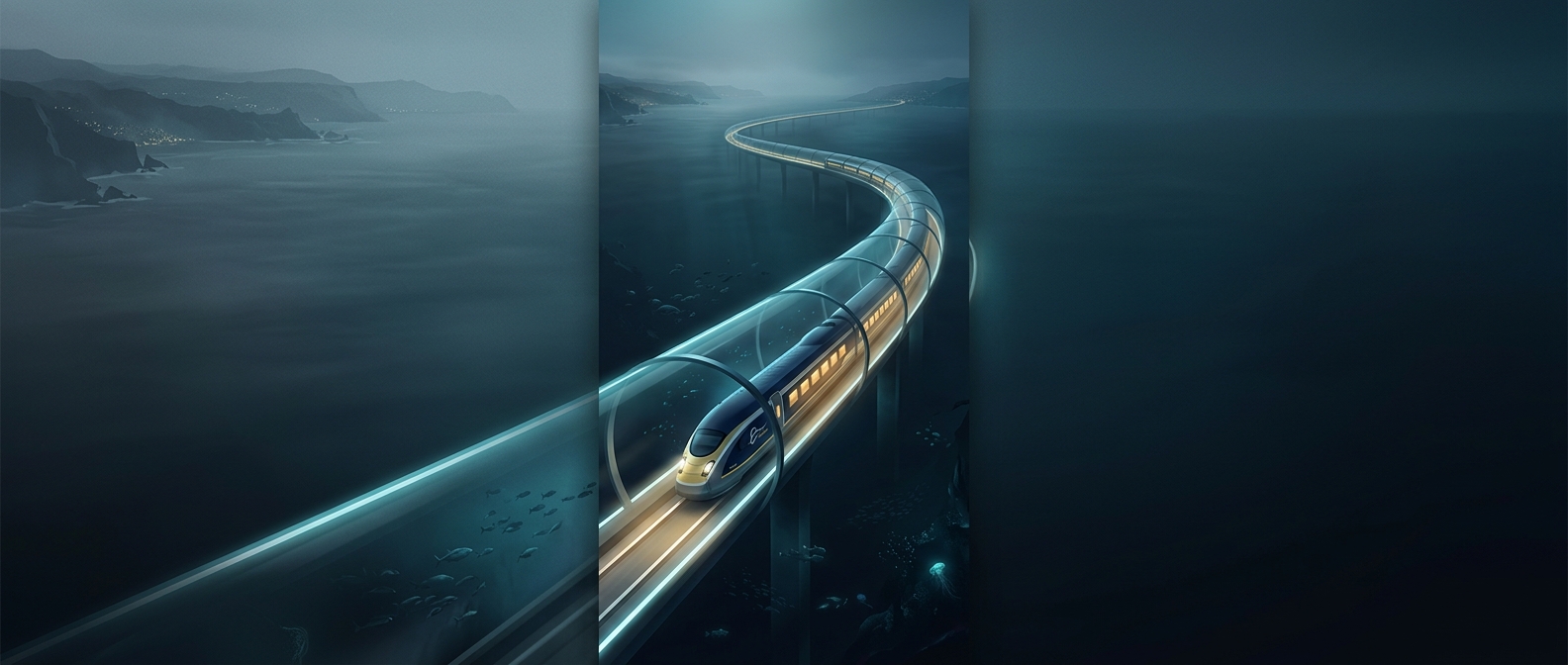
The Channel Tunnel is carved through rock, not laid on the seabed
The rail link between Folkestone in southeast England and Coquelles near Calais runs through a tunnel bored beneath the Channel’s floor. Most of its underwater stretch passes through chalk marl, a relatively stable layer of rock that made a deep route practical. The sea is overhead, but rock separates the trains from the water.
That distinction matters: engineers did not have to build a giant tube that could float, buckle, or be sealed against the full force of the sea. Instead, tunnel-boring machines excavated through the rock and workers lined the passage to keep it stable and watertight.
A second tunnel is part of the railway
The system has two large tunnels for trains, one in each direction, plus a smaller service tunnel between them. Cross-passages connect the rail tunnels to the service tunnel, giving staff access for inspection and providing a route to move people away from a train in an emergency.
The result is more than a submerged shortcut. It is a railway built inside a carefully chosen geological layer, with the seabed above and solid ground doing the work of holding the sea back.