A doorway that had to announce a new kind of city travel
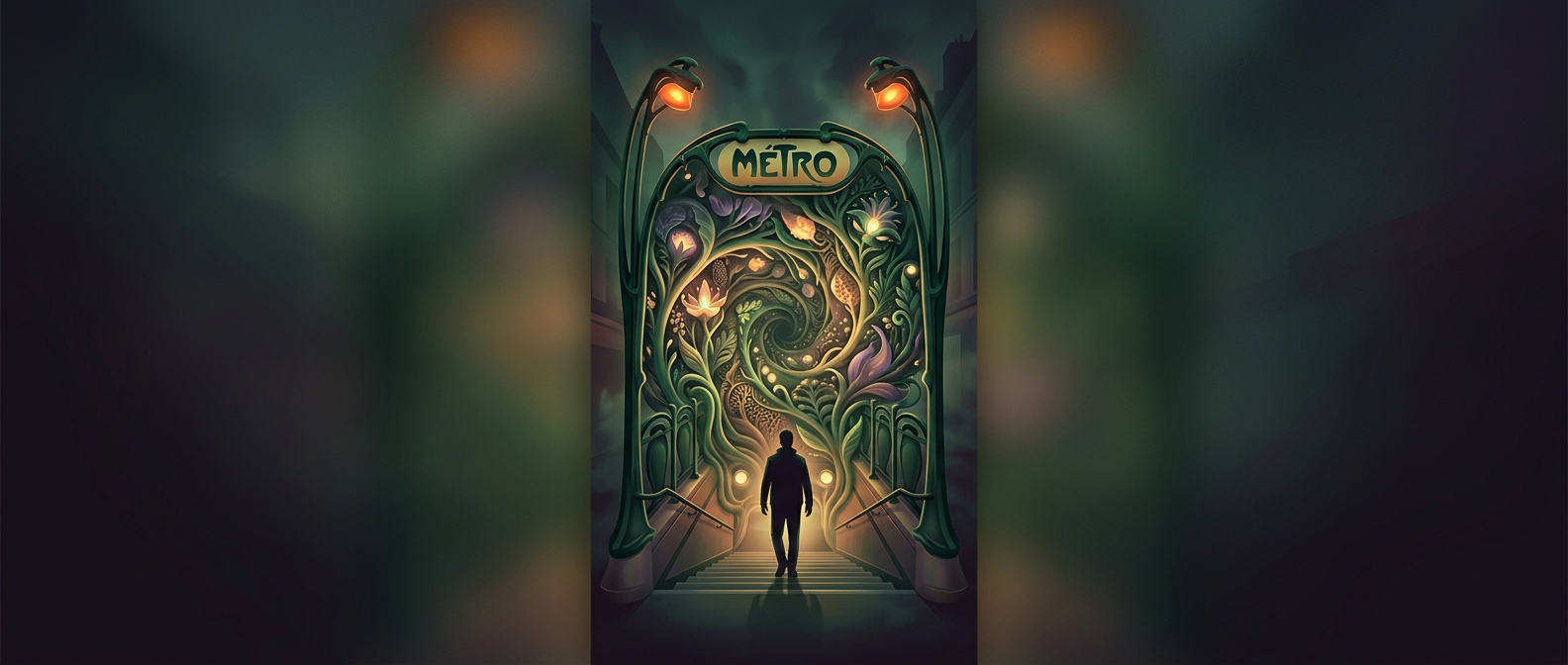
When the Paris Métro began opening stations around 1900, its entrances were more than gaps in the pavement: they were public signs for a transport system many Parisians had never used. Architect Hector Guimard gave them a recognizable look without making every entrance a monumental building. Their looping outlines marked the way down while leaving the busy sidewalk largely open.
Why iron could look like foliage
The plantlike curves were not carved from stone. They were made from cast iron, a material that could be poured into shaped molds, then assembled into repeating pieces. That made elaborate forms practical for a network with many entrances. Instead of hiding the structure, Guimard turned its supports and rails into part of the design, bending them into stems, leaves, and arching tendrils.
The green finish helped the iron read as a unified, organic form against the street. Amber-colored glass lamps added a warm glow after dark, making the entrance easier to spot and giving the underground stairway a visible threshold. The result joined a functional job—guiding passengers safely toward the stairs—with a distinctive visual language.
A modern entrance with a local identity
The design also answered a city-planning challenge: how to make a new, largely hidden railway legible at street level. Repeated elements helped people recognize Métro access, while the sculptural details made the entrances feel like part of Paris rather than anonymous pieces of infrastructure. The striking trick is that the decoration does not sit on top of the entrance; the structure itself becomes the ornament.
At Abbesses, the familiar form still frames an ordinary daily choice—whether to descend into the station. Its plantlike silhouette makes that transition from open street to underground passage visible before a traveler reaches the stairs.