The State House Had a Day Job in Court
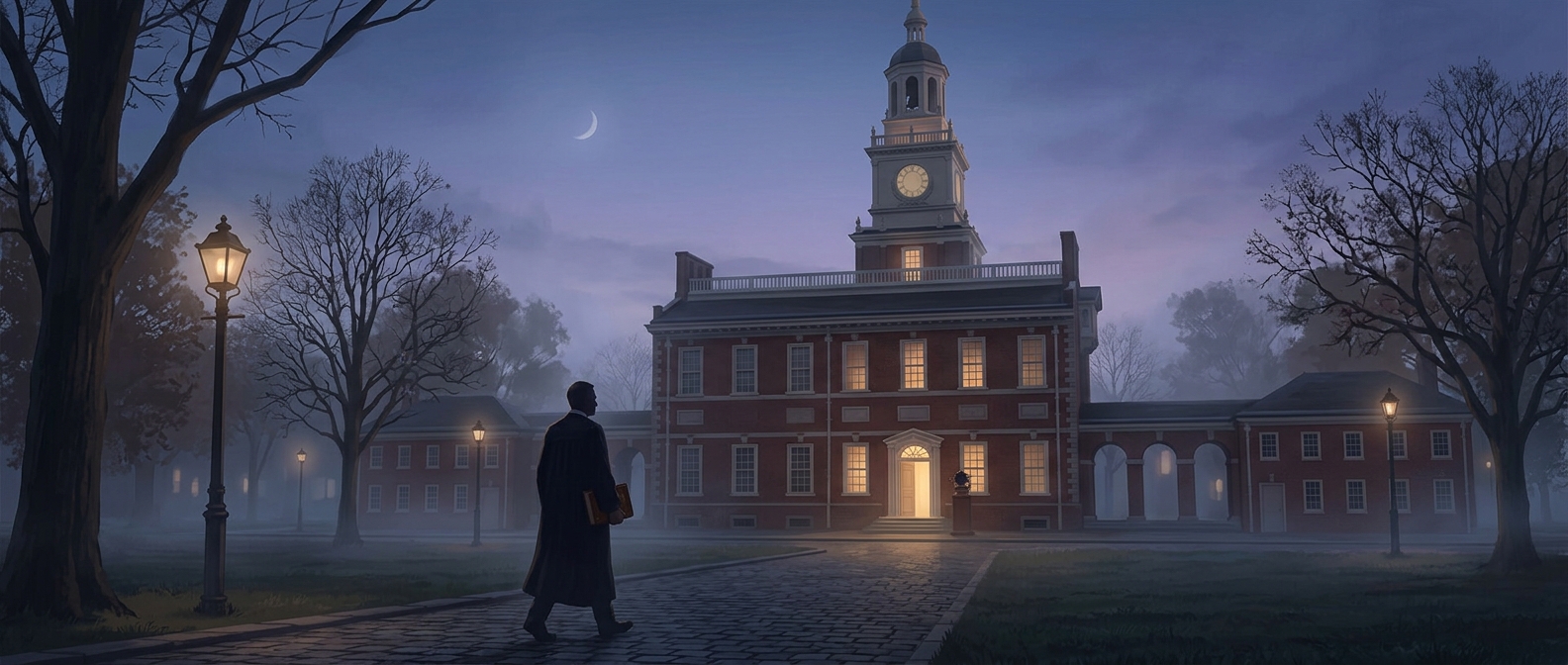
The building now known as Independence Hall was built as Pennsylvania’s State House, a center of colonial government—not as a monument to independence. Its rooms also served the courts, where judges heard cases and members of the public could watch proceedings. That meant the building’s daily life included practical civic business alongside the debates that later made it famous.
A courthouse was not just a place to settle dramatic crimes. Local courts handled the disputes and legal matters that arose in ordinary community life. Holding trials in a public building made the law visible: people could come into the room, observe proceedings, and see government at work.
A Civic Building Before a National Shrine
The courthouse role helps explain why the building mattered to people before the Declaration of Independence was adopted there. It was already part of Philadelphia’s working civic landscape. The same rooms that hosted legal proceedings also became the setting for consequential political meetings, giving the building a history grounded in everyday public life as well as national events.
That change in meaning is easy to miss today. Visitors encounter a carefully preserved landmark, but its earlier purpose was more immediate: a place where residents could bring disputes and watch public decisions unfold.